Warren Buffett Relives The 2008 Financial Crisis | July 11, 2018
TL;DR
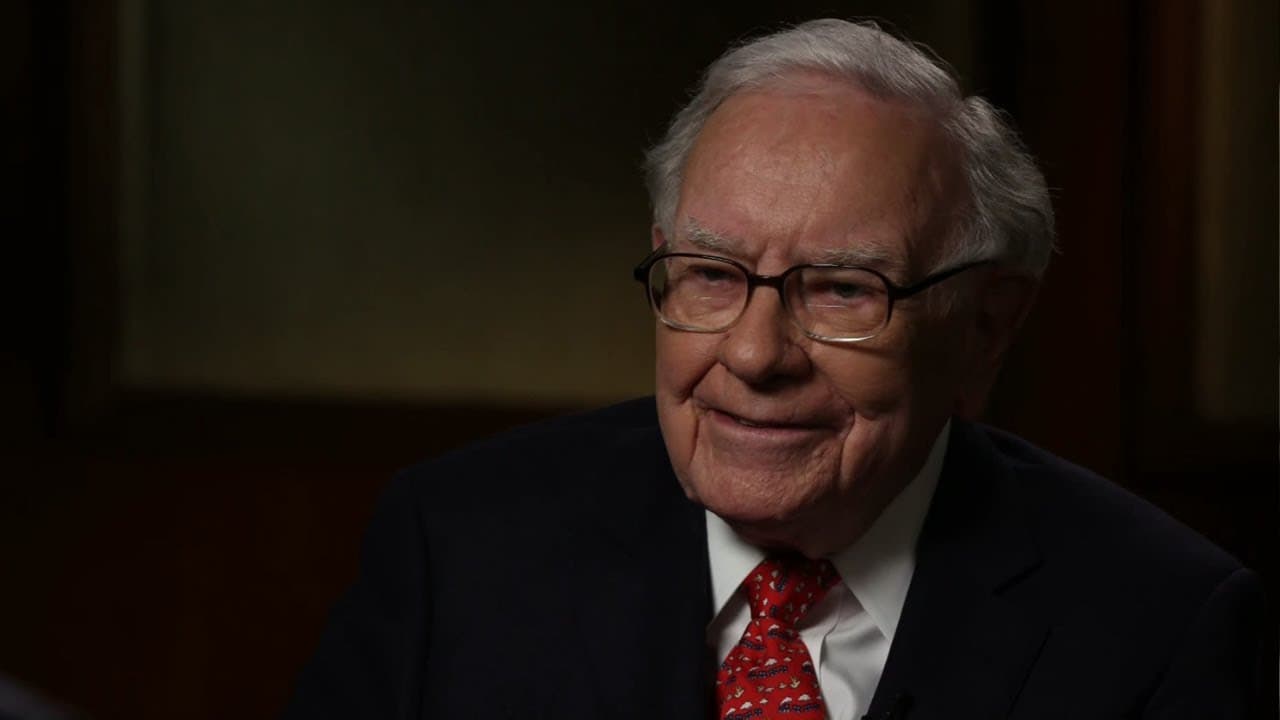
The 2008 crisis began with widespread faith that housing prices could only rise, encouraging excessive borrowing, weak mortgages, refinancing, and the resale of risky loans. When housing values fell, heavily leveraged families and institutions faced losses, while fear surrounding roughly two trillion dollars in nongovernment money market funds turned financial distress into a broad panic.
Transcript
i want to just go back to 2008 for a moment and just even start with a very big picture sense of it all what do you think happened that led to 2008 well i think the main thing but you know there's all kinds of tributaries feeding into the big missouri river on this but uh you had people think that uh housing could do nothing but go up and and and y... Read More
Key Insights
- Housing speculation was the central force behind the crisis, according to Buffett. People treated the roughly 20 trillion dollar residential housing market as though prices could only rise, then borrowed against homes and based living standards on appreciating values that ultimately declined.
- Mortgage risk was distributed through a chain of participants. Some originators wrote loans they did not expect to retain, borrowers refinanced despite payments that were too high, lenders participated in weak practices, and packaged mortgages were sold to distant investors, including buyers in Norway.
- Household leverage made falling home prices broadly damaging. Of 75 million owner-occupied homes in the United States, 50 million carried mortgages and 25 million were owned free and clear, leaving tens of millions of families exposed when the value of their leveraged asset crashed.
- Buffett's investment approach is based on adaptation rather than prediction. He expects the American economy to advance dramatically over a lifetime while periodically experiencing craziness and disruptions, so he does not attempt to forecast markets or businesses before deciding how to respond.
- Unusual requests for capital served as warning signals. When a major Wall Street firm contacted Buffett about buying many billions of dollars of Freddie Mac equity, he concluded that something was wrong because Freddie normally had numerous potential financing sources around the world.
- Money market fear transformed financial instability into a widespread panic. Around September 1, there were 35 million money market accounts and three and a half trillion dollars in money market funds, with roughly two trillion dollars held outside government funds, placing vast sums under perceived threat.
- Lehman's financial filings contained enough problems for Buffett to reject an investment. He reviewed a 250 to 300-page filing, recorded the pages where concerns appeared, and concluded that Lehman's financial condition was too risky under the circumstances developing across Wall Street.
- AIG's complexity prevented Buffett from valuing a potential transaction confidently. Although Berkshire could have paid more than 20 billion dollars if the assets were understandable, Buffett could not determine the scope of intercompany guarantees or possible obligations connected to financial products.
Install to Summarize YouTube Videos and Get Transcripts
Explore YouTube Video Summarizer or Get YouTube Transcript Extractor
Questions & Answers
Q: What caused the 2008 financial crisis according to Warren Buffett?
Buffett identifies massive housing speculation as the main cause. People believed residential property prices could only rise, borrowed heavily against homes, refinanced even when payments were too high, and treated housing wealth like currency. Mortgage originators also wrote loans they expected to sell, allowing risk to move through packaged securities until falling home values exposed the system's leverage.
Q: Why did falling housing prices create such widespread damage?
Housing was a roughly 20 trillion dollar asset class owned broadly across the country, often with borrowed money. Buffett notes that 50 million of the 75 million owner-occupied homes had mortgages, while 25 million were free and clear. When values fell, leveraged families lost wealth, faced debts against declining assets, and could no longer rely on appreciation to support spending.
Q: How did mortgage lenders and borrowers contribute to the crisis?
Borrowers, lenders, and mortgage originators all participated in practices built on the belief that housing prices would keep increasing. Some borrowers refinanced despite unaffordable monthly payments or provided false information on loan applications. Some originators issued mortgages they knew they would not retain, then sold those loans after they were bundled and transferred to other investors.
Q: Why did Buffett become concerned about Freddie Mac in 2008?
Buffett received a summer 2008 call from a senior official at a major Wall Street firm seeking to sell Berkshire many billions of dollars of Freddie Mac equity securities. He viewed the call itself as a warning because Freddie ordinarily had many possible buyers worldwide. Reaching Berkshire suggested that normal sources of capital had been exhausted and serious trouble was developing.
Q: Why did Buffett reject an investment in Lehman Brothers?
Buffett reviewed Lehman's financial information after Dick Fuld discussed a possible investment of three to five billion dollars. Buffett spent an evening reading a filing of roughly 250 to 300 pages and marked pages containing problems. The number and nature of those concerns made him worried about Lehman's financial condition under worsening Wall Street conditions, so he declined politely.
Q: Why did Buffett refuse AIG's request for investment?
AIG contacted Buffett about a possible 10 billion dollar investment, and he considered its property and casualty insurance operations. The information sent to him was not useful enough to evaluate the transaction. He could not determine the extent of intercompany guarantees or whether insurance subsidiaries had backed financial products obligations, so he told AIG not to spend more time on Berkshire.
Q: How did money market funds intensify the financial panic?
Buffett says that around September 1 there were 35 million money market accounts whose owners generally believed their money was completely secure. Within weeks, confidence deteriorated following major institutional failures and interventions. About three and a half trillion dollars sat in money market funds, including roughly two trillion dollars outside government funds, so uncertainty threatened an exceptionally broad group of savers.
Q: Why did troubled institutions call Warren Buffett during the crisis?
Institutions contacted Buffett because Berkshire could assess opportunities rapidly and finance transactions involving billions of dollars. Buffett described Berkshire as a particularly fast buyer when it liked an asset. A late-night call or urgent delivery of financial information therefore indicated that a company needed a binding commitment within days and had few practical financing alternatives remaining.
Summary
In this video, Warren Buffett discusses the 2008 financial crisis and shares his thoughts on what led to it. He talks about the speculation in the housing market, the levels of participation and borrowing, and the crash in housing values. Buffett also talks about his experiences during the crisis, including receiving calls from top officials of Wall Street firms and the government. He discusses his decision not to invest in certain companies, such as Freddie Mac, AIG, and Lehman Brothers. Buffett reflects on the actions taken by the government and the challenges they faced. He also emphasizes the importance of fear in driving the crisis and the need for a powerful central bank. Despite the crisis, Buffett remains confident in the long-term growth of the American economy.
Questions & Answers
Q: What do you think happened that led to the 2008 financial crisis?
The main cause was the speculation in the housing market, with people believing that housing prices could only go up. This led to a huge array of problematic practices, such as borrowing, refinancing, lying on loans, and the participation of lenders. The crash in housing values affected 50 million families who owned homes on mortgage and based their living standards on the assumption that the value of their homes would continue to rise.
Q: Were you worried during the 2008 crisis?
Buffett explains that he has always assumed that the American economy moves forward over time, but also experiences periodic hiccups. While he wasn't worried, he did recognize signs of trouble when he received a call from a top official of a Wall Street firm trying to sell billions of dollars worth of securities. This indicated that something was wrong, and soon after, the roof fell in with the conservatorship of Freddie Mac and Fannie Mae.
Q: Did you consider investing in Lehman Brothers when they were in trouble?
Buffett recalls receiving a call from Dick Fuld, CEO of Lehman Brothers, who asked if he would be interested in investing between three to five billion dollars. Buffett asked about the details and the payment terms, but ultimately decided not to invest after going through the company's financial information and finding concerns about their financial condition.
Q: Did you think the system would completely freeze up during the crisis?
Buffett describes the crisis as an economic "pearl harbor," a blow to the country's economy that was comparable in magnitude to what happened during the attack on Pearl Harbor. He believed that if the system froze up completely, it would have a significant impact on the economy and people's lives, as it would result in a decrease in productivity and a loss of confidence. He also mentions the fear and panic that spread throughout the population.
Q: Do you think it was a mistake not to save Lehman Brothers and AIG?
Buffett acknowledges the difficult decisions that government officials had to make during the crisis. In the case of Lehman Brothers and AIG, he believes that they had to be put into conservatorship to prevent further damage to the financial system. The government faced challenges in terms of guarantees, the need to limit exposure, and the fear of public opinion and potential backlash.
Q: Do you worry about another crisis?
Buffett admits that there will likely be another crisis at some point but doesn't worry about it personally. He believes in conducting himself and his investments in a way that can withstand a crisis. He emphasizes the importance of having a powerful central bank, like the Federal Reserve, to keep the economy running smoothly.
Q: Is there anyone to blame for the 2008 crisis?
Buffett acknowledges that many people made foolish decisions and engaged in dishonest behavior during the crisis. However, he also recognizes that fear is a natural response and cannot be blamed on individuals alone. He believes that a crisis of this magnitude affects public opinion and creates a desire to punish those deemed responsible.
Q: How would you describe the impact of the crisis to the man on the street?
The crisis had a significant impact on the economy, reducing overall productivity and causing fear and panic. Buffett compares it to a train going off the tracks, where everything comes to a stop and people lose confidence in each other. It becomes difficult to conduct business, and the effects are felt by ordinary individuals.
Q: Were there any investments you wish you had made during the crisis?
Buffett admits that with hindsight, he could have made better investment decisions during the crisis. He believes that waiting a few months before making any purchases would have been more advantageous. However, he also notes that his investments were not heavily affected by the crisis.
Q: Are we better prepared for another crisis?
Buffett expresses his concern that some regulations, such as Dodd-Frank, have weakened the ability of powerful institutions like the Federal Reserve to act promptly and unilaterally during a crisis. He believes that a strong central bank is essential to the stability of the economy and that it is important to learn from past experiences to better prepare for future crises.
Summary & Key Takeaways
-
Buffett attributes the crisis primarily to enormous housing speculation. Borrowers, lenders, and mortgage originators behaved as though home prices would always rise. Mortgages were issued and resold through packages, families refinanced despite unaffordable payments, and housing wealth supported spending until declining values exposed the danger of widespread leverage.
-
Buffett says he does not try to predict markets or businesses because periodic craziness and economic disruptions are part of the American system. He instead adapts as events unfold. A summer 2008 request involving many billions of dollars in Freddie Mac equity signaled that ordinary financing channels had stopped functioning.
-
During the crisis, major institutions sought Buffett because Berkshire could evaluate and fund multibillion-dollar transactions quickly. Buffett rejected Lehman after finding numerous concerns in its filings, declined AIG because its obligations and guarantees were unclear, and considered Barclays' request for an unlimited guarantee connected to a possible Lehman transaction.
Read in Other Languages (beta)
Share This Summary 📚
Summarize YouTube Videos and Get Video Transcripts with 1-Click
Try YouTube Summary with ChatGPT & Claude or YouTube Transcript Generator
Explore More Summaries from Investor Archive 📚

Summarize YouTube Videos and Get Video Transcripts with 1-Click
Try YouTube Summary with ChatGPT & Claude or YouTube Transcript Generator