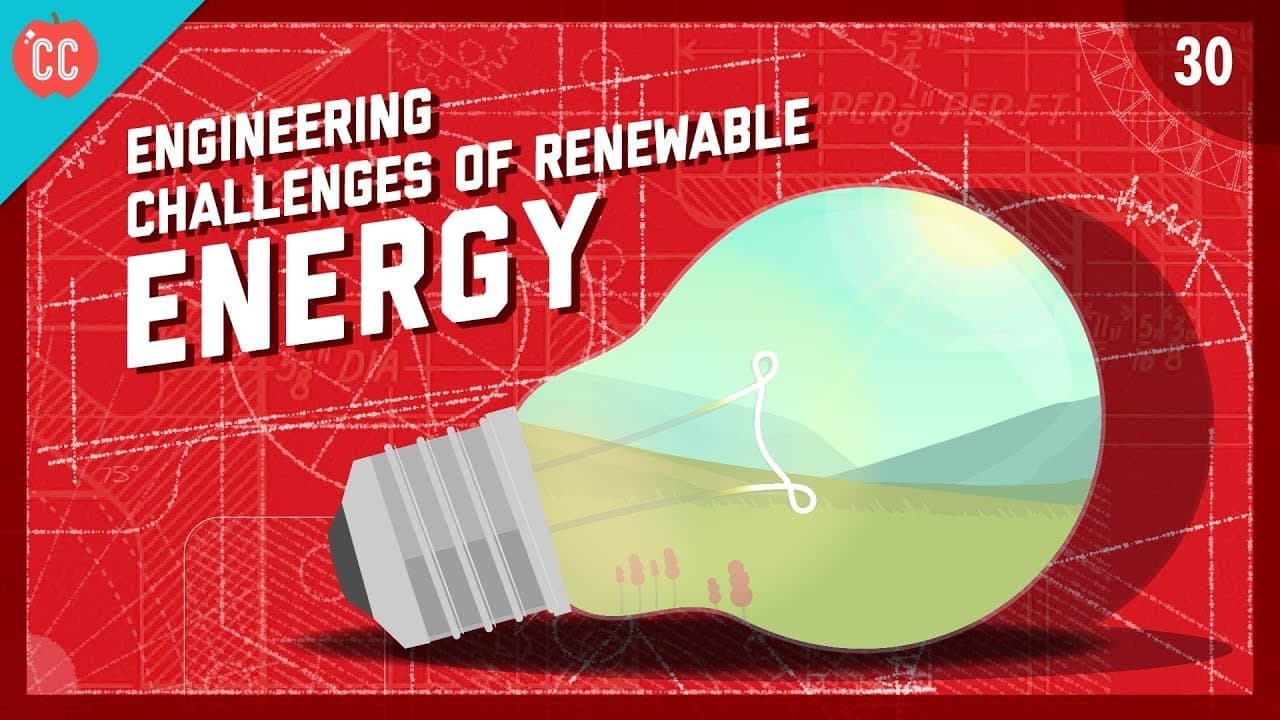
What Are the Engineering Challenges of Renewable Energy?
TL;DR
Renewable energy sources like hydropower, wind, geothermal, and solar face significant engineering challenges including efficiency, cost, and energy storage. While these sources provide sustainable alternatives to fossil fuels, issues like geographical limitations for geothermal and inefficiencies in solar panels hinder widespread adoption. Engineers are actively working on innovations to improve these technologies and address sustainability in energy production.
Transcript
Engineering has given a lot to the world. It’s transformed the nature of work, improved sanitation and helped create vital infrastructure. The bad news is that to power the tools and processes behind those developments, we’ve relied on non-renewable fuels – the kind that get produced at a much slower rate than we use them. As the name implies, non-... Read More
Key Insights
- Engineering has significantly contributed to global development but relies heavily on non-renewable energy sources, which are damaging to the environment and depleting rapidly.
- Non-renewable energy sources like fossil fuels and nuclear fission dominate energy production but have significant environmental and waste management challenges.
- Renewable energy sources such as wind, solar, hydropower, and geothermal offer sustainable alternatives but face challenges in efficiency, cost, and energy storage.
- Hydropower is a major renewable energy source but can disrupt local ecosystems and is limited by geographical and environmental conditions.
- Wind power is efficient in specific locations but struggles with energy transport and demand management due to its dependence on natural wind patterns.
- Geothermal energy is efficient in certain areas but requires significant initial investment and is geographically limited to tectonic plate boundaries.
- Solar power is abundant but inefficient and costly to produce, with challenges in energy storage and material production impacting its widespread adoption.
- Engineers are exploring new technologies and materials to improve the efficiency of renewable energy sources, aiming to make them economically competitive with traditional energy sources.
Install to Summarize YouTube Videos and Get Transcripts
Explore YouTube Video Summarizer or Get YouTube Transcript Extractor
Questions & Answers
Q: What are the main types of renewable energy discussed in the video?
The video discusses four main types of renewable energy: hydropower, wind, geothermal, and solar power. Each of these sources is explored in terms of how they work, their current contributions to the energy supply, and the engineering challenges they face in terms of efficiency, cost, and energy storage.
Q: Why is there a need to transition from non-renewable to renewable energy sources?
Non-renewable energy sources, such as fossil fuels and nuclear fission, are depleting and have significant environmental impacts, including greenhouse gas emissions and radioactive waste. Transitioning to renewable energy sources is necessary to ensure a sustainable energy supply, reduce environmental damage, and mitigate climate change.
Q: What are the challenges associated with hydropower as a renewable energy source?
Hydropower, while a significant source of renewable energy, poses challenges such as disrupting local ecosystems and being limited by geographical and environmental conditions. The construction of dams can flood areas, affecting wildlife and communities. Additionally, hydropower's dependence on water flow makes it less controllable compared to other energy sources.
Q: How does wind power generate electricity, and what challenges does it face?
Wind power generates electricity by using wind turbines to convert the kinetic energy of air into electrical power. Challenges include designing efficient turbine blades, managing energy transport over long distances, and dealing with the variability of wind patterns, which can affect energy supply stability and demand management.
Q: What makes geothermal energy a viable renewable energy source, and what are its limitations?
Geothermal energy is viable because it uses the Earth's natural heat to produce steam that drives turbines, generating electricity without the need for fuel. However, its limitations include high initial costs for drilling and exploration and its geographical restriction to areas with suitable underground conditions, such as tectonic plate boundaries.
Q: What are the main challenges faced by solar power in becoming a primary energy source?
Solar power faces challenges such as low efficiency, high production costs, and the need for effective energy storage solutions. Photovoltaic cells, while abundant, convert only a small percentage of sunlight into electricity. Additionally, the production of solar panels involves energy-intensive processes that can offset their environmental benefits.
Q: How are engineers addressing the efficiency and cost challenges of renewable energy sources?
Engineers are exploring new materials, such as nanocrystals, and innovative technologies to improve the efficiency of renewable energy sources. They are also developing advanced energy storage systems and methods to integrate solar power into existing energy grids. The goal is to make renewable energy sources economically competitive with traditional energy sources.
Q: What role do future engineers play in advancing renewable energy technologies?
Future engineers are crucial in advancing renewable energy technologies by developing innovative solutions to increase efficiency, reduce costs, and improve energy storage. Their contributions will help overcome the current challenges faced by renewable energy sources, making them more viable and widespread, ultimately contributing to a sustainable energy future.
Summary & Key Takeaways
-
The episode discusses the significant role of engineering in modern development, highlighting the reliance on non-renewable energy sources and their environmental impact. It emphasizes the need for renewable energy solutions to address sustainability and climate change challenges.
-
A detailed examination of renewable energy sources—hydropower, wind, geothermal, and solar—is presented, addressing their current contributions, limitations, and the engineering challenges they face in terms of efficiency, cost, and energy storage.
-
Future engineering efforts focus on improving renewable energy technologies, with innovations in materials and energy storage systems aimed at increasing efficiency and reducing costs, making renewables a viable alternative to non-renewable energy sources.
Read in Other Languages (beta)
Share This Summary 📚
Summarize YouTube Videos and Get Video Transcripts with 1-Click
Try YouTube Summary with ChatGPT & Claude or YouTube Transcript Generator
Explore More Summaries from CrashCourse 📚


Summarize YouTube Videos and Get Video Transcripts with 1-Click
Try YouTube Summary with ChatGPT & Claude or YouTube Transcript Generator