How Did Religion Spread Along the Silk Roads?
TL;DR
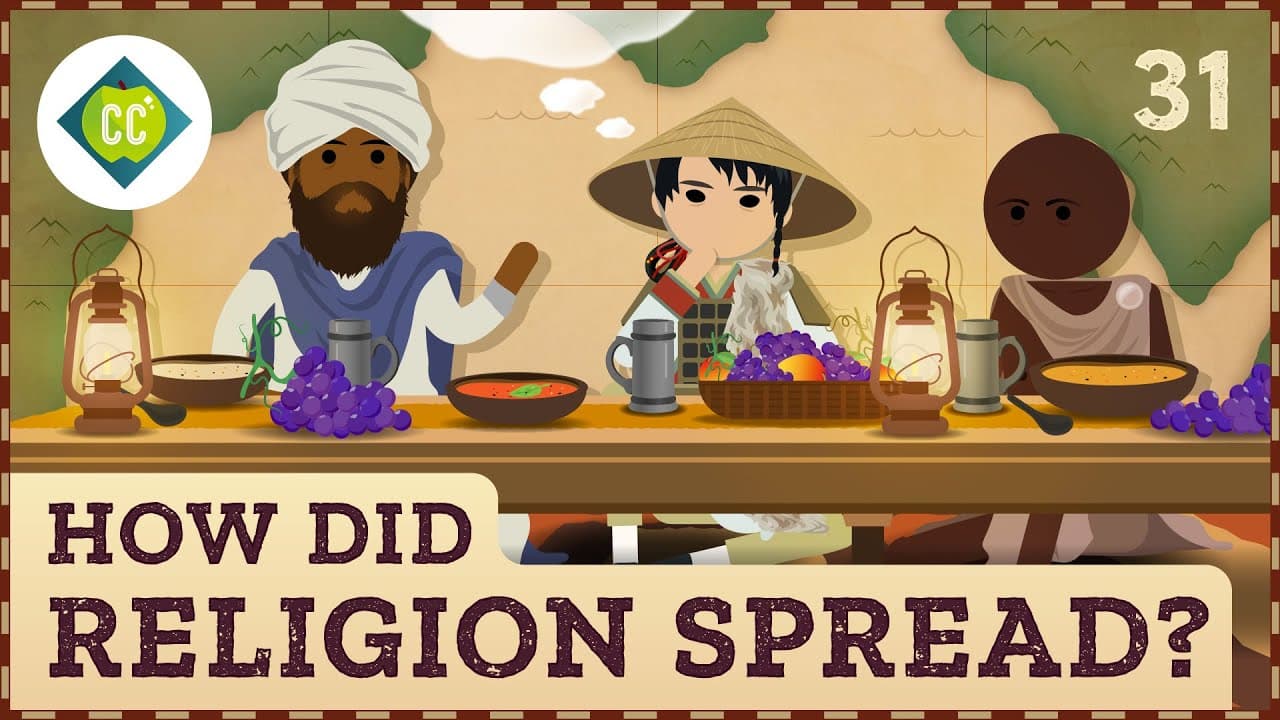
Religion spread along the Silk Roads through a network of trade routes that facilitated cultural exchange over 1,600 years. As traders interacted, they shared ideas and beliefs, leading to the diffusion of major religions like Buddhism, Islam, and Hinduism. Economic factors and the movement of people played a significant role in shaping these religious exchanges.
Transcript
Around 45 BCE, silk was introduced to Rome. Depending on what route you take, this luxurious fabric travelled over 6400 kilometers on its way from China and likely would’ve changed many hands. It wasn’t long before spices, produce, and other cloth was moving east to west, south to north, and everywhere in between all over Asia, the Medite... Read More
Key Insights
- 👋 The Silk Roads were an extensive network of trade routes that connected various regions, facilitating the exchange of goods, ideas, and cultural beliefs.
- 🎮 The routes of the Silk Roads were influenced by the political control and economic considerations of different empires and traders.
- 💡 Along the Silk Roads, traders shared their cultural practices, stories, and worldviews, contributing to the diffusion of ideas and beliefs.
- 🖐️ Maps played a significant role in guiding traders along the Silk Roads and revealing the worldview of the cartographers.
- ❓ Religions like Buddhism, Islam, and Hinduism spread along the Silk Roads, contributing to the diversity of religious beliefs in different regions.
- 🥇 Ethnic religions, such as animist traditions, were closely tied to specific cultures and places along the Silk Roads.
- ❓ Universal religions, like Christianity, Judaism, and Islam, spread easily and did not require specific ethnic affiliations for full participation.
Install to Summarize YouTube Videos and Get Transcripts
Explore YouTube Video Summarizer or Get YouTube Transcript Extractor
Questions & Answers
Q: What were the Silk Roads?
The Silk Roads were a network of trade routes stretching over 6400 kilometers, connecting Asia, the Mediterranean, and North Africa. They facilitated the exchange of goods and ideas between different regions.
Q: How did the Silk Roads influence the spread of religious beliefs?
The Silk Roads provided a platform for the diffusion of religious beliefs as traders from various regions interacted and shared their cultural practices. This led to the spread of religions such as Buddhism, Islam, and Hinduism along the trade routes.
Q: What role did maps play in the Silk Roads?
Maps, like Claudius Ptolemy's and Muhammad al-Idrisi's, helped cartographers depict the world and reveal their worldview. Maps also played a crucial role in guiding traders along the Silk Roads and facilitating cultural exchange.
Q: How did the Silk Roads impact cultural identities?
The Silk Roads influenced cultural identities by allowing the diffusion of beliefs, traditions, and practices. People along the trade routes would pick and choose elements from different cultures, leading to the development of syncretic religions and the blending of cultural traits.
Summary & Key Takeaways
-
Silk was introduced to Rome around 45 BCE through the Silk Roads, which were a vast network of trade routes spanning over 6400 kilometers.
-
The Silk Roads facilitated the movement of various goods, including spices, produce, and cloth, across Asia, the Mediterranean, and North Africa.
-
The Silk Roads played a crucial role in the diffusion of ideas, such as religious beliefs and worldviews, as traders interacted and shared their knowledge along the routes.
Read in Other Languages (beta)
Share This Summary 📚
Summarize YouTube Videos and Get Video Transcripts with 1-Click
Try YouTube Summary with ChatGPT & Claude or YouTube Transcript Generator
Explore More Summaries from CrashCourse 📚






Summarize YouTube Videos and Get Video Transcripts with 1-Click
Try YouTube Summary with ChatGPT & Claude or YouTube Transcript Generator