Products
Features
YouTube Video Summarizer
Summarize YouTube videos
Web & PDF Highlighter
Highlight web pages & PDFs
Chat with PDF
Ask any PDF questions with AI
Ask AI Clone
Chat with your highlights & memories
Audio Transcriber
Transcribe audio files to text
Glasp Reader
Read and highlight articles
Kindle Highlight Export
Export your Kindle highlights
Idea Hatch
Hatch ideas from your highlights
Integrations
Obsidian Plugin
Notion Integration
Pocket Integration
Instapaper Integration
Medium Integration
Readwise Integration
Snipd Integration
Hypothesis Integration
Apps & Extensions
Chrome Extension
Safari Extension
Edge Add-ons
Firefox Add-ons
iOS App
Android App
Discover
Discover
Ideas
Discover new ideas and insights
Articles
Curated articles and insights
Books
Book recommendations by great minds
Posts
Essays and notes from readers
Quotes
Inspiring quotes collection
Videos
Curated videos and summaries
Explore Glasp
Glasp Newsletter
Weekly insights and updates
Glasp Talk
Interview series with great minds
Glasp Blog
Latest news and articles
Glasp Use Cases
Learn how others use Glasp
Build & Support
Glasp API
Access Glasp's API for developers
MCP Connector
Connect Glasp to Claude & ChatGPT
Community
Glasp Reddit Community
Students
Student discount and benefits
FAQs
Frequently Asked Questions
AboutPricing
DashboardLog inSign up

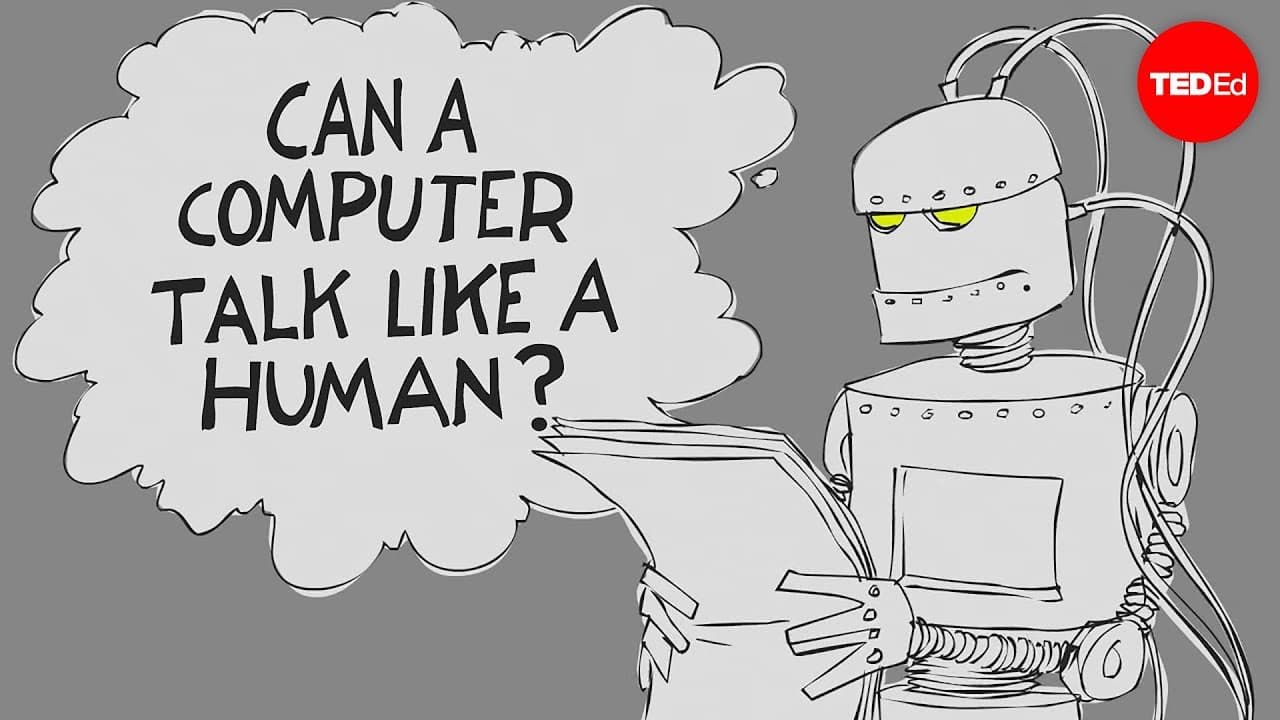
What Is the Turing Test and Can Computers Pass It?
1.6M views
•
April 25, 2016
by
TED-Ed
YouTube video player
What Is the Turing Test and Can Computers Pass It?

TL;DR

The Turing Test evaluates a computer's ability to engage in a conversation indistinguishable from a human's. Early chatbots like ELIZA and PARRY demonstrated limited success by mimicking human responses, but modern AI chatbots still struggle with complex language and context. Despite advancements, true conversational understanding remains elusive for machines.

Transcript

What is consciousness? Can an artificial machine really think? Does the mind just consist of neurons in the brain, or is there some intangible spark at its core? For many, these have been vital considerations for the future of artificial intelligence. But British computer scientist Alan Turing decided to disregard all these questions in favor of a ... Read More

Key Insights

  • 🛰️ Alan Turing's Turing Test measures artificial intelligence based on conversational abilities.
  • 👯 Early chatbots like ELIZA and PARRY successfully fooled people by imitating human characteristics.
  • 🏆 Chatbot competitions like the Loebner Prize have made the test more formal but have not significantly advanced genuine conversational abilities.

Install to Summarize YouTube Videos and Get Transcripts

Explore YouTube Video Summarizer or Get YouTube Transcript Extractor

Questions & Answers

Q: What is the Turing Test?

The Turing Test is a measure of artificial intelligence that tests a computer's ability to engage in a conversation that cannot be easily distinguished from a human's.

Q: How did early chatbots like ELIZA and PARRY trick people?

ELIZA deceived people by imitating a psychologist and encouraging them to talk more, while PARRY imitated a paranoid schizophrenic and steered conversations back to its preprogrammed obsessions.

Q: How have chatbot competitions improved the Turing Test?

Competitions like the Loebner Prize have made the test more formal, with judges knowing that some conversation partners are machines. However, many chatbots still rely on strategies to fool judges rather than genuine intelligence.

Q: What challenges do modern chatbots face?

Modern chatbots like Cleverbot use statistical analysis and stored memories to generate responses, but they struggle with maintaining a consistent personality and dealing with brand new topics.

Summary & Key Takeaways

  • The Turing Test evaluates whether a computer can engage in a conversation like a human.

  • Early programs like ELIZA and PARRY succeeded in fooling people by mimicking a psychologist and a paranoid schizophrenic.

  • Modern chatbots, like Cleverbot, use statistical analysis and stored memories to generate responses, but still struggle with human-like conversation.


Read in Other Languages (beta)

English

Share This Summary 📚

Summarize YouTube Videos and Get Video Transcripts with 1-Click

Download browser extensions on:

Try YouTube Summary with ChatGPT & Claude or YouTube Transcript Generator

Explore More Summaries from TED-Ed 📚

The benefits of a good night's sleep - Shai Marcu thumbnail
The benefits of a good night's sleep - Shai Marcu
TED-Ed
A brief history of alcohol - Rod Phillips thumbnail
A brief history of alcohol - Rod Phillips
TED-Ed
Why do competitors open their stores next to one another? - Jac de Haan thumbnail
Why do competitors open their stores next to one another? - Jac de Haan
TED-Ed
How does money laundering work? - Delena D. Spann thumbnail
How does money laundering work? - Delena D. Spann
TED-Ed
Where did Russia come from? - Alex Gendler thumbnail
Where did Russia come from? - Alex Gendler
TED-Ed
The Egyptian Book of the Dead: A guidebook for the underworld - Tejal Gala thumbnail
The Egyptian Book of the Dead: A guidebook for the underworld - Tejal Gala
TED-Ed

Summarize YouTube Videos and Get Video Transcripts with 1-Click

Download browser extensions on:

Try YouTube Summary with ChatGPT & Claude or YouTube Transcript Generator

Apps & Extensions

  • Chrome Extension
  • Safari Extension
  • Edge Add-ons
  • Firefox Add-ons
  • iOS App
  • Android App

Key Features

  • YouTube Video Summarizer
  • Web & PDF Summarizer
  • Web & PDF Highlighter
  • Chat with PDF
  • Ask AI Clone
  • Audio Transcriber
  • Glasp Reader
  • Kindle Highlight Export
  • Idea Hatch

Integrations

  • Obsidian Plugin
  • Notion Integration
  • Pocket Integration
  • Instapaper Integration
  • Medium Integration
  • Readwise Integration
  • Snipd Integration
  • Hypothesis Integration

More Features

  • APIs
  • MCP Connector
  • Blog & Post
  • Embed Links
  • Image Highlight
  • Personality Test
  • Quote Shots

Company

  • About us
  • Blog
  • Community
  • FAQs
  • Job Board
  • Newsletter
  • Pricing
Terms

•

Privacy

•

Guidelines

© 2026 Glasp Inc. All rights reserved.