When Did the Roman Empire Truly Fall?
TL;DR
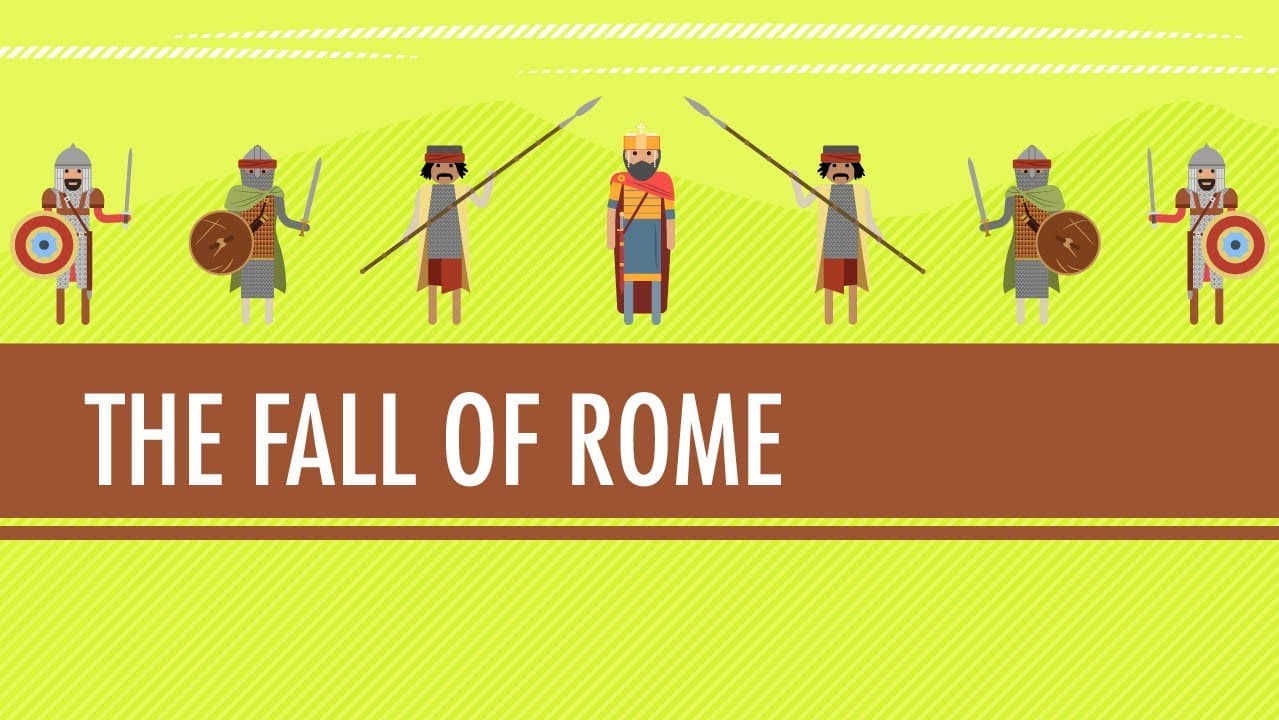
The Roman Empire's fall is often marked by the sack of Rome in 476 CE, but its eastern half, known as the Byzantine Empire, persisted until the 15th century. Key figures like Emperor Justinian played crucial roles in maintaining Roman law and culture, demonstrating that Rome's influence extended far beyond its traditional end date.
Transcript
Hi there, my name’s John Green; this is Crash Course: World History, and today we’re going to talk about the fall of Rome. Mr. Green, Mr. Green, Mr. Green! Who’s that pretty lady? That lady, me-from-the-past, is Emperor Justinian. We’ll get to him in a minute. [Theme Music] How and when Rome fell remains the subject of considerable historical debat... Read More
Key Insights
- The fall of Rome is traditionally marked by the sack of the city in 476 CE by barbarians.
- Emperor Justinian played a significant role in codifying Roman law, which influenced European legal systems for centuries.
- The Byzantine Empire, or Eastern Roman Empire, continued Roman traditions until the 15th century.
- The Eastern Empire was wealthier and more urbanized than the Western Empire, aiding its longevity.
- The split between Catholic and Orthodox Christianity was partly due to political and doctrinal differences.
- The Byzantine Empire maintained Roman cultural and legal traditions, despite speaking Greek rather than Latin.
- Theodora, Justinian's wife, was influential in expanding women's rights and stabilizing his reign.
- The Byzantine Empire's capital, Constantinople, was a major cultural and economic hub in the medieval world.
Install to Summarize YouTube Videos and Get Transcripts
Explore YouTube Video Summarizer or Get YouTube Transcript Extractor
Questions & Answers
Q: When did the Roman Empire officially fall?
While the traditional date for the fall of the Roman Empire is 476 CE when Rome was sacked by barbarians, the Eastern Roman Empire, known as the Byzantine Empire, continued to thrive for another thousand years. This continuation suggests that the Roman Empire's influence and legacy persisted well beyond the fall of its western half.
Q: Who was Emperor Justinian and what was his significance?
Emperor Justinian was a Byzantine ruler known for his efforts to restore the Roman Empire's former glory. He is particularly famous for codifying Roman law, which became a foundational element of European legal systems. Justinian also commissioned the construction of the Hagia Sophia, a symbol of Byzantine architectural achievement.
Q: What role did Theodora play in the Byzantine Empire?
Theodora, the wife of Emperor Justinian, was a former actress and a significant political figure. She played a crucial role in stabilizing Justinian's reign by advising him during crises and advocating for women's rights, such as property ownership and protection from execution for adultery.
Q: How did the Byzantine Empire maintain Roman traditions?
The Byzantine Empire maintained Roman traditions through its legal system, architecture, and cultural practices. Despite speaking Greek, the Byzantines considered themselves Romans and continued to uphold Roman law, as seen in Justinian's codification efforts. They also preserved Roman architectural styles, evident in structures like the Hagia Sophia.
Q: What were the main differences between the Catholic and Orthodox Churches?
The Catholic and Orthodox Churches differed in both doctrinal and political aspects. Doctrinally, they disagreed on issues like the dating of Easter. Politically, the Catholic Church was led by the Pope, who held significant religious authority, while the Orthodox Church's Patriarch was appointed by the Byzantine Emperor, reflecting a closer church-state relationship.
Q: Why was Constantinople significant in the Byzantine Empire?
Constantinople, the capital of the Byzantine Empire, was a major cultural and economic hub due to its strategic location on the Bosporus Strait. It served as a center of trade, wealth, and power, contributing to the empire's longevity. The city's defenses and wealth made it a formidable stronghold in the medieval world.
Q: How did the Byzantine Empire influence modern legal systems?
The Byzantine Empire's influence on modern legal systems is largely due to Justinian's codification of Roman law. This legal code, known as the Justinian Code, laid the foundation for many European legal systems, emphasizing the importance of laws over individual rulers and shaping legal thought for centuries.
Q: What factors contributed to the Byzantine Empire's longevity?
The Byzantine Empire's longevity can be attributed to its strategic location, wealth, and urbanization. Its capital, Constantinople, was a major trade hub, and the empire's compact size made it easier to defend and administer. Additionally, the Byzantines maintained Roman legal and cultural traditions, providing stability and continuity.
Summary & Key Takeaways
-
The Roman Empire's fall is often associated with the sack of Rome in 476 CE, but the Eastern Roman Empire, known as the Byzantine Empire, continued for another millennium. The Byzantine Empire maintained Roman traditions and law, exemplified by Emperor Justinian's codification efforts. Despite differences in language and culture, the Byzantines considered themselves Romans.
-
The Byzantine Empire's capital, Constantinople, became a major center of wealth and power, contrasting with the declining Western Roman Empire. The Eastern Empire's strategic location allowed it to engage with powerful neighbors like the Persian Empires, contributing to its prolonged existence.
-
The split between the Catholic and Orthodox Churches highlights the political and doctrinal differences that emerged as the Roman Empire transitioned into its Byzantine phase. The Byzantine Empire's influence persisted in legal systems and cultural perceptions of East and West.
Read in Other Languages (beta)
Share This Summary 📚
Summarize YouTube Videos and Get Video Transcripts with 1-Click
Try YouTube Summary with ChatGPT & Claude or YouTube Transcript Generator
Explore More Summaries from CrashCourse 📚




Summarize YouTube Videos and Get Video Transcripts with 1-Click
Try YouTube Summary with ChatGPT & Claude or YouTube Transcript Generator