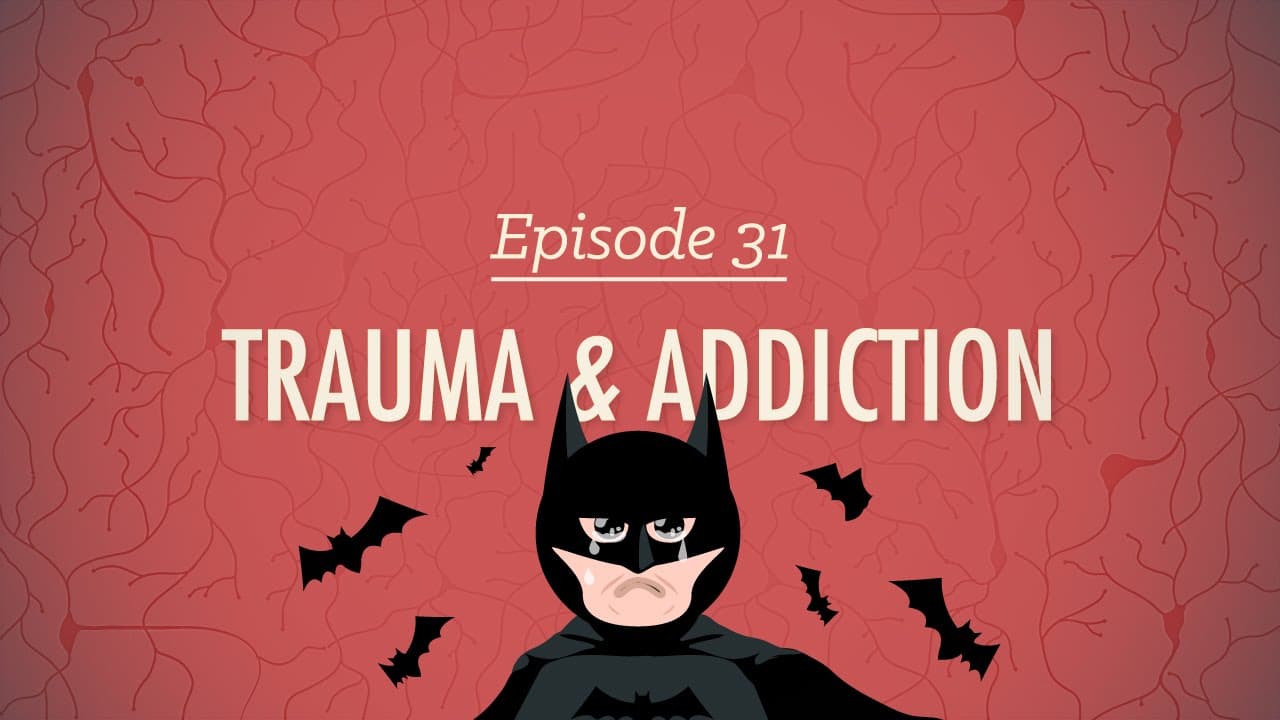
How Are Trauma, PTSD, and Addiction Connected? | Crash Course Psychology #31
TL;DR
Trauma can lead to PTSD when reactions such as flashbacks, avoidance, anxiety, and guilt persist and disrupt daily functioning, while addiction may develop as an attempt to cope with that distress. PTSD symptoms fall into four major clusters, and more than 2 in 10 veterans with PTSD also struggle with substance abuse. Recovery may require addressing both conditions, while post-traumatic growth shows that positive change is possible. Read on to understand the symptoms, risks, and treatment approach.
Transcript
All right, so you might have read "The Hobbit" or "The Lord of the Rings," you have probably seen them, you've definitely heard of them. But not everyone knows the story of their author, J.R.R. Tolkien. Tolkien was an English World War One veteran. A reluctant solider, he joined up with a sense of duty and he lived through the bloody battle of Somm... Read More
Key Insights
- PTSD is a psychological disorder resulting from experiencing or witnessing a traumatic event.
- Symptoms of PTSD include intrusive memories, avoidance, physiological arousal, and negative emotional changes.
- Addiction can develop as a coping mechanism for trauma, often requiring dual diagnosis treatment.
- PTSD and addiction are interconnected, with many veterans experiencing both conditions.
- Trauma can affect the brain, potentially damaging the hippocampus and affecting memory consolidation.
- Post-traumatic growth is a positive psychological change resulting from struggling with challenging circumstances.
- Addiction is defined as compulsive, excessive, and difficult-to-control substance use or behavior.
- Dual Diagnosis Model treats both addiction and underlying psychological issues simultaneously.
Install to Summarize YouTube Videos and Get Transcripts
Explore YouTube Video Summarizer or Get YouTube Transcript Extractor
Questions & Answers
Q: How does trauma lead to PTSD and addiction?
Trauma can lead to PTSD when stress reactions persist and begin interfering with a person’s ability to function. Someone who feels desperate for relief may turn to substance use as a coping strategy, allowing PTSD and addiction to reinforce one another.
Q: What are the four major symptom clusters of PTSD?
The four clusters are re-experiencing the trauma through intrusive memories, nightmares, or flashbacks; avoiding associated situations; excessive physiological arousal; and pervasive negative changes in emotions and beliefs. Arousal can include anxiety, irritability, sleep problems, heart pounding, muscle tension, and difficulty concentrating.
Q: How is PTSD defined?
PTSD is a psychological disorder generated by witnessing or experiencing a traumatic event. It may be diagnosed when symptoms such as nightmares, flashbacks, avoidance, fear, guilt, anxiety, rage, and insomnia persist and interfere with functioning.
Q: How common are PTSD and substance abuse together among veterans?
According to the US Department of Veterans Affairs figures cited in the transcript, more than 2 in 10 veterans with PTSD also struggle with substance abuse problems. It also states that 1 in every 3 veterans seeking substance abuse treatment has PTSD.
Q: Why can PTSD and addiction be difficult to treat separately?
Addiction and trauma can go hand in hand because substance use may become a way of managing untreated psychological distress. The Dual Diagnosis Model therefore addresses addiction and underlying issues such as PTSD simultaneously.
Q: Why do some trauma survivors develop PTSD while others do not?
The risk factors are complicated, and the transcript notes that genetic predispositions may make some people more vulnerable than others. Most people show some stress-related behavior after trauma, but these symptoms usually fade rather than developing into a lasting disorder.
Q: What is moral injury in relation to PTSD?
Moral injury broadens the understanding of PTSD beyond fear conditioning and memories of personal danger. It can involve distress over what someone did or did not do to others, as illustrated by the combat drone operator who developed intrusive memories, nightmares, depression, anxiety, and substance abuse without fearing for his own safety.
Q: What is post-traumatic growth?
Post-traumatic growth is positive psychological change that can emerge from struggling with trauma or a major life crisis. J.R.R. Tolkien’s turn to fiction after his World War One experiences illustrates how trauma can be shaped into meaningful work while a person reclaims a healthy and happy life.
Summary & Key Takeaways
-
PTSD is a disorder caused by traumatic events, with symptoms like intrusive memories and avoidance. It can lead to addiction as a coping mechanism. Dual diagnosis treatment addresses both PTSD and addiction, recognizing their interconnected nature. Positive change, or post-traumatic growth, is possible with support.
-
The brain's limbic system plays a role in PTSD, flooding the body with stress hormones during traumatic memories. Neuroimaging suggests trauma may shrink the hippocampus, affecting memory storage. Understanding these mechanisms helps in developing effective treatments for PTSD and related conditions.
-
Addiction involves compulsive substance use or behavior that interferes with daily life. It can be a reaction to stress and psychological problems, often requiring dual treatment with underlying issues like PTSD. Recovery approaches vary, with some needing complete abstinence and others regaining control over time.
Read in Other Languages (beta)
Share This Summary 📚
Summarize YouTube Videos and Get Video Transcripts with 1-Click
Try YouTube Summary with ChatGPT & Claude or YouTube Transcript Generator
Explore More Summaries from CrashCourse 📚



Summarize YouTube Videos and Get Video Transcripts with 1-Click
Try YouTube Summary with ChatGPT & Claude or YouTube Transcript Generator