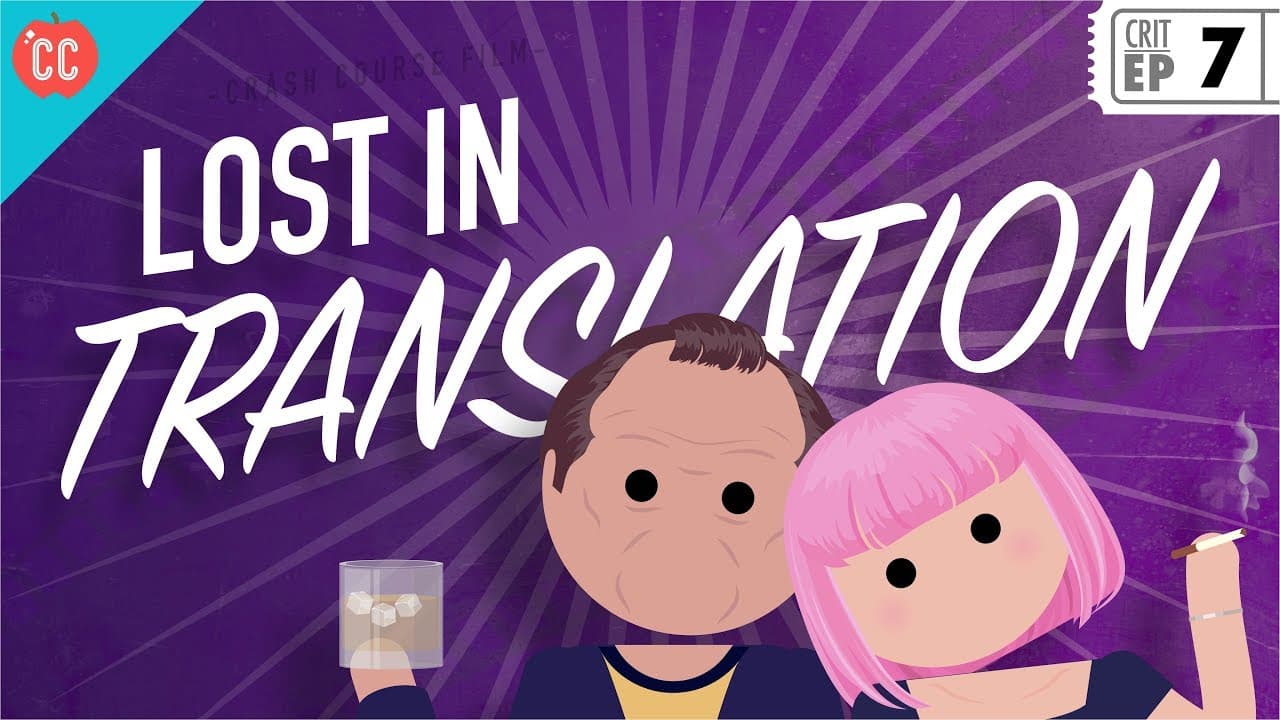
Lost in Translation: Crash Course Film Criticism #7
TL;DR
Explores the depth and critique in Lost in Translation.
Transcript
Movies come in all shapes and sizes. Some are big and loud and thrilling, while others are small, finely crafted gems. And there are few love stories as soft-spoken and full of soul as Sofia Coppola’s Lost in Translation. It’s a movie that sneaks up on you, using artistry that feels so natural that the precision of its craft is only clear if you th... Read More
Key Insights
- Lost in Translation is a nuanced film that subtly critiques modern consumer culture and explores authentic portrayals of a woman's perspective.
- Sofia Coppola's direction in Lost in Translation expands her scope while focusing on two central characters, Charlotte and Bob, exploring their personal struggles and connections.
- The film uses Tokyo's vibrant backdrop to highlight the alienation and excess faced by the characters, reflecting on global capitalism's impact on personal satisfaction.
- Charlotte and Bob's relationship is characterized by emotional depth and platonic intimacy, avoiding typical romantic tropes and focusing on genuine connection.
- Lost in Translation critiques global capitalism by portraying characters overwhelmed by excess and finding meaning in absence and spontaneity.
- Coppola's film employs cultural stereotypes for comedic effect, raising questions about the representation of Japanese culture and the reinforcement of stereotypes.
- Through a feminist lens, the film challenges traditional Hollywood presentations of women, offering a complex portrayal of Charlotte beyond the male gaze.
- Sofia Coppola's direction invites viewers to question their complicity in cinematic tropes, using familiar aesthetics to subvert expectations and offer deeper insights.
Install to Summarize YouTube Videos and Get Transcripts
Explore YouTube Video Summarizer or Get YouTube Transcript Extractor
Questions & Answers
Q: How does Lost in Translation critique modern consumer culture?
Lost in Translation critiques modern consumer culture by portraying the characters' alienation and dissatisfaction amidst the vibrant excess of Tokyo. The film suggests that the desire for excessive experiences and material goods is a product of global capitalism, which leaves individuals unsatisfied. Charlotte and Bob find meaning in absence and spontaneity, rejecting the never-ending quest for material satisfaction.
Q: What makes the relationship between Charlotte and Bob unique in the film?
The relationship between Charlotte and Bob in Lost in Translation is unique because it focuses on emotional depth and platonic intimacy, avoiding typical romantic tropes. Their connection is characterized by genuine understanding and support, without crossing into a physical affair. This portrayal emphasizes the importance of emotional bonds and challenges conventional depictions of romance in cinema.
Q: How does Sofia Coppola's direction challenge traditional Hollywood presentations of women?
Sofia Coppola's direction in Lost in Translation challenges traditional Hollywood presentations of women by offering a complex portrayal of Charlotte that goes beyond the male gaze. The film uses familiar aesthetics to subvert expectations, inviting viewers to question their complicity in cinematic tropes. Charlotte's character is depicted as a whole, complex human, emphasizing emotional depth and authenticity over objectification.
Q: What role does Tokyo play in the film's narrative?
Tokyo plays a significant role in Lost in Translation's narrative by serving as a vibrant and overwhelming backdrop that reflects the characters' alienation and excess. The city's bustling environment contrasts with Charlotte and Bob's personal struggles, highlighting their search for meaning amidst the chaos. This setting underscores the film's critique of global capitalism and the impact of consumer culture on personal satisfaction.
Q: In what ways does the film subvert romantic comedy tropes?
Lost in Translation subverts romantic comedy tropes by focusing on emotional depth and genuine connection rather than physical romance. The film avoids typical romantic plot points, such as consummation or a happily-ever-after ending, instead emphasizing the characters' emotional journeys and the significance of their platonic bond. This approach challenges conventional depictions of romance in cinema, offering a more nuanced portrayal of relationships.
Q: How does the film address cultural stereotypes?
Lost in Translation addresses cultural stereotypes by using them for comedic effect, particularly in its portrayal of Japanese culture. The film relies on certain caricatures and stereotypes, such as the call girl with broken English, raising questions about the representation of Japanese people and culture. This aspect of the film has been critiqued for reinforcing stereotypes and using Japan as a backdrop without fully engaging with its cultural complexities.
Q: What is the significance of the film's ending?
The ending of Lost in Translation is significant because it emphasizes the emotional bond between Charlotte and Bob without providing a definitive resolution. Bob's whispered message to Charlotte remains unheard by the audience, symbolizing the film's focus on absence and the unspoken depth of their connection. This bittersweet conclusion highlights the enduring impact of their relationship and the complexity of their emotional journey.
Q: How does the film explore the theme of alienation?
Lost in Translation explores the theme of alienation through its portrayal of Charlotte and Bob's experiences in Tokyo. Both characters feel disconnected from their surroundings and relationships, highlighted by the vibrant excess of the city. The film emphasizes their search for meaning and connection amidst this alienation, ultimately finding solace in their emotional bond and the quiet moments they share away from the chaos.
Summary & Key Takeaways
-
Lost in Translation, directed by Sofia Coppola, explores the nuanced relationship between two characters, Charlotte and Bob, set against the vibrant backdrop of Tokyo. Through its subtle critique of modern consumer culture and its authentic portrayal of a woman's perspective, the film offers a unique take on romantic comedy, focusing on emotional depth and genuine connection.
-
The film critiques global capitalism by highlighting the alienation and excess faced by the characters, who find meaning in absence and spontaneity. Coppola's use of Tokyo's bustling environment contrasts with the characters' personal struggles, reflecting on the impact of consumerism on personal satisfaction and the search for authentic connections.
-
Through a feminist lens, Lost in Translation challenges traditional Hollywood presentations of women, offering a complex portrayal of Charlotte beyond the male gaze. Coppola's direction invites viewers to question their complicity in cinematic tropes, using familiar aesthetics to subvert expectations and offer deeper insights into the characters' emotional journeys.
Read in Other Languages (beta)
Share This Summary 📚
Summarize YouTube Videos and Get Video Transcripts with 1-Click
Try YouTube Summary with ChatGPT & Claude or YouTube Transcript Generator
Explore More Summaries from CrashCourse 📚





Summarize YouTube Videos and Get Video Transcripts with 1-Click
Try YouTube Summary with ChatGPT & Claude or YouTube Transcript Generator