What Did Democracy Mean in Ancient Athens?
TL;DR
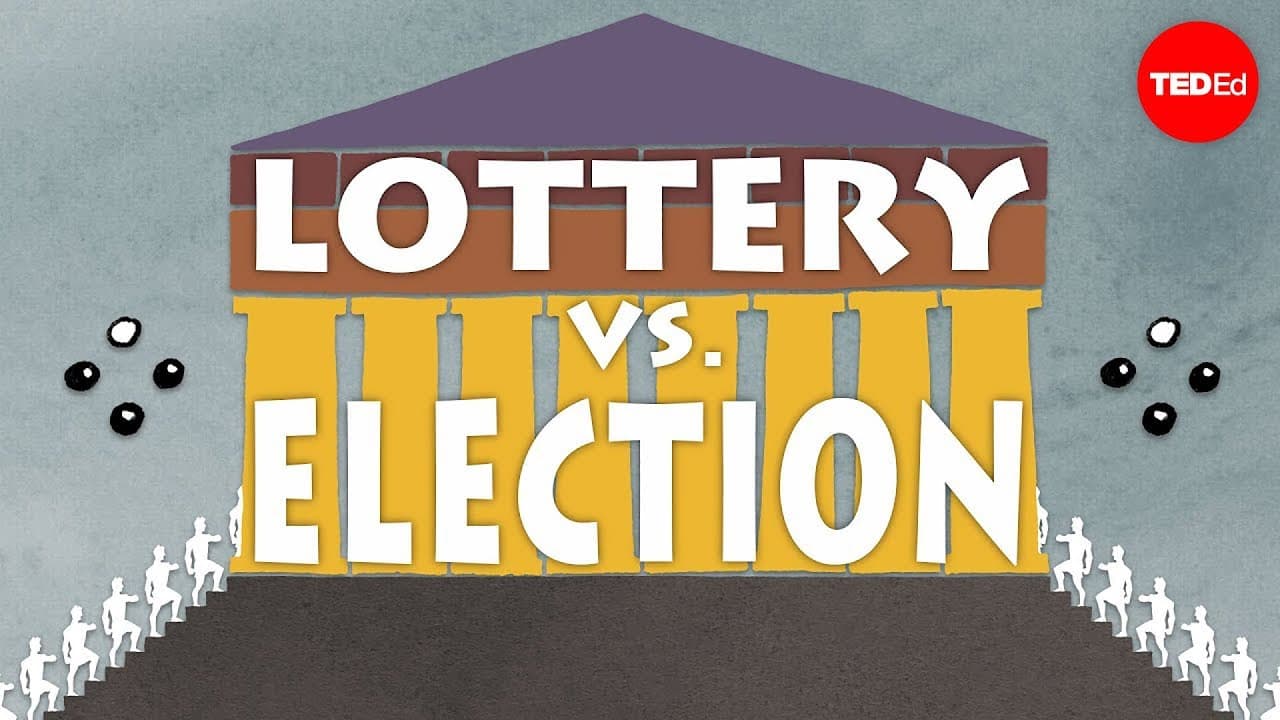
In ancient Athens, democracy primarily involved sortition, where most government positions were filled by random selection rather than elections. This system allowed all eligible citizens to participate directly in governance, promoting higher participation and preventing the emergence of political elites. Despite its limitations, it set foundational principles for modern democratic practices.
Transcript
Hey, congratulations! You've just won the lottery, only the prize isn't cash or a luxury cruise. It's a position in your country's national legislature. And you aren't the only lucky winner. All of your fellow lawmakers were chosen in the same way. This might strike you as a strange way to run a government, let alone a democracy. Elections are the... Read More
Key Insights
- 🖐️ Elections played a small role in ancient Athenian democracy, with most positions filled by random lottery, promoting wide participation.
- 🥳 Sortition was used to prevent the formation of governing classes or political parties, as well as to ensure term limits.
- 🧔♀️ Athenian democracy had limitations, excluding women, slaves, and foreigners from full citizenship.
- ⚖️ Modern democracies often combine elements of sortition and elections to strike a balance between wide participation and expertise.
- 😀 Wealth influence and the emergence of professional politicians are challenges faced by modern democracies.
- 🥺 Reviving election by lottery could lead to more diverse and representative legislatures, but the question of expertise remains.
- ❓ Sortition principles still survive today in examples like juries, citizens' assemblies, and deliberative polls.
Install to Summarize YouTube Videos and Get Transcripts
Explore YouTube Video Summarizer or Get YouTube Transcript Extractor
Questions & Answers
Q: How did the ancient Athenian democracy differ from modern representative democracies?
Unlike modern democracies where voters elect leaders, Athens practiced direct democracy, with most offices filled by random lottery from a pool of citizen volunteers. Any eligible citizen could participate in general assembly meetings.
Q: How did the Athenian system ensure effective governance with a large number of citizens participating?
While any citizen could address the assembly, propose a law, or bring a public lawsuit, a 500-member governing council called the Boule set the agenda and evaluated proposals. Jurors and magistrates also handled legal matters.
Q: Why were only certain positions filled by election in ancient Athens?
Positions requiring expertise, such as generals, were recognized as aristocratic rule and filled by election. Most other government positions were filled by random selection, as it was believed that civic participation was the duty of all citizens.
Q: Why did ancient philosophers like Plato criticize Athenian democracy?
Ancient philosophers like Plato viewed Athenian democracy as anarchic and run by fools. They believed that governance should be left to a select group of knowledgeable individuals rather than the general population.
Summary & Key Takeaways
-
Ancient Athens practiced direct democracy, with most government positions filled by random lottery from a pool of citizen volunteers.
-
Elections played a small role, and the principle of ho boulomenos allowed any eligible citizen to participate in general assembly meetings.
-
The Athenian system included a governing council, jurors, and magistrates, all selected by lot, except for positions requiring expertise.
Read in Other Languages (beta)
Share This Summary 📚
Summarize YouTube Videos and Get Video Transcripts with 1-Click
Try YouTube Summary with ChatGPT & Claude or YouTube Transcript Generator
Explore More Summaries from TED-Ed 📚





Summarize YouTube Videos and Get Video Transcripts with 1-Click
Try YouTube Summary with ChatGPT & Claude or YouTube Transcript Generator