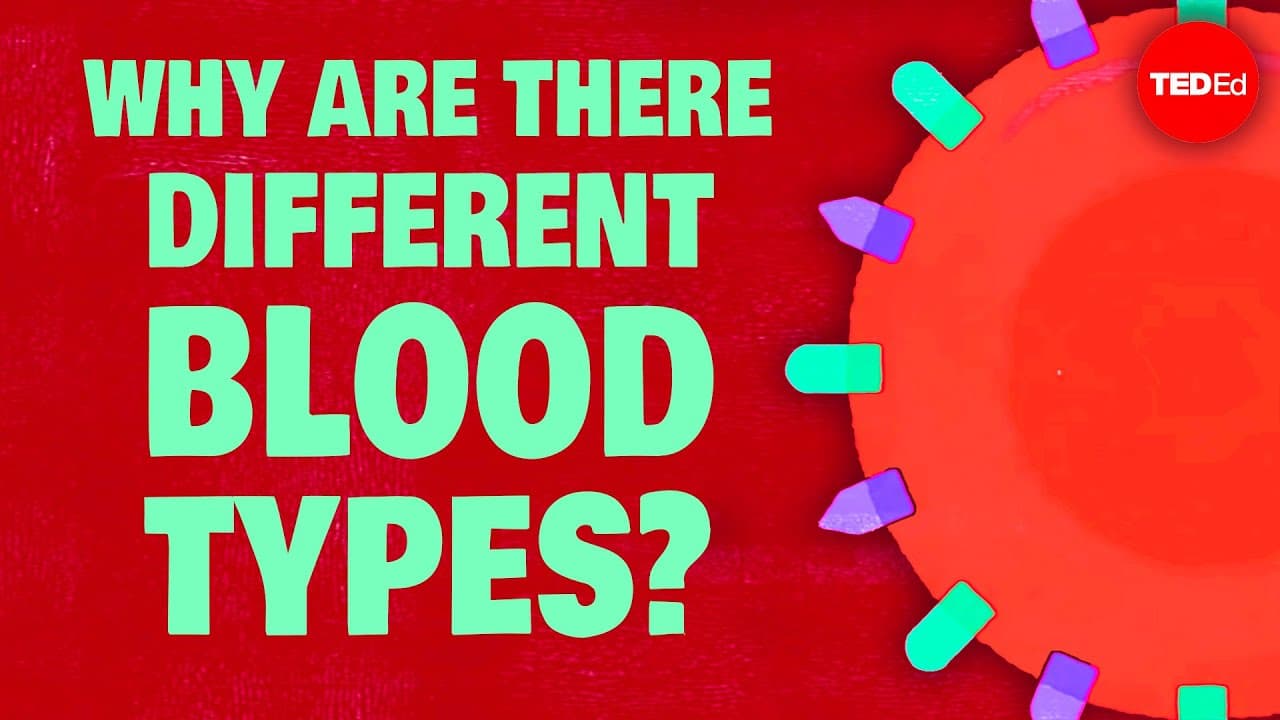
Why do blood types matter? - Natalie S. Hodge
TL;DR
Blood types are crucial for health because they determine compatibility in blood transfusions, preventing potentially life-threatening immune reactions. Mismatched blood types can cause the body to attack donated blood, leading to complications, while type O individuals are universal donors and type AB are universal recipients. Understanding blood types also helps predict pregnancy complications related to the Rh factor.
Transcript
It's often said that despite humanity's many conflicts, we all bleed the same blood. It's a nice thought but not quite accurate. In fact, our blood comes in a few different varieties. Our red blood cells contain a protein called hemoglobin that binds to oxygen, allowing the cells to transport it throughout the body. But they also have another kin... Read More
Key Insights
- 🅰️ Blood types are determined by inherited antigens coded by alleles from both parents.
- 🅰️ Matching blood types is critical for successful blood transfusions and avoiding immune reactions.
- 😄 The Rh factor can complicate transfusions and pregnancies due to D antigen incompatibility.
- 🆎 Blood type O individuals are universal donors, while type AB individuals are universal recipients.
- 🅰️ Understanding blood types is crucial for predicting potential complications during pregnancy.
- 🅰️ Human blood types are not linked to personality, as commonly believed in some cultures.
- 🅰️ Blood type diversity across human populations suggests a complex evolutionary history.
Install to Summarize YouTube Videos and Get Transcripts
Explore YouTube Video Summarizer or Get YouTube Transcript Extractor
Questions & Answers
Q: How are blood types determined and inherited?
Blood types are determined by inherited alleles that code for specific antigens on red blood cells. The combination of alleles inherited from both parents determines an individual's blood type.
Q: Why is it important to match blood types for transfusions?
Matching blood types for transfusions is crucial to prevent the recipient's immune system from rejecting the transfused blood, which can lead to serious complications such as blood clotting or immune reactions.
Q: What role does the Rh factor play in blood types?
The Rh factor refers to the presence or absence of the D antigen in the Rh blood group system. It can complicate blood transfusions and pregnancy, potentially leading to hemolytic disease of the newborn if there is a mismatch.
Q: How do blood types impact pregnancy?
Incompatibility between a mother's blood type and her fetus can lead to hemolytic disease of the newborn, where the mother's antibodies attack the baby's red blood cells, causing severe complications.
Summary
Our blood comes in different varieties due to the presence of antigens on red blood cells, which determine our blood type. These antigens are coded for by different alleles, with A and B being dominant and O being recessive. Blood types are important in blood transfusions, as mismatched blood types can cause clotting and rejection. Additionally, the Rh factor, which determines the presence or absence of the D antigen, can complicate transfusions and pregnancy. Blood types do not have a scientific basis for personality association, and the reasons for their evolution are still not fully understood.
Questions & Answers
Q: How do antigens on red blood cells determine our blood type?
Antigens on red blood cells serve as identifying markers that allow the immune system to recognize our body's cells without attacking them as foreign bodies. These antigens, known as A and B, communicate with white blood cells, which are immune cells that protect against infection. The presence or absence of these antigens determines our blood type.
Q: How do alleles determine our blood type?
Blood type is determined by alleles, which are varieties of a particular gene. The A and B alleles code for A and B antigens, respectively, while the O allele codes for neither antigen. Each individual has two alleles for blood type, inherited from each parent. When these alleles are different, one allele may override the other based on their relative dominance, resulting in different blood types.
Q: What happens if both alleles for blood type are the same?
If an individual inherits two alleles for blood type that are the same, the resulting codominance will produce both A and B antigens, leading to blood type AB. The A and B alleles are both dominant, so they override the O allele, which is recessive. Blood types A and B can also result from inheriting one dominant allele and one recessive O allele.
Q: Why is it important to know both parents' blood types?
Knowing both parents' blood types allows us to predict the relative probability of their children's blood types. This is crucial for blood transfusions, as mismatched blood types can lead to life-threatening complications. Understanding the parents' blood types helps in determining the potential blood type compatibility of their offspring.
Q: How do blood transfusions work with different blood types?
Blood transfusions must be carefully matched to the recipient's blood type. If someone with type A blood is given type B blood, or vice versa, their antibodies will reject the foreign antigens and attack them, potentially causing the transfused blood to clot. Type AB individuals, who produce both A and B antigens, can receive blood from any blood type without rejection. Type O individuals, who do not produce either A or B antigens, are considered universal donors but can only receive blood from type O donors.
Q: What is the Rh factor, and how does it complicate transfusions and pregnancy?
The Rh factor refers to the presence or absence of the D antigen in the Rh blood group system. If an individual is Rh+ (has the D antigen) and receives Rh- blood, their immune system may produce Rh antibodies that can attack the transfused blood. In pregnancy, if an Rh- mother carries an Rh+ child, her body may produce Rh antibodies that can cross the placenta and attack the fetus, leading to a condition called hemolytic disease of the newborn.
Q: Is blood type associated with personality?
No, there is no scientific basis for the belief that blood type is associated with personality. While some cultures believe in a connection between blood type and personality traits, this notion lacks scientific evidence.
Q: Why do blood types vary between human populations?
The reasons for the variation in blood types between human populations are still uncertain. One possibility is that different blood types evolved as protection against blood-borne diseases. Another explanation could be random genetic drift, where certain alleles became more or less common in different populations over time.
Q: How do different blood types in animals compare to human blood types?
Different species have different sets of antigens, resulting in varying blood types. In comparison to humans, apes share the four main blood types, but dogs have a much more extensive range of blood types, with thirteen types identified. Each species has its own unique blood type system and antigens.
Q: What are the implications of blood type variations in different species?
The variations in blood types among different species highlight the complexity and diversity of immune systems across the animal kingdom. Understanding these differences is crucial for conducting successful blood transfusions and medical treatments involving blood products in different animal species.
Takeaways
Our blood types are determined by the presence or absence of antigens on red blood cells. The A and B antigens, coded for by different alleles, determine our blood type. Blood types are crucial in blood transfusions, and mismatched blood types can be life-threatening. The Rh factor can complicate transfusions and pregnancy. Blood types do not have a scientific basis for personality association, and the reasons for their evolution are still not fully understood. Variations in blood types exist across different species, with dogs having a more extensive range compared to humans.
Summary & Key Takeaways
-
Human blood has different types (A, B, AB, O) determined by inherited antigens that interact to create unique blood types.
-
Understanding blood types is crucial for blood transfusions, as mismatched blood types can lead to serious health complications.
-
Blood types are inherited from parents and involve a complex genetic interplay of dominant and recessive alleles.
Read in Other Languages (beta)
Share This Summary 📚
Summarize YouTube Videos and Get Video Transcripts with 1-Click
Try YouTube Summary with ChatGPT & Claude or YouTube Transcript Generator
Explore More Summaries from TED-Ed 📚



Summarize YouTube Videos and Get Video Transcripts with 1-Click
Try YouTube Summary with ChatGPT & Claude or YouTube Transcript Generator