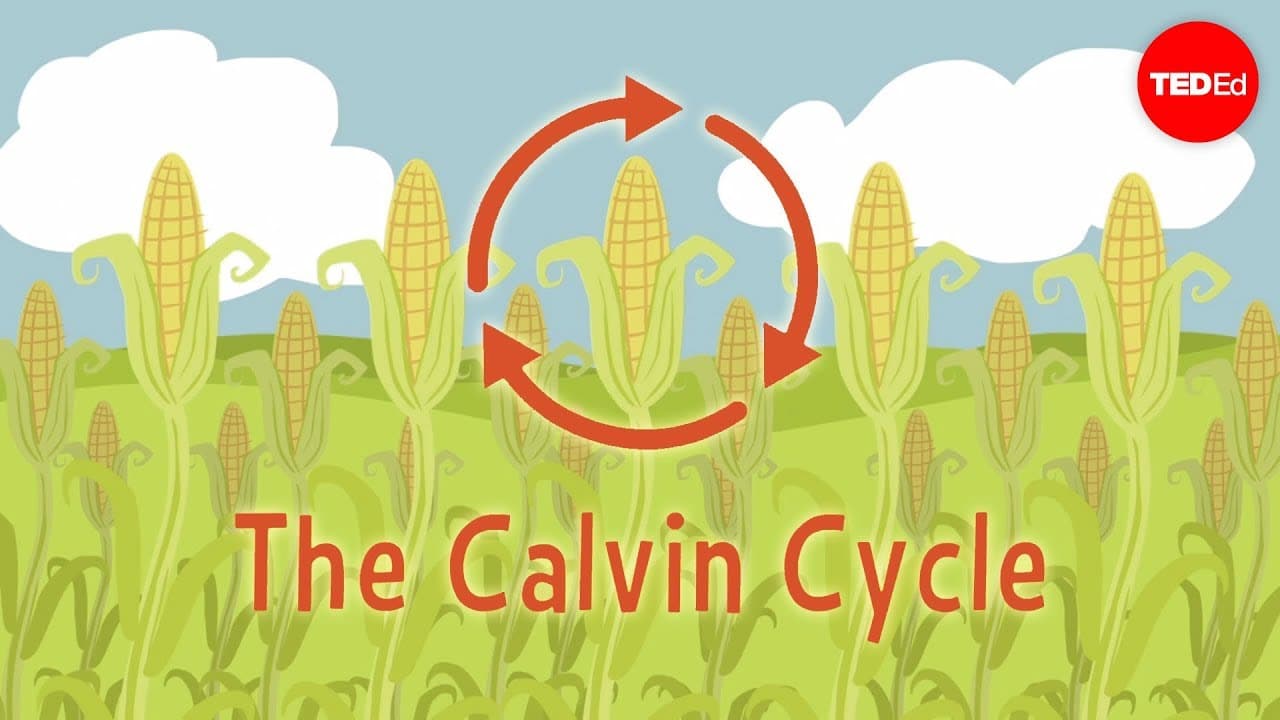
How Does the Calvin Cycle Convert CO2 into Glucose?
TL;DR
The Calvin cycle transforms carbon dioxide into glucose through a series of biochemical reactions. It uses ATP and NADPH to convert CO2 into glyceraldehyde 3 phosphates (G3Ps), which combine to form glucose while simultaneously regenerating ribulose bisphosphate (RuBP) to keep the cycle going efficiently.
Transcript
You're facing a giant bowl of energy packed Carbon Crunchies. One spoonful. Two. Three. Soon, you're powered up by the energy surge that comes from your meal. But how did that energy get into your bowl? Energy exists in the form of sugars made by the plant your cereal came from, like wheat or corn. As you can see, carbon is the chemical backbone, a... Read More
Key Insights
- 👱 Carbon dioxide from the air is converted into glucose through the process of photosynthesis, specifically the Calvin cycle.
- 😒 The Calvin cycle uses ATP and NADPH to convert carbon dioxide into glyceraldehyde 3 phosphates (G3Ps), which are then used to form glucose.
- 🏍️ The Calvin cycle operates through multiple parallel pathways to ensure the efficient regeneration of RuBPs and the production of glucose.
Install to Summarize YouTube Videos and Get Transcripts
Explore YouTube Video Summarizer or Get YouTube Transcript Extractor
Questions & Answers
Q: How does photosynthesis convert carbon dioxide into glucose?
Photosynthesis has two steps: ATP energy storage and the Calvin cycle. The Calvin cycle captures carbon dioxide and uses ATP energy and NADPH to convert it into glyceraldehyde 3 phosphates (G3Ps), which are then used to form glucose.
Q: What is the role of rubisco in the Calvin cycle?
Rubisco is an enzyme that initiates the Calvin cycle by combining one carbon atom from carbon dioxide with a five-carbon molecule called ribulose biphosphate (RuBP). This creates an initial six-carbon sequence, which is then split into two three-carbon molecules called phosphoglycerates (PGAs).
Q: How is ATP and NADPH used in the Calvin cycle?
ATP acts as a source of energy in the Calvin cycle, delivering energy to drive the chemical reactions. NADPH donates hydrogen atoms to the PGA molecules, converting them into molecules called glyceraldehyde 3 phosphates (G3Ps).
Q: How is the carbon cycle in the Calvin cycle sustainable?
While glucose is formed from G3P molecules, the original RuBPs needed to initiate the Calvin cycle are recreated by reusing materials within the cycle. The cycle operates with multiple parallel pathways, ensuring that the necessary carbon atoms are available for glucose production and RuBP regeneration.
Summary & Key Takeaways
-
Energy in cereal comes from sugars made by plants through photosynthesis, which converts CO2 into glucose.
-
Photosynthesis is divided into two steps: ATP energy storage and the Calvin cycle, which captures carbon and converts it into sugar.
-
The Calvin cycle uses carbon dioxide, ATP, and NADPH to create glyceraldehyde 3 phosphates (G3Ps), which are then used to form glucose.
Read in Other Languages (beta)
Share This Summary 📚
Summarize YouTube Videos and Get Video Transcripts with 1-Click
Try YouTube Summary with ChatGPT & Claude or YouTube Transcript Generator
Explore More Summaries from TED-Ed 📚


Summarize YouTube Videos and Get Video Transcripts with 1-Click
Try YouTube Summary with ChatGPT & Claude or YouTube Transcript Generator