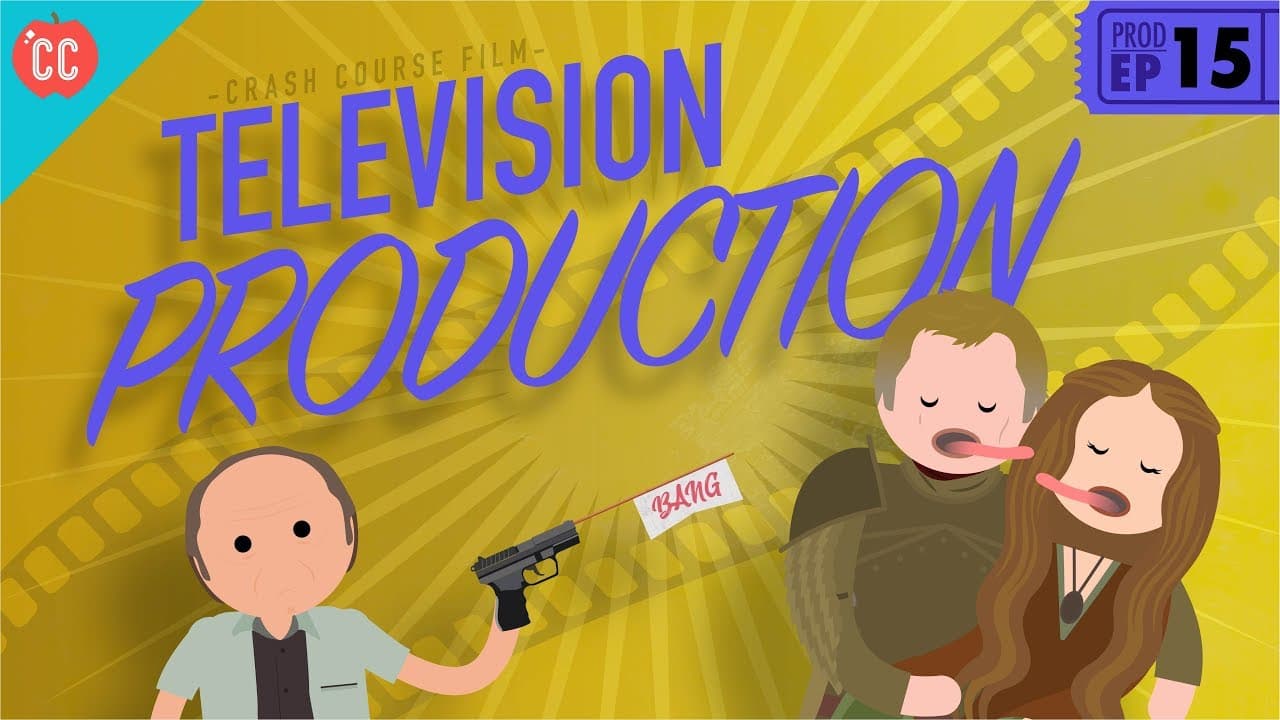
How Does Television Production Differ from Film?, Crash Course Film Production with Lily Gladstone #15
TL;DR
Television production differs from film in how shows are structured, financed, delivered, and evaluated, although the two increasingly resemble each other. Scripted television spans four main network types, broadcast, basic cable, premium cable, and streaming, whose advertising, carriage-fee, or subscription models influence episode counts, audiences, and subject matter. Read on to understand ratings, network economics, and television’s growing overlap with cinema.
Transcript
These days, you might turn on the TV and think you’d been transported to a movie theater. Oscar-winning movie stars are all over television shows, Directors known for big screen blockbusters, like David Fincher and Martin Scorsese, have found success working in television. And the advent of streaming services and premium cable networks have expande... Read More
Key Insights
- Television production now mirrors film production, especially in streaming and premium cable content.
- TV shows are categorized into scripted and unscripted content, with scripted TV being closer to film.
- The four main types of TV networks are broadcast, basic cable, premium cable, and streaming services.
- Ratings are crucial for broadcast networks, while premium cable and streaming rely on subscriptions.
- Showrunners are the primary creative forces in TV, overseeing everything from story direction to editing.
- TV series can be longer than films, requiring more scripts, shooting days, and larger crews.
- Single-camera shows resemble films more than three-camera shows, which often use live audiences.
- The crossover of talent between TV and film is increasing, with shared universes and extended movie-like series.
Install to Summarize YouTube Videos and Get Transcripts
Explore YouTube Video Summarizer or Get YouTube Transcript Extractor
Questions & Answers
Q: How does television production differ from film production?
Television encompasses many formats, but scripted TV is the category closest to film. Its production is strongly shaped by how a network delivers programs and makes money, while streaming services, premium cable, movie stars, and film directors have made television increasingly resemble cinema.
Q: What are the four main types of contemporary TV networks?
The four main types are broadcast networks, basic cable, premium cable, and streaming services. These categories affect which programs get made, how they are produced, and what subject matter they can address.
Q: What is the difference between scripted and unscripted television?
Scripted television is created from a written script and includes shows such as Game of Thrones, Empire, Family Ties, and Quantum Leap. Unscripted television includes reality shows, sports games, awards shows, and cable news.
Q: How do broadcast television networks make money?
Major broadcast networks make most of their money through on-air advertising. Because more viewers allow them to charge advertisers more, they seek broadly appealing shows and use ratings when deciding which programs to renew or cancel.
Q: How do Nielsen ratings measure television audiences?
Nielsen monitors the viewing habits of a sample of American households and extrapolates those results into a rating for each episode. The transcript says the sample is about 5,000 households and that DVR viewing counts only when an episode is watched within one week of its original air date.
Q: How does basic cable differ from broadcast television?
Basic cable earns money from both on-air advertising and carriage fees paid by cable companies. This reduces the pressure to attract a massive audience and allows shows to serve profitable niches; Mad Men drew about 2 million weekly viewers on AMC, while The Big Bang Theory reached almost 20 million per episode on CBS.
Q: Why can premium cable produce more challenging content?
Premium cable networks such as HBO, Showtime, and Starz avoid on-air advertising and rely largely on monthly household fees. Ratings therefore matter less, and success can come from generating enough cultural excitement to attract additional subscribers.
Q: How do streaming services affect which television shows get produced?
Streaming services such as Netflix, Amazon Prime, and Hulu rely on subscriptions when producing original content. A program such as Transparent succeeds by encouraging more people to pay for Amazon Prime, rather than by competing directly with Quantico for viewers.
Summary & Key Takeaways
-
Television production has evolved to resemble film production, especially with the rise of streaming services and premium cable networks offering edgier content. These platforms allow for more creative freedom compared to traditional broadcast networks, which rely on ratings and advertisements.
-
TV shows are categorized by their delivery method, including broadcast, cable, and streaming, each affecting production and content differently. Showrunners, often the creators, are the main creative forces in TV, unlike film where directors usually hold this role.
-
The line between TV and film is blurring, with more shared talent and storytelling techniques. Single-camera shows are more cinematic, while three-camera shows often use live audiences. The industry's evolution offers more diverse viewing experiences but also creates a challenge to keep up with all available content.
Read in Other Languages (beta)
Share This Summary 📚
Summarize YouTube Videos and Get Video Transcripts with 1-Click
Try YouTube Summary with ChatGPT & Claude or YouTube Transcript Generator
Explore More Summaries from CrashCourse 📚



Summarize YouTube Videos and Get Video Transcripts with 1-Click
Try YouTube Summary with ChatGPT & Claude or YouTube Transcript Generator