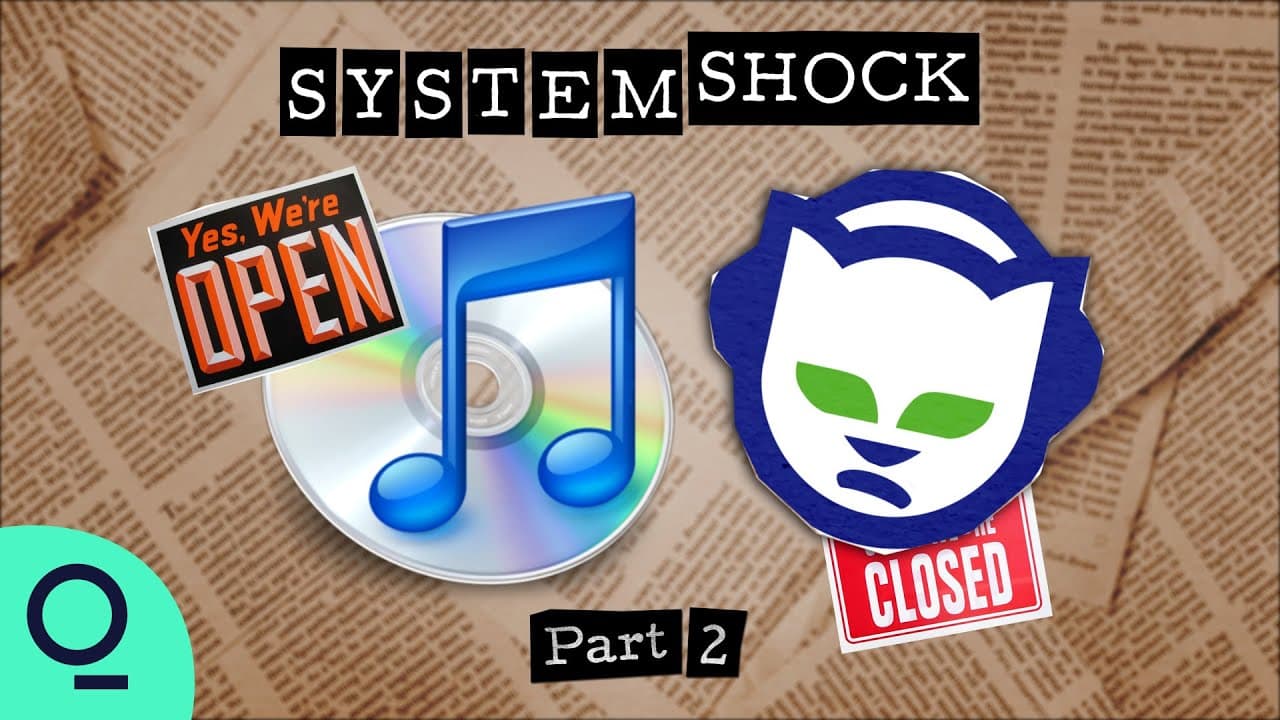
The Music Industry Strikes Back | System Shock Ep 2
TL;DR
Napster revolutionized music access, sparking industry battles over rights and revenue.
Transcript
What's up man? I'm with MTV news, I was wondering if you had any MP3s on your computer? Yeah. So how many MP3s you have on your computer? About 600. Six or 7,000. Come again? Six or 7,000. Find like 300. For real? Where'd you get them from? Truthfully most of them from Napster. The first time I heard about digital music was through Napster. And I d... Read More
Key Insights
- Napster's emergence allowed users to download music for free, challenging traditional music industry models and sparking debates on music ownership and piracy.
- Shawn Fanning developed Napster, which quickly became a symbol of freedom for music fans but a nightmare for the music industry due to lost revenue.
- The music industry, represented by figures like Lars Ulrich from Metallica, fought back against Napster, leading to lawsuits and a public backlash.
- Napster's legal battles highlighted the tension between technological innovation and traditional business models, with the courts ultimately siding against Napster.
- The closure of Napster led to the rise of alternative file-sharing services, which continued to challenge the music industry's control over music distribution.
- Steve Jobs and Apple bridged the gap between technology and the music industry with the iTunes Store, offering a legal and convenient way to purchase music online.
- The unbundling of albums into individual tracks on platforms like iTunes fundamentally changed the music industry's revenue model, leading to significant financial losses.
- The music industry attempted to combat piracy through litigation against individuals, which was controversial and often counterproductive, alienating music fans.
Install to Summarize YouTube Videos and Get Transcripts
Explore YouTube Video Summarizer or Get YouTube Transcript Extractor
Questions & Answers
Q: What impact did Napster have on the music industry?
Napster had a profound impact on the music industry by enabling users to download music for free, which challenged the industry's traditional revenue models. It sparked debates over music ownership and piracy, leading to legal battles and a significant shift in how music was distributed and consumed.
Q: How did the music industry respond to Napster's rise?
The music industry responded to Napster's rise with legal action, spearheaded by figures like Lars Ulrich from Metallica, who argued that Napster's model was illegal and harmful to artists. This led to lawsuits against Napster and later against individual users, although these actions were controversial and often alienated music fans.
Q: What role did Steve Jobs play in the music industry's transformation?
Steve Jobs played a crucial role in transforming the music industry by introducing the iTunes Store, which provided a legal and convenient way for users to purchase music online. This innovation helped bridge the gap between technology and the music industry, although it also led to the unbundling of albums into individual tracks, impacting revenue.
Q: What were the consequences of unbundling albums on platforms like iTunes?
The unbundling of albums on platforms like iTunes allowed consumers to purchase individual tracks rather than entire albums, which significantly impacted the music industry's revenue. This shift meant that the income from album sales decreased, as consumers no longer had to buy entire albums for just a few songs they liked.
Q: How did the public react to the music industry's lawsuits against Napster and individuals?
The public reaction to the music industry's lawsuits against Napster and individuals was largely negative. Many viewed these actions as heavy-handed and unfair, especially when lawsuits targeted children, grandmothers, and music fans. This approach often alienated consumers and, in some cases, drove more people towards piracy.
Q: What happened to Napster after the legal battles?
After losing multiple court battles, Napster was forced to shut down its operations and eventually went bankrupt. Despite this, the demand for free music persisted, leading to the rise of alternative file-sharing services that continued to challenge the music industry's control over distribution.
Q: How did alternative file-sharing services impact the music industry post-Napster?
Alternative file-sharing services that emerged post-Napster, such as Kazaa, continued to pose challenges for the music industry. These services often operated without centralized servers, making them harder to shut down and allowing music piracy to persist, further eroding the industry's control over music distribution.
Q: What was the long-term impact of Napster and file-sharing on the music industry?
The long-term impact of Napster and file-sharing on the music industry was significant, leading to a dramatic decline in revenue and the need for the industry to adapt to new digital distribution models. The shift towards digital and streaming services ultimately transformed how music is consumed, with lasting effects on artists, labels, and consumers.
Summary & Key Takeaways
-
Napster revolutionized music access by allowing users to download songs for free, challenging the music industry's traditional revenue models and sparking debates over music ownership and piracy.
-
The music industry, led by figures like Lars Ulrich from Metallica, fought back against Napster through lawsuits, which led to a public backlash and highlighted the tension between technological innovation and traditional business models.
-
Steve Jobs and Apple introduced the iTunes Store, offering a legal way to purchase music online, but the shift to selling individual tracks rather than albums significantly impacted the music industry's revenue.
Read in Other Languages (beta)
Share This Summary 📚
Summarize YouTube Videos and Get Video Transcripts with 1-Click
Try YouTube Summary with ChatGPT & Claude or YouTube Transcript Generator
Explore More Summaries from Bloomberg Originals 📚





Summarize YouTube Videos and Get Video Transcripts with 1-Click
Try YouTube Summary with ChatGPT & Claude or YouTube Transcript Generator