Why Companies Need a Product Security Officer
TL;DR
A chief product security officer manages the cybersecurity risks created by every company product that runs code. The role differs from enterprise security because product protection spans design, development, vulnerability handling, customer notification, patch delivery, regulatory exposure, and end-of-life support, requiring specialized leadership across the complete product life cycle.
Transcript
So thanks everyone for coming. We're gonna talk today about the emerging role of the CPSO. So just a brief overview. We're gonna talk about what it is, how it's different from your traditional C-suite security roles, why there's a need for it, what it actually is, what makes somebody good at this role, and then conclusion. So I wanna just start by ... Read More
Key Insights
- Product security is a distinct discipline from enterprise security because securing products requires different expertise and execution than protecting internal networks and infrastructure. Although the responsibilities may have similar names, their technical environments, affected parties, delivery mechanisms, and business consequences differ substantially.
- A CPSO is responsible for managing cybersecurity risk across every product that contains software, firmware, embedded systems, or other code carrying the company’s name. The role oversees programs intended to reduce the business risks created by those products.
- Product security is an emergent property of a well-designed system, not a feature that can simply be added after development. Effective security activities must influence every stage of the product life cycle, beginning with concept and feasibility and continuing through end-of-life decisions.
- Cybersecurity risk management is continuous because no device can be made permanently secure. A CPSO must oversee secure design, vulnerability management, incident response, policies, procedures, and standards while adapting those activities as products, threats, configurations, and support obligations change.
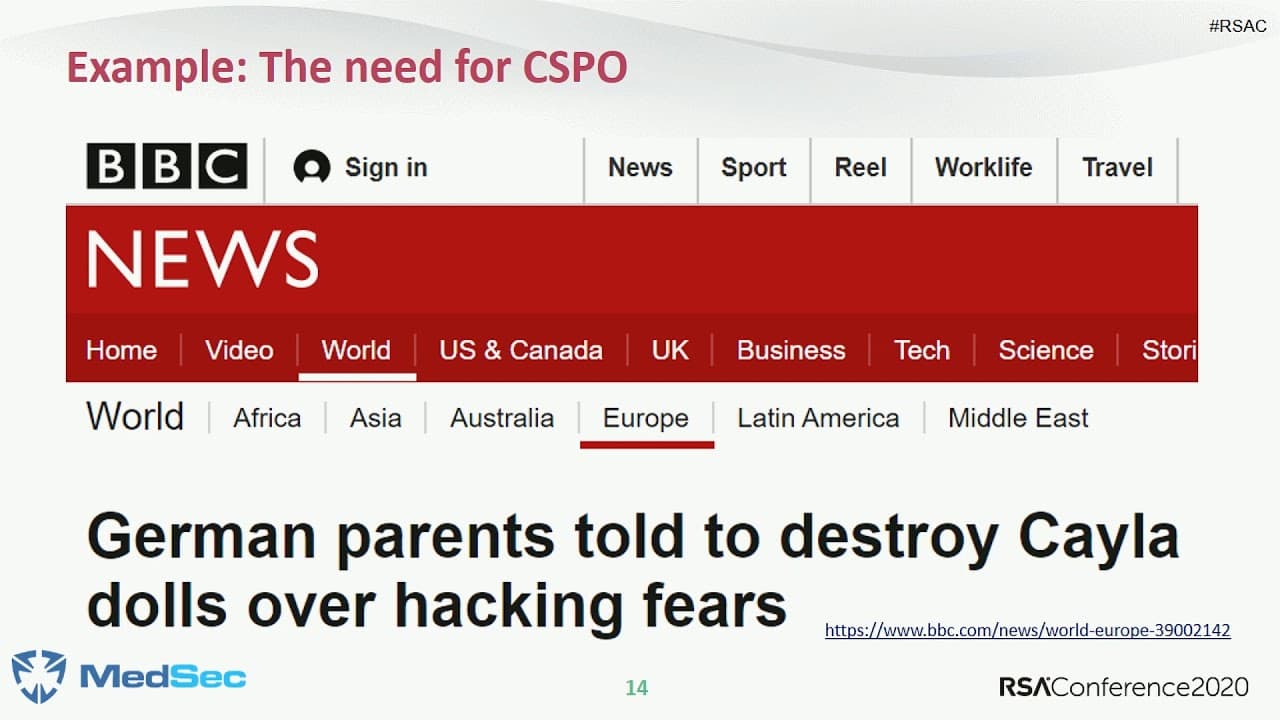
- Loss of trust in a product can quickly undermine the business because product sales generate revenue for a for-profit company. Product vulnerabilities can also create monetary, reputational, legal, regulatory, and customer-relationship consequences that deserve scrutiny comparable to enterprise breaches.
- A company’s product can become another organization’s third-party cybersecurity risk. Customers are responding by adding product security clauses to purchasing agreements, including indemnification provisions, patch deadlines, and requirements to disclose vulnerabilities before a corrective patch is available.
- Product incident response begins with reproducing a reported problem across potentially numerous versions, configurations, and customer environments. Investigators must also determine whether the reported defect is isolated or evidence of a broader family of vulnerabilities requiring expanded testing and remediation.
- Product vulnerability remediation requires cross-functional coordination among security leaders, research and development teams, legal counsel, regulators, and customers. Releasing a fix may involve website downloads, remote deployment, mailed USB devices, or technicians performing manual updates at customer sites.
Install to Summarize YouTube Videos and Get Transcripts
Explore YouTube Video Summarizer or Get YouTube Transcript Extractor
Questions & Answers
Q: What is a chief product security officer?
A chief product security officer, or CPSO, is the executive responsible for overseeing cybersecurity risk in the products a company produces. The scope includes anything containing software, firmware, embedded systems, or other code carrying the company’s name. The CPSO establishes and manages programs for secure design, risk management, vulnerability handling, incident response, policies, procedures, and standards.
Q: How does a CPSO differ from a CISO or CSO?
A CPSO focuses on cybersecurity risks in products, while a CISO or CSO traditionally focuses on enterprise infrastructure. Both may own activities called risk management, vulnerability management, or incident response, but the execution differs. Product security must account for product versions, customer configurations, development processes, patch distribution, contractual duties, regulatory exposure, and support throughout the product life cycle.
Q: Why does a company need a CPSO?
A company needs a CPSO because product cybersecurity creates business risks that enterprise security leadership may not be equipped to manage alone. Vulnerabilities can damage customer trust, threaten product revenue, trigger regulatory action, create product-specific liability, and activate contractual duties. A dedicated executive gives these risks scrutiny comparable to the attention given to breaches of internal infrastructure.
Q: What responsibilities does a CPSO have?
A CPSO has high-level responsibility for secure product design, cybersecurity risk management, vulnerability management, product incident response, and the policies, procedures, and standards governing product security. The role also coordinates with research and development, legal counsel, regulators, customers, and operational teams to investigate flaws, build fixes, satisfy obligations, and distribute patches through appropriate delivery channels.
Q: Why must security be integrated into product development?
Security must be integrated into product development because it is not a feature that can simply be attached to a finished product. It emerges from a well-designed system and affects every development stage. Relevant security work begins during concept and feasibility, changes throughout research and development, continues after release, and remains necessary until production and support reach their end.
Q: How does a CPSO respond to a reported product vulnerability?
A CPSO first works to reproduce the reported behavior, which may require rebuilding a customer’s specific combination of product version, configuration, and environment. After reproduction, the team determines whether the issue is isolated or part of a larger vulnerability family. Confirmed vulnerabilities then require expanded testing, code changes, validation, release planning, customer communication, and legal or regulatory review.
Q: How do customer contracts affect product security response?
Customer contracts can establish firm obligations for patching and vulnerability notification. The transcript describes agreements requiring patches within thirty days or seven days, as well as notification within seven days even when a patch is unavailable. A CPSO must work with legal counsel to identify every applicable commitment, assess liability, communicate appropriately, and coordinate remediation within the promised timelines.
Q: Why can distributing a product security patch be difficult?
Patch distribution can be difficult because products have different architectures, environments, and update mechanisms. A fix might be posted on a website, pushed directly to a device, mailed to customers on USB media, or installed by technicians visiting customer sites. Before distribution, teams must write, build, test, and release new code while managing contractual, legal, and regulatory concerns.
Summary & Key Takeaways
-
Product security and enterprise security are distinct specialties. CISOs and CSOs protect internal infrastructure, while a CPSO oversees risks associated with products containing software, firmware, embedded systems, or connected components. Assigning both domains to one executive can fail because similar responsibilities require substantially different knowledge, processes, and execution.
-
The business case for a CPSO includes protecting product revenue and customer trust while addressing recalls, litigation, contractual requirements, and third-party risk. Customers increasingly manage supplier risk through purchasing clauses covering indemnification, vulnerability notifications, and patch deadlines, making product cybersecurity a direct commercial and legal concern.
-
A CPSO establishes security throughout the product life cycle, from initial concept and feasibility through development, release, support, and end of life. Responsibilities include secure design, risk management, vulnerability management, incident response, and governance. Effective response requires coordination among security, research and development, legal, regulatory, and customer-facing teams.
Read in Other Languages (beta)
Share This Summary 📚
Summarize YouTube Videos and Get Video Transcripts with 1-Click
Try YouTube Summary with ChatGPT & Claude or YouTube Transcript Generator
Explore More Summaries from RSAC Cybersecurity 📚





Summarize YouTube Videos and Get Video Transcripts with 1-Click
Try YouTube Summary with ChatGPT & Claude or YouTube Transcript Generator