Preparing New York For the Next Big Storm
TL;DR
Exploring innovative solutions to protect New York from future superstorms.
Transcript
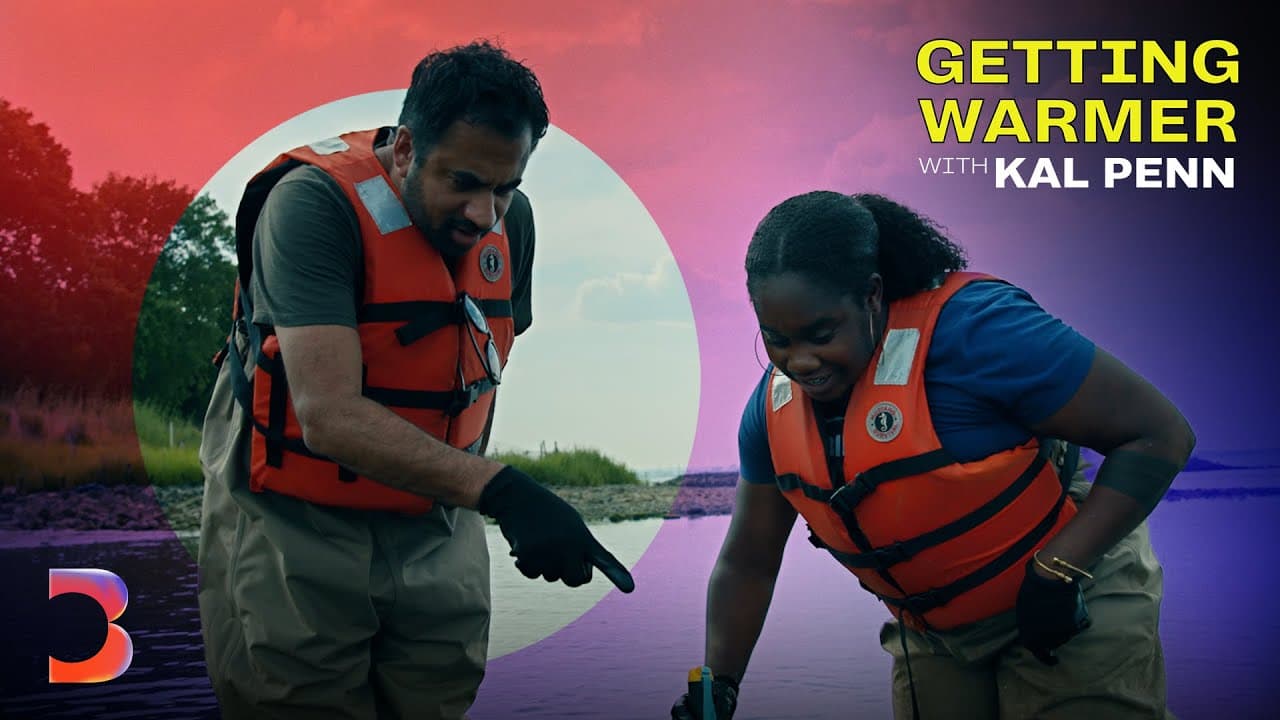
Oh, look, you can see the big blue crab. Look, there it is. Right here? Yes, look right where I am. Whoa. Do you see how large his claw is? Yes. Look, there it is. Wow. Oh, my gosh. Oh, no way. That was so cool. It was huge. It was pretty big. That was big. I'm out here on the Brooklyn waterfront, sporting the latest in bright orange life jacket fa... Read More
Key Insights
- The Billion Oyster Project aims to use oysters to filter New York Harbor's water and reduce pollution, enhancing the ecosystem's health.
- Living Breakwaters is a climate adaptation project using breakwaters and oysters to reduce storm impact and restore marine habitats.
- Hurricane Sandy caused $20 billion in damage, highlighting the need for effective climate adaptation strategies in New York.
- Proposals like the Big U and massive seawalls aim to protect New York, but face criticism for potential ecological impacts.
- Living Breakwaters project focuses on ecological solutions that integrate with the environment rather than altering it drastically.
- The project aims to create a living barrier with oysters, enhancing wave resistance and reducing erosion and storm damage.
- The approach acknowledges that while flooding won't be entirely stopped, the impact can be significantly reduced.
- Adapting to rising sea levels involves reimagining urban living, acknowledging changes, and planning for a sustainable future.
Install to Summarize YouTube Videos and Get Transcripts
Explore YouTube Video Summarizer or Get YouTube Transcript Extractor
Questions & Answers
Q: What is the Billion Oyster Project and its purpose?
The Billion Oyster Project is a nonprofit organization focused on restoring oyster reefs to New York Harbor. Its primary goal is to improve water quality and restore marine habitats by using oysters as natural filters. The project involves public education initiatives and aims to enhance the ecosystem's health, contributing to the city's climate resilience.
Q: How does the Living Breakwaters project aim to protect New York?
The Living Breakwaters project uses a series of breakwaters and oyster reefs off Staten Island's shore to reduce storm impact and restore marine ecosystems. These structures break waves before they reach the shore, minimizing erosion and storm damage. The project integrates ecological solutions to enhance urban resilience against climate change.
Q: What challenges did Hurricane Sandy highlight for New York?
Hurricane Sandy caused extensive damage, with $20 billion in losses, and highlighted New York's vulnerability to superstorms. The storm flooded neighborhoods, left many without power, and emphasized the need for effective climate adaptation strategies. It sparked discussions on innovative solutions to protect the city from future climate-related disasters.
Q: What are some criticisms of traditional infrastructure solutions like seawalls?
Traditional infrastructure solutions, such as massive seawalls, face criticism for their potential ecological impacts. Critics argue that these structures could disrupt marine habitats and fundamentally alter the harbor's ecology. They also raise concerns about the feasibility, cost, and time required to implement such large-scale projects, advocating for more integrative and sustainable approaches.
Q: How does the Living Breakwaters project differ from traditional solutions?
Unlike traditional solutions like seawalls, the Living Breakwaters project focuses on ecological integration. It uses natural barriers, such as oyster reefs, to reduce storm impact and restore marine habitats. This approach aims to enhance urban resilience while preserving the environment, offering a sustainable alternative to altering the ecosystem with large infrastructure.
Q: What role do oysters play in the Living Breakwaters project?
Oysters are central to the Living Breakwaters project, serving as natural filters that improve water quality and enhance wave resistance. The project plans to seed millions of oysters on artificial reefs, creating a living barrier that reduces erosion and storm damage while restoring marine habitats. This approach integrates ecological solutions into urban climate resilience.
Q: Can the Living Breakwaters project completely prevent flooding?
The Living Breakwaters project cannot completely prevent flooding but aims to significantly reduce its impact. By breaking waves before they reach the shore, the project minimizes erosion and storm damage. While some water may still get in, the approach focuses on reducing destructive forces, providing a more sustainable and integrative solution to urban climate challenges.
Q: What is the long-term vision for adapting to rising sea levels?
The long-term vision for adapting to rising sea levels involves reimagining urban living and integrating ecological solutions into planning. It acknowledges that water levels will rise and storms will be more frequent, emphasizing the need for sustainable approaches that allow both human and ecological systems to thrive. This vision seeks to create a future where climate change adaptation enhances quality of life.
Summary & Key Takeaways
-
The video explores innovative projects like the Billion Oyster Project and Living Breakwaters to protect New York from future superstorms. These initiatives use ecological solutions, such as oysters and breakwaters, to reduce storm impact and enhance marine ecosystems, providing an alternative to traditional infrastructure like seawalls.
-
Hurricane Sandy's devastation highlighted the need for effective climate adaptation strategies in New York. The Living Breakwaters project proposes using natural barriers to reduce storm damage while restoring marine habitats, offering a sustainable and integrative approach to urban climate resilience.
-
The video emphasizes the importance of adapting to climate change by integrating ecological solutions into urban planning. Projects like Living Breakwaters aim to create a future where rising sea levels are managed through innovative, environmentally-friendly approaches, ensuring both human and ecological systems can thrive.
Read in Other Languages (beta)
Share This Summary 📚
Summarize YouTube Videos and Get Video Transcripts with 1-Click
Try YouTube Summary with ChatGPT & Claude or YouTube Transcript Generator
Explore More Summaries from Bloomberg Originals 📚



Summarize YouTube Videos and Get Video Transcripts with 1-Click
Try YouTube Summary with ChatGPT & Claude or YouTube Transcript Generator