Electro-osmosis: pumping water with electricity and no magnets
TL;DR
Learn how to build an electroosmotic pump that uses electric fields to move water, showcasing unique flow control capabilities.
Transcript
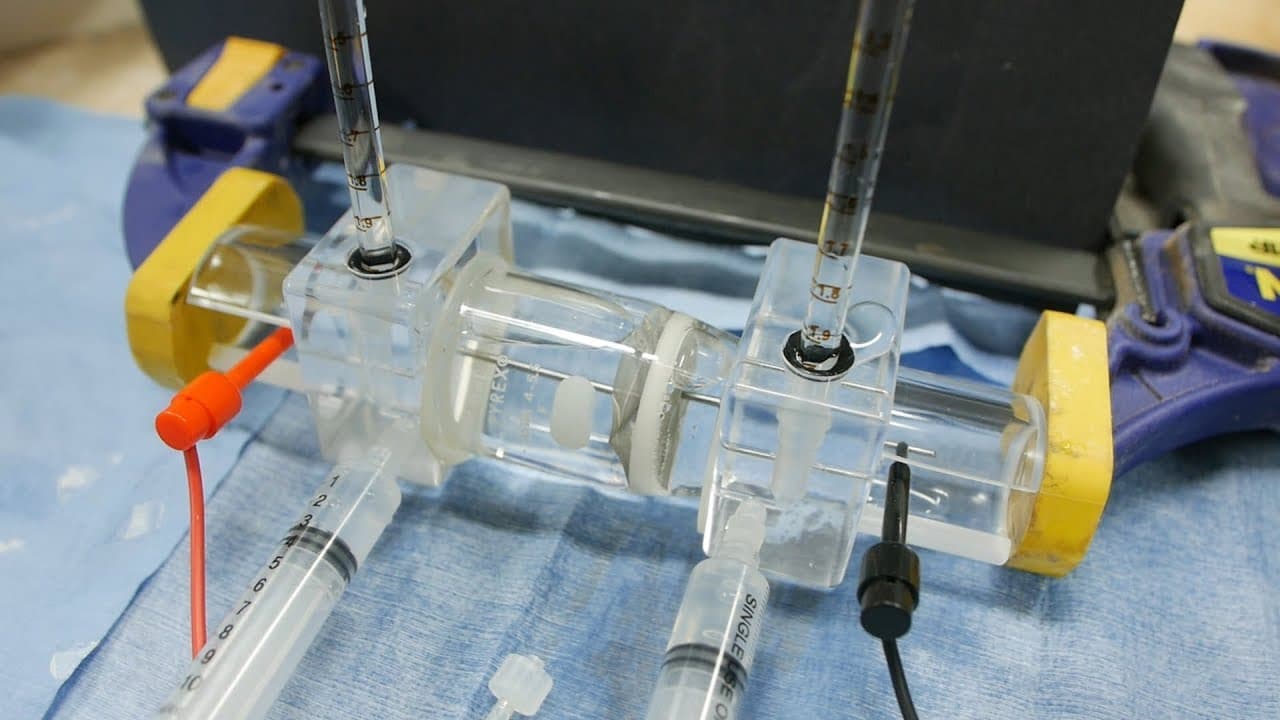
today on Applied Science I'm going to show you how to build a pump in which the only moving part is the liquid itself and it functions as a flow sensor and it doesn't use any magnets so until I said that last part you may have recalled the movie The Hunt for Red October in which there's this fictional sounding but actually quite realistic thing cal... Read More
Key Insights
- 🥳 Electroosmotic pumps operate without moving parts, relying on electric fields to manipulate water flow.
- 😎 Water and glass interactions lead to charged separations crucial for the pump's functionality.
- 😎 Water conductivity optimization enhances the pump's efficiency through the thickening of the charged layer near the glass surface.
- 💦 The pump's direction of water flow can be controlled by altering the polarity of the electric field.
- ⛽ The efficiency of the electroosmotic pump is impacted by electrolysis, which diverts energy from fluid movement.
- 💐 The pump's flow profile differs from typical parabolic flow, showcasing unique characteristics of electroosmotic flow.
- 👻 Customization of the pump through varying parameters allows for tailored flow and pressure profiles based on specific requirements.
Install to Summarize YouTube Videos and Get Transcripts
Explore YouTube Video Summarizer or Get YouTube Transcript Extractor
Questions & Answers
Q: How does an electroosmotic pump work without any moving parts?
An electroosmotic pump utilizes an electric field to induce charged particles, causing water to move through a porous medium, separating ions on the glass surface, and driving flow without physical components.
Q: What role does water conductivity play in optimizing an electroosmotic pump?
Water conductivity affects the efficiency of the pump by influencing the thickness of the charged layer near the glass surface, allowing for better interaction with the electric field and enhanced pumping capabilities.
Q: Can the electroosmotic pump control the direction of water flow?
Yes, by manipulating the polarity of the electric field, the pump can reverse the direction of water flow, showcasing the adaptability and versatility of electric field control in the system.
Q: What are the implications of the low thermodynamic efficiency of the electroosmotic pump?
Despite its low efficiency, the pump's scalability and ability to customize flow and pressure profiles make it valuable for specific applications where mechanical pumps are not feasible, highlighting its unique advantages.
Summary & Key Takeaways
-
Demonstrates the construction of an electroosmotic pump without moving parts, utilizing an electric field and water conductivity.
-
Discusses the principles behind electroosmosis and how it drives the pump's functionality.
-
Showcases the pump's ability to serve as both a flow sensor and fluid manipulator through electric field control.
Read in Other Languages (beta)
Share This Summary 📚
Summarize YouTube Videos and Get Video Transcripts with 1-Click
Try YouTube Summary with ChatGPT & Claude or YouTube Transcript Generator
Explore More Summaries from Applied Science 📚
Summarize YouTube Videos and Get Video Transcripts with 1-Click
Try YouTube Summary with ChatGPT & Claude or YouTube Transcript Generator