How Did a Tail Gunner Survive a 4-Mile Fall?
TL;DR
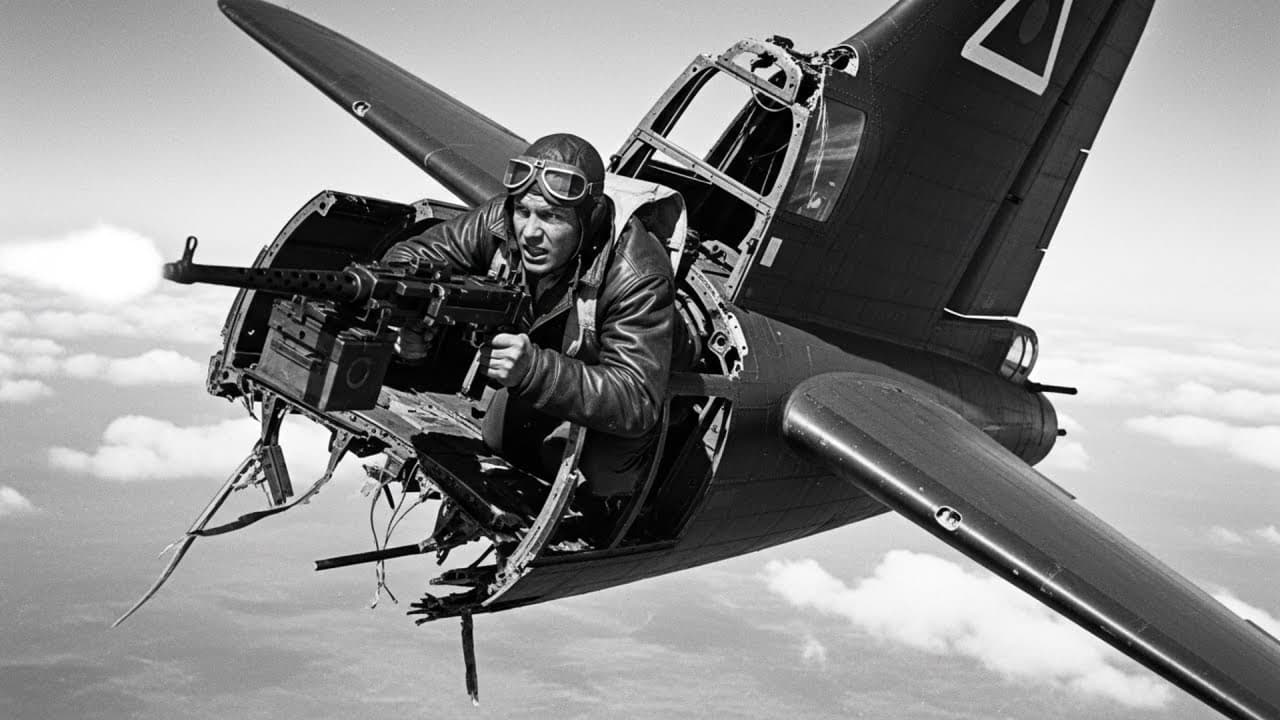
Staff Sergeant Eugene Moran, a B-17 tail gunner, survived a four-mile fall without a parachute during World War II. Despite catastrophic injuries, he continued firing at German fighters as his bomber disintegrated. His survival story is one of resilience and defiance in the face of overwhelming odds, marking him as one of only three airmen to survive such a fall during the war.
Transcript
At 11:32 on the morning of November 29th, 1943, Staff Sergeant Eugene Moran knelt in the tail section of a B7 flying fortress named Ricky Tikitabi, watching German fighters swarm toward his bomber like angry hornets. 19 years old, a farm boy from Wisconsin, his first combat mission over a heavily defended target. The Eighth Air Force had sent over ... Read More
Key Insights
- Eugene Moran was a 19-year-old tail gunner on a B-17 bomber during World War II.
- His bomber, Rikki Tikki Tavi, was attacked over Bremen, Germany, in 1943.
- The bomber split in half at 24,000 feet, leaving Moran trapped in the tail section.
- Moran's parachute was destroyed, and he sustained severe injuries to both arms.
- Despite his injuries, Moran continued to fire at German fighters during his fall.
- The tail section's design allowed it to glide, slowing Moran's descent enough to survive.
- Moran was captured by German forces and endured harsh conditions as a POW.
- He survived a forced march and was liberated in 1945, later receiving multiple military honors.
Install to Summarize YouTube Videos and Get Transcripts
Explore YouTube Video Summarizer or Get YouTube Transcript Extractor
Questions & Answers
Q: How did Eugene Moran survive a fall from 24,000 feet?
Eugene Moran survived a fall from 24,000 feet due to the partial glide of the B-17's tail section he was trapped in. The tail's stabilizers acted like crude wings, slowing the descent enough to make survival possible. Despite catastrophic injuries, Moran's resilience and the tail's aerodynamics contributed to his survival.
Q: What injuries did Eugene Moran sustain during the fall?
During the fall, Eugene Moran sustained severe injuries, including compound fractures in both forearms, shattered ribs, and a head wound that exposed part of his brain. These injuries were compounded by the destruction of his parachute, leaving him with no safe means to land. Despite this, he survived the impact.
Q: How did Eugene Moran continue fighting after his bomber was hit?
Despite being severely injured with both arms bleeding, Eugene Moran continued to operate his machine guns while trapped in the severed tail section of his B-17. His determination and refusal to surrender allowed him to keep firing at German fighters, even as his aircraft was disintegrating around him.
Q: What happened to Moran after he was captured by German forces?
After his capture, Eugene Moran was held as a prisoner of war, enduring brutal conditions, including inadequate medical care and harsh treatment. He survived a forced march known as the Black March and was eventually liberated by American forces in 1945. His resilience helped him survive these challenging circumstances.
Q: What recognition did Eugene Moran receive for his service?
Eugene Moran received multiple military honors for his service, including two Purple Hearts for his injuries and the Air Medal with oak leaf cluster. His remarkable survival story was later recognized with the Veteran Lifetime Achievement Award by the Wisconsin Board of Veterans Affairs in 2007.
Q: What was the Black March and how did Moran survive it?
The Black March was a forced march of Allied prisoners through Germany in harsh winter conditions. Eugene Moran survived the 600-mile march despite inadequate clothing, starvation, and brutal treatment from guards. His determination and will to survive, which had seen him through his fall, helped him endure this ordeal.
Q: How did Eugene Moran's story become widely known?
Eugene Moran's story gained recognition when it was documented in a book called 'Tailspin,' published in 2022. The book, based on extensive interviews and research, detailed his incredible survival and resilience during World War II, bringing his story to a wider audience and ensuring it was not forgotten.
Q: What impact did the war have on Eugene Moran's life after his return?
After the war, Eugene Moran returned to Wisconsin, married, and raised a family. He rarely spoke about his wartime experiences, which left him with physical and emotional scars. Despite ongoing health issues from his injuries, he lived a full life, contributing to his community and being honored for his extraordinary wartime survival.
Summary & Key Takeaways
-
Eugene Moran, a B-17 tail gunner, survived a fall from 24,000 feet without a parachute after his bomber was attacked over Germany in 1943. Despite severe injuries, he continued firing at enemy fighters as his aircraft disintegrated. His survival story is remarkable, as he endured harsh conditions as a POW before being liberated in 1945.
-
Moran's bomber, Rikki Tikki Tavi, was attacked by German fighters, causing it to split in half. Trapped in the tail section, Moran's parachute was destroyed, and he suffered injuries to both arms. However, he kept firing at the enemy, defying the odds and surviving the fall due to the tail section's partial glide.
-
Captured by German forces, Moran faced brutal conditions as a prisoner of war, including a forced march known as the Black March. Despite his injuries and the harsh treatment, he survived until liberation in 1945. Moran's story is one of extraordinary resilience and defiance in the face of certain death.
Read in Other Languages (beta)
Share This Summary 📚
Summarize YouTube Videos and Get Video Transcripts with 1-Click
Try YouTube Summary with ChatGPT & Claude or YouTube Transcript Generator
Explore More Summaries from WW2 Records 📚

Summarize YouTube Videos and Get Video Transcripts with 1-Click
Try YouTube Summary with ChatGPT & Claude or YouTube Transcript Generator