How Did a Brass Washer Fix RAF Fighter Engines?
TL;DR
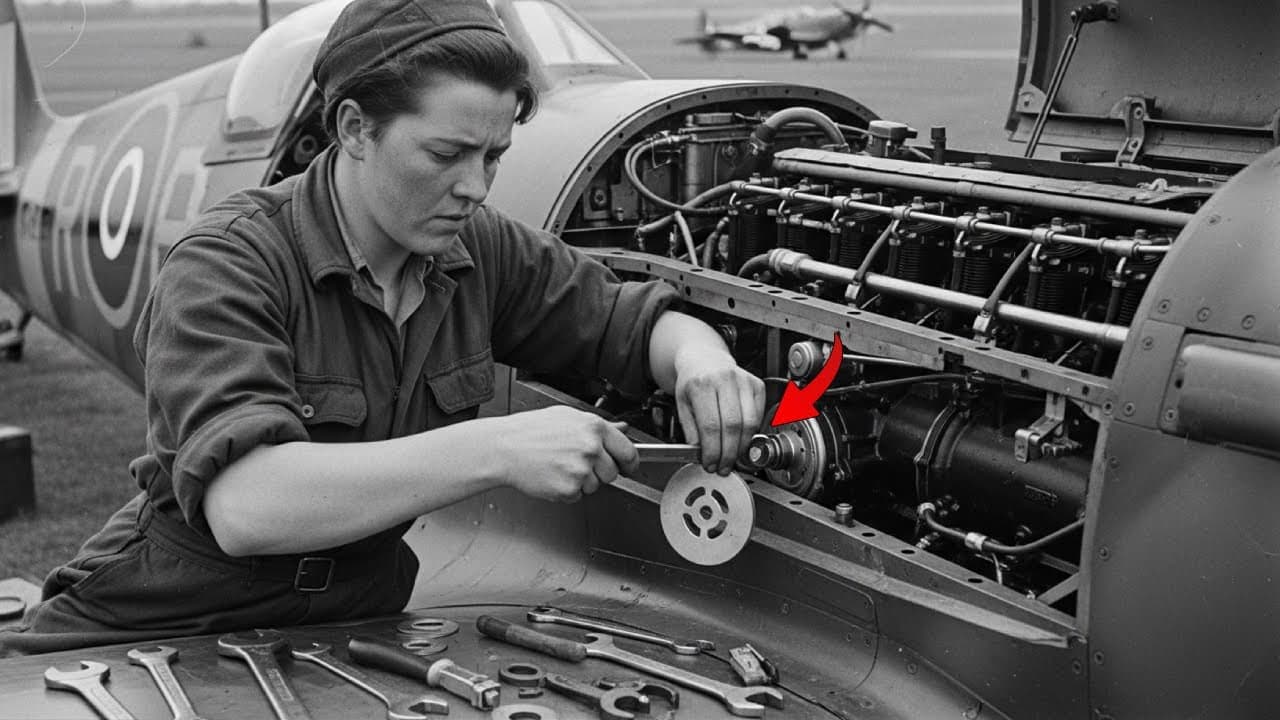
A precisely sized brass restrictor prevented excess fuel from flooding the Merlin engine's carburetor during negative-G dives, allowing RAF fighters to maintain power while attacking. Beatrice Shilling developed the simple modification after testing 17 sizes, and the description says engine failures fell from 38% to 0.4% in one month while the device remained in use until pressure carburetors arrived in 1943.
Transcript
At 7:42 on the morning of March 14th, 1941, Beatatric Schilling stood on the tarmac at RAF Kennley watching a hurricane pilot climb into his cockpit for what might be his last mission. 32 years old, 6 years at the Royal Aircraft establishment, zero solutions to the problem that was killing her pilots. The Luftwaffa had sent 43 Messmid BF 109 fighte... Read More
Key Insights
- The central engineering problem was carburetor flooding during negative-G maneuvers. When a Spitfire or Hurricane entered a sudden dive, fuel moved inside the float chamber, disrupted delivery through the jet, and stopped the Merlin engine for 1.5 seconds.
- The Bf 109's advantage was its direct fuel-injection system. Its Daimler-Benz engine had no float chamber to flood, so German pilots could dive, climb, roll, or invert their aircraft without the momentary power loss experienced by British pilots.
- The restrictor worked by limiting fuel flow before it reached the carburetor. Its opening had to be large enough to supply the engine at full power but small enough to stop unrestricted flow from flooding the carburetor when gravity reversed.
- The final dimensions resulted from testing 17 different sizes. Shilling's first brass component had a diameter of 0.125 inches and a central hole measuring 0.04 inches, after which she simplified the design into a flat washer for easier production and installation.
- The operational test was conducted without formal authorization at RAF Kenley. Sergeant William Cooper disconnected the fuel line between the pump and carburetor, inserted the restrictor, and welded it into position while Squadron Leader Davies remained unaware of the modification.
- The first combat test showed that the modified Merlin could maintain full power during a steep dive. Davies reached 400 mph under negative-G forces, closed on two Bf 109s, fired from 200 yards, and returned with the engine running flawlessly.
- The modification offered an immediate bridge to a more complete fuel-delivery redesign. Rolls-Royce was developing a pressure carburetor, but the transcript says it might not be ready until 1943 or 1944, while pilots needed a usable remedy immediately.
- The reported operational result was a major reduction in engine failures. The description states that failures fell from 38% to 0.4% in one month and that the brass restrictor remained standard equipment until pressure carburetors arrived in 1943.
Install to Summarize YouTube Videos and Get Transcripts
Explore YouTube Video Summarizer or Get YouTube Transcript Extractor
Questions & Answers
Q: Why did Merlin engines cut out during combat dives?
Merlin engines cut out because the Skinner's Union carburetor could not handle the negative-G forces produced by sudden diving maneuvers. Fuel surged inside the float chamber and disrupted delivery through the jet, causing the engine to lose power for 1.5 seconds. That interruption could let a Bf 109 escape, circle behind the British fighter, or fire while its pilot struggled to restore power.
Q: How did Beatrice Shilling's brass restrictor work?
Beatrice Shilling's restrictor limited the maximum amount of fuel flowing into the carburetor. It did not stop fuel completely. Instead, its carefully sized central opening allowed the Merlin engine to receive sufficient fuel at full power while preventing the unrestricted surge that caused flooding during negative-G maneuvers. The solution addressed the immediate flow problem without requiring a complete redesign of the fuel-delivery system.
Q: Why did Bf 109 fighters have an advantage in dives?
Bf 109 fighters used Daimler-Benz engines with direct fuel injection rather than the float-chamber carburetor fitted to British Merlin engines. With no float chamber to flood, the German engines maintained power while diving, climbing, rolling, or flying inverted. German pilots could exploit this difference by entering maneuvers that British pilots could not immediately follow without risking a 1.5-second engine failure.
Q: How was the restrictor tested on an RAF fighter?
Shilling brought six restrictors to RAF Kenley and worked with Sergeant William Cooper, who installed one in Squadron Leader Davies's Hurricane without formal authorization. Cooper disconnected the fuel line between the pump and carburetor, inserted the component, and welded it into place. Davies then flew a combat patrol and completed a steep negative-G diving attack while the Merlin maintained full power throughout the maneuver.
Q: What happened during the first combat test of the washer?
Squadron Leader Davies spotted two Bf 109s at 14,000 feet and positioned his section above them. He pushed into a steep dive that reached 400 mph, with negative-G forces lifting him against his harness. The modified Merlin continued running at full power. Davies closed to 200 yards, fired a three-second burst, climbed back to altitude, and returned safely with no engine problem.
Q: Why was the washer's hole size important?
The hole size controlled the balance between flooding and fuel starvation. If the opening was too large, excessive fuel could still reach the carburetor during negative-G flight and cause the original failure. If it was too small, the engine would not receive enough fuel at full power. Shilling tested 17 sizes before selecting a component measuring 0.125 inches across with a 0.04-inch central hole.
Q: Why did Shilling use a temporary fix instead of waiting for Rolls-Royce?
Rolls-Royce engineers were developing a pressure carburetor as a complete solution, but the transcript says it might not be ready until 1943 or 1944. Meanwhile, RAF pilots were already experiencing engine failures in combat. Shilling's restrictor could be manufactured simply and installed quickly in the existing fuel line, giving fighter squadrons an immediate remedy while the more extensive carburetor redesign continued.
Q: What results were attributed to Shilling's modification?
The description states that engine failures fell from 38% to 0.4% in one month after the modification began spreading through Fighter Command. It also says the restrictor was associated with an estimated 2,100 Spitfires and Hurricanes and remained standard equipment until pressure carburetors arrived in 1943. Pilots called the component "Miss Shilling's Orifice," and crews installed it across RAF stations.
Summary & Key Takeaways
-
RAF Spitfires and Hurricanes suffered brief engine failures when pilots pushed into negative-G dives. Fuel surged within the carburetor, disrupting delivery and cutting power for 1.5 seconds. German Bf 109 fighters avoided this weakness because their Daimler-Benz engines used direct fuel injection, giving their pilots greater freedom during combat maneuvers.
-
Beatrice Shilling developed a brass restrictor with a carefully calculated opening that limited maximum fuel flow without starving the Merlin engine at full power. She tested 17 sizes, simplified the component into a flat washer, and demonstrated through bench testing that it prevented flooding under simulated negative-G conditions.
-
Shilling arranged an unauthorized operational test at RAF Kenley with Sergeant William Cooper. Squadron Leader Davies completed a steep, 400 mph diving attack without losing engine power and reported that the Merlin performed flawlessly. The modification then spread through Fighter Command and remained standard until pressure carburetors arrived in 1943.
Read in Other Languages (beta)
Share This Summary 📚
Summarize YouTube Videos and Get Video Transcripts with 1-Click
Try YouTube Summary with ChatGPT & Claude or YouTube Transcript Generator
Explore More Summaries from WW2 Records 📚



Summarize YouTube Videos and Get Video Transcripts with 1-Click
Try YouTube Summary with ChatGPT & Claude or YouTube Transcript Generator