The Floating Harbors of D-Day
TL;DR
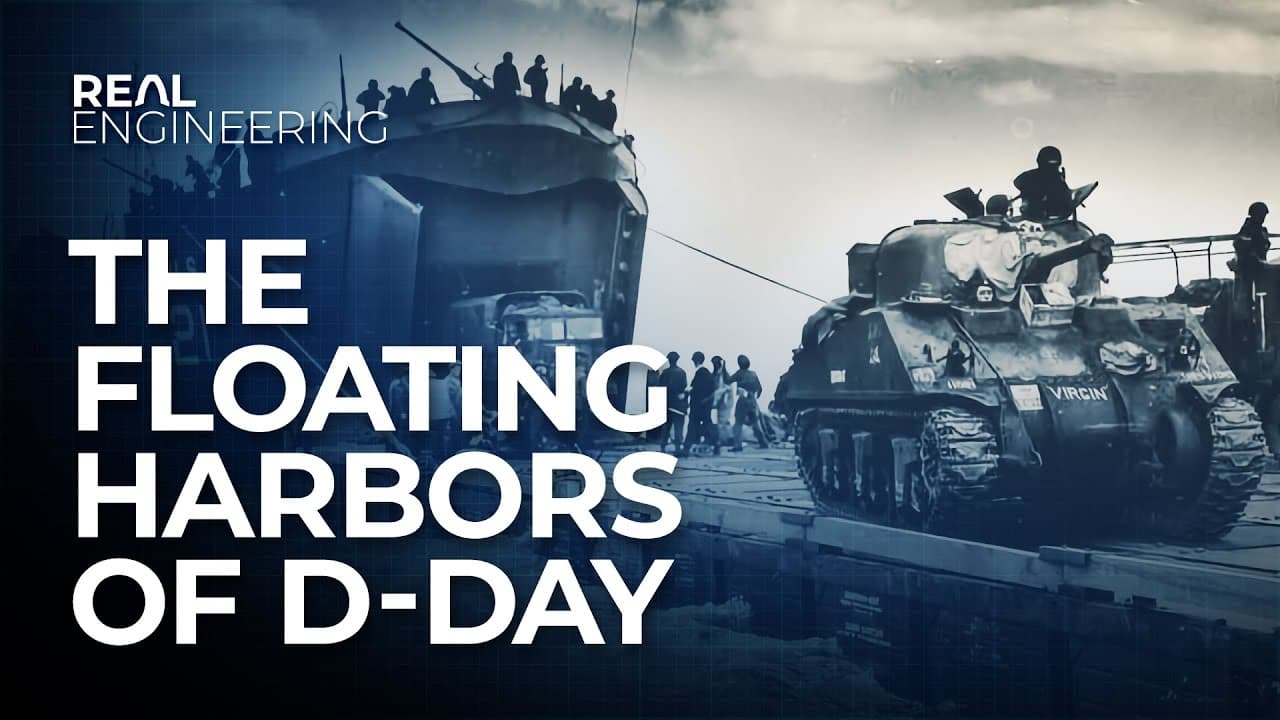
This video explains the incredible engineering and logistical efforts behind the construction and deployment of the Mulberry Harbours during D-Day. It delves into the meticulous planning, innovative designs, and challenges faced in creating these temporary harbors, which played a crucial role in the success of the Allied invasion of Normandy.
Transcript
This video was made possible by CuriosityStream, sign up for the Nebula bundle deal for just 14.79 at curiositystream.com/realengineering to watch the other 8 episodes in this logistics of d-day series. When learning the history of D-Day, we are most frequently met with tales of valor of soldiers rushing the beaches. Our collective vision of that d... Read More
Key Insights
- The Mulberry Harbours were two artificial harbors built to support the D-Day invasion, allowing for the rapid unloading of troops and supplies onto the beaches of Normandy.
- The harbors needed to be constructed in secrecy, transported across the English Channel, and assembled in a war zone, showcasing an extraordinary engineering feat.
- Breakwaters, including scuttled ships and floating structures, were used to protect the harbors from harsh sea conditions and ensure safe unloading operations.
- The harbors were essential in maintaining the supply chain, enabling the Allies to sustain their beachhead and eventually push forward into Europe.
- A severe storm shortly after D-Day tested the durability of the harbors, leading to the destruction of the American harbor, while the British harbor survived with some damage.
- The video highlights the role of various components like Phoenix Caissons, Bombardons, and floating piers, each designed to address specific logistical challenges.
- Despite criticisms, the Mulberry Harbours were crucial in ensuring redundancy and flexibility in supply lines, which were vital for the Allies' success.
- The video is part of a larger series on the logistics of D-Day, emphasizing the importance of planning and innovation in wartime operations.
Install to Summarize YouTube Videos and Get Transcripts
Explore YouTube Video Summarizer or Get YouTube Transcript Extractor
Questions & Answers
Q: What were the Mulberry Harbours, and why were they important?
The Mulberry Harbours were temporary floating harbors constructed by the Allies during World War II to facilitate the rapid unloading of troops, vehicles, and supplies onto the beaches of Normandy. They were crucial for maintaining supply lines and supporting the initial stages of the Allied invasion, allowing for a sustained beachhead and eventual push into Europe.
Q: How were the Mulberry Harbours constructed and deployed?
The Mulberry Harbours were constructed in secrecy in Britain, comprising various components like Phoenix Caissons and Bombardons. They were then floated across the English Channel and assembled off the Normandy coast. This complex operation required meticulous planning and coordination, showcasing an extraordinary engineering feat during wartime.
Q: What challenges did the Allies face with the Mulberry Harbours?
The Allies faced several challenges, including the need for secrecy, the complexity of assembling the harbors in a war zone, and the harsh sea conditions. A severe storm shortly after D-Day tested the harbors' durability, leading to the destruction of the American harbor, while the British harbor survived with some damage.
Q: What role did breakwaters play in the Mulberry Harbours?
Breakwaters were critical components of the Mulberry Harbours, providing protection from the sea's harsh conditions. They included scuttled ships and floating structures like Bombardons, which helped create calm waters within the harbors, ensuring safe and efficient unloading operations for the Allied forces.
Q: How did the Allies address the logistical challenges of varying tide levels?
The Allies addressed the challenges of varying tide levels by designing flexible pier systems with adjustable legs, known as Spud Piers, and modular bridge sections. These allowed the harbor structures to adapt to different tide levels and wave actions, ensuring a steady roadway for the transportation of supplies and vehicles.
Q: What impact did the storm on June 19th have on the Mulberry Harbours?
The storm on June 19th, which was unprecedented in its severity, caused significant damage to the Mulberry Harbours. The American harbor was completely destroyed, while the British harbor, protected by natural breakwaters, sustained damage but remained operational. This event highlighted the harbors' vulnerability to extreme weather conditions.
Q: Why were the Mulberry Harbours criticized, and how did they prove their worth?
The Mulberry Harbours were criticized because the US forces managed to maintain supply lines without their harbor, primarily using landing craft. However, the harbors provided crucial redundancy and flexibility, ensuring a steady supply line in the face of potential setbacks, which is vital in military logistics.
Q: How does this video fit into the larger series on D-Day logistics?
This video is part of a comprehensive series exploring the logistics of D-Day, covering various aspects like the selection of Normandy, deception tactics, and supply chain innovations. It emphasizes the importance of planning, engineering, and adaptability in executing such a massive military operation, providing a deep dive into the complexities of wartime logistics.
Summary & Key Takeaways
-
The video covers the creation and deployment of the Mulberry Harbours used during the D-Day invasion. These temporary harbors were engineered to facilitate the rapid unloading of troops and supplies onto Normandy beaches, playing a pivotal role in the Allied success.
-
The construction involved innovative designs like floating breakwaters and Phoenix Caissons, which were transported and assembled in a war zone. The harbors faced challenges, including a severe storm, but proved essential for maintaining supply lines.
-
Part of a larger series on D-Day logistics, the video highlights the incredible planning and engineering efforts required to execute such a massive operation. It underscores the importance of adaptability and innovation in military strategy.
Read in Other Languages (beta)
Share This Summary 📚
Summarize YouTube Videos and Get Video Transcripts with 1-Click
Try YouTube Summary with ChatGPT & Claude or YouTube Transcript Generator
Explore More Summaries from Real Engineering 📚






Summarize YouTube Videos and Get Video Transcripts with 1-Click
Try YouTube Summary with ChatGPT & Claude or YouTube Transcript Generator