How the SR-71 Blackbird Achieved Mach 3.2
TL;DR
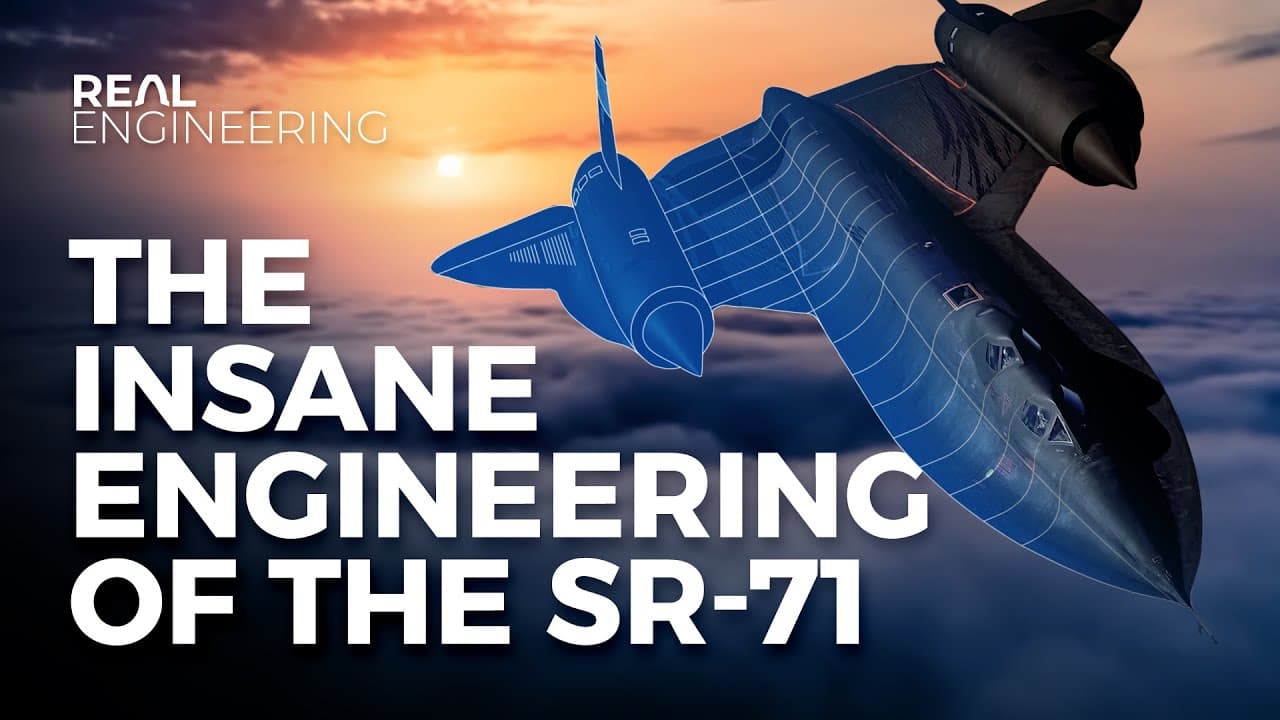
The SR-71 Blackbird is an engineering marvel capable of flying at Mach 3.2 due to its unique design and materials. It uses a hybrid turbojet-ramjet engine to achieve high speeds, with titanium construction to withstand extreme temperatures. The aircraft's black paint aids in heat dissipation, and its design allows for high-altitude, long-range reconnaissance missions without being intercepted by enemy missiles.
Transcript
It’s hard to explain the engineering marvel that is the SR-71 Blackbird. A long range plane capable of flying 26 kilometres above the surface of the planet. So high that the pilots could see the curvature on the planet and the inky black of space from their cockpits. It flew so fast that the engineers had to develop entirely new materials and desig... Read More
Key Insights
- The SR-71 Blackbird can fly at 26 kilometers above the Earth's surface, allowing pilots to see the planet's curvature and space.
- Unique materials and designs were developed to manage the heat generated from aerodynamic friction at high speeds.
- The SR-71's engines transition from turbojet to ramjet in mid-flight, optimizing performance for Mach 3.2.
- The aircraft's black paint helps radiate heat away, contrary to typical white paint used for heat reflection.
- Titanium construction allows the SR-71 to withstand temperatures up to 649 degrees Celsius.
- The SR-71's fuel system uses JP7 fuel, which is stable enough to act as a coolant for the plane's systems.
- Aerial refueling enables the SR-71 to have an effectively unlimited range, determined by pilot endurance.
- Future advancements in materials and autonomous technology are expected to enhance the capabilities of the SR-71's successor, the SR-72.
Install to Summarize YouTube Videos and Get Transcripts
Explore YouTube Video Summarizer or Get YouTube Transcript Extractor
Questions & Answers
Q: How does the SR-71 Blackbird achieve Mach 3.2?
The SR-71 achieves Mach 3.2 through a hybrid engine system that transitions from turbojet to ramjet mid-flight. The Pratt and Whitney J58 engines, coupled with advanced airflow management, allow the aircraft to maintain high speeds. The use of titanium construction and specialized fuel further supports its ability to withstand high temperatures and maintain performance.
Q: What materials are used in the SR-71's construction?
The SR-71 is primarily constructed from titanium, which accounts for 93% of its structure. Titanium is chosen for its excellent strength-to-weight ratio and heat resistance, allowing the aircraft to withstand the high temperatures encountered at Mach 3.2. The SR-71 also uses advanced composites for radar absorption and heat management.
Q: Why is the SR-71 Blackbird painted black?
The SR-71 is painted black to aid in heat dissipation. According to Kirchoff's Rule of Radiation, a good heat absorber like black paint is also an effective heat emitter. This helps the aircraft radiate more heat away than it absorbs from the sun, which is crucial given the extreme heat generated by aerodynamic friction at high speeds.
Q: What role does the JP7 fuel play in the SR-71's operation?
JP7 fuel is crucial for the SR-71's operation, acting as both a fuel and a coolant. Its low volatility and high flash point prevent it from igniting easily, which is important given the fuel leaks that occur due to the aircraft's design. JP7 is circulated throughout the airframe to cool critical components before being used for combustion.
Q: How does the SR-71 manage heat generated during flight?
The SR-71 manages heat through its titanium construction, which withstands high temperatures, and its black paint, which aids in heat radiation. The JP7 fuel also acts as a coolant, circulating through the airframe to absorb heat from critical systems. These measures, combined with careful material selection, prevent the aircraft from overheating.
Q: What is the significance of the SR-71's engine design?
The SR-71's engine design is significant due to its ability to transition from turbojet to ramjet operation. This hybrid system allows the aircraft to achieve and maintain high speeds efficiently. The engines feature advanced airflow management systems, such as inlet spikes and bypass ducts, to optimize performance and manage the shockwave position.
Q: What limitations did the SR-71 face in terms of speed and range?
The SR-71's top speed was limited to Mach 3.2 due to heat constraints on its titanium structure. Its range was also limited by fuel capacity, but aerial refueling extended its operational range significantly. The aircraft's range was ultimately determined by pilot endurance and the availability of refueling opportunities during missions.
Q: How will the SR-72 improve upon the SR-71's design?
The SR-72 is expected to improve upon the SR-71's design by utilizing advanced composites and autonomous technology. These advancements will allow the SR-72 to reach speeds up to Mach 6, with enhanced heat resistance and efficiency. The use of 3D-printed titanium components will further optimize the aircraft's performance and capabilities.
Summary & Key Takeaways
-
The SR-71 Blackbird's engineering allows it to fly at Mach 3.2, using a combination of turbojet and ramjet engines. Its titanium construction withstands extreme temperatures, and its black paint aids in heat dissipation. The aircraft's unique design and aerial refueling capabilities enable it to perform long-range reconnaissance missions without interception.
-
The SR-71's engines transition from turbojet to ramjet, allowing it to achieve high speeds. Its design includes a total wet wing fuel system, using JP7 fuel that doubles as a coolant. The plane's titanium structure and black paint help manage heat generated from friction, enabling sustained high-speed flight.
-
Future developments in aerospace technology, such as advanced composites and autonomous systems, are expected to enhance the capabilities of the SR-71's successor, the SR-72. These advancements will allow for higher speeds and more efficient operations, continuing the legacy of the SR-71's groundbreaking engineering.
Read in Other Languages (beta)
Share This Summary 📚
Summarize YouTube Videos and Get Video Transcripts with 1-Click
Try YouTube Summary with ChatGPT & Claude or YouTube Transcript Generator
Explore More Summaries from Real Engineering 📚





Summarize YouTube Videos and Get Video Transcripts with 1-Click
Try YouTube Summary with ChatGPT & Claude or YouTube Transcript Generator