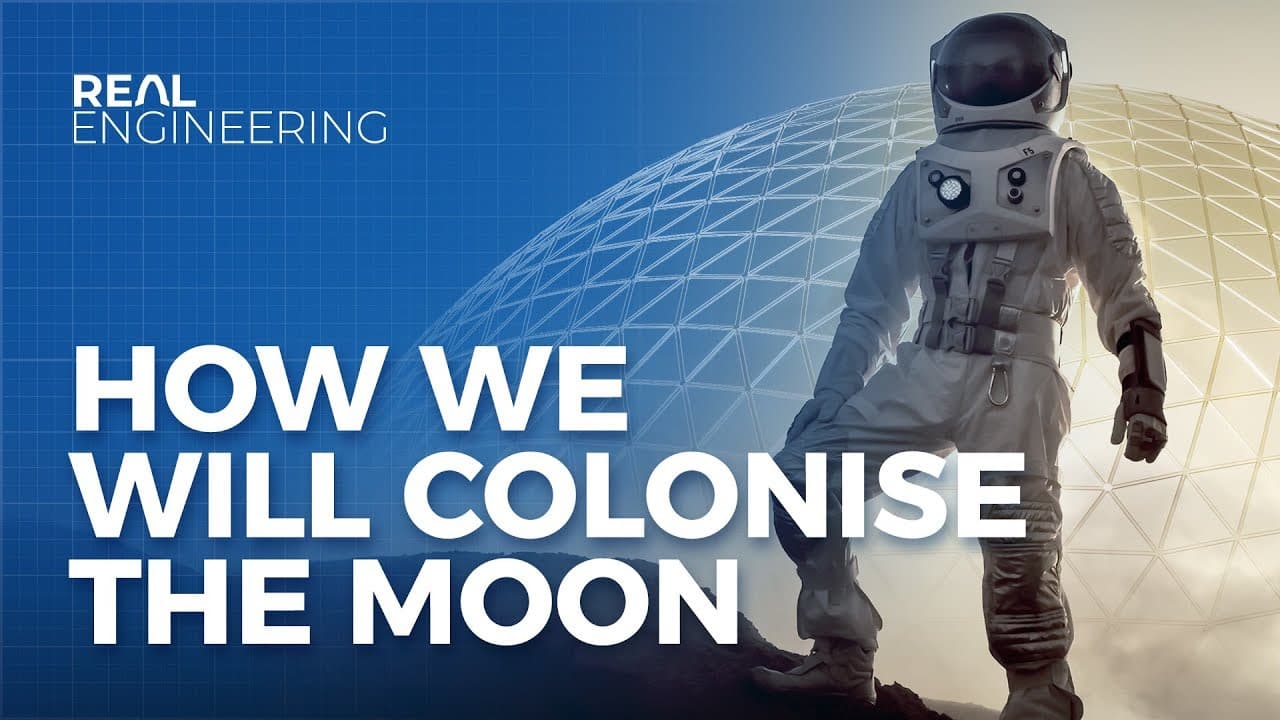
How We Will Colonise The Moon
TL;DR
Developing technologies to utilize moon's resources is key for colonization.
Transcript
Ever since man landed on the moon, we have been dreaming of colonising it. We have the technology to get there, the only thing that is standing in our way is the cost of sending materials to the moon. While companies like Space X and Blue Origin are aiming to reduce the cost of rocket launches. The real challenge will be using the materials availab... Read More
Key Insights
- The main barrier to moon colonization is the high cost of transporting materials from Earth, making in-situ resource utilization crucial.
- The moon's poles are ideal for colonization due to the presence of water ice and regions with continuous sunlight, enabling solar energy generation.
- Efficient extraction of lunar resources, like water ice, involves innovative methods such as using microwaves to evaporate and collect water vapor.
- Oxygen, trapped in lunar soil oxides, is abundant and can be extracted as a byproduct of metal refining processes, aiding sustainability.
- Iron is vital for construction but heavy to transport; developing a fully electrified extraction process on the moon is essential.
- Aluminium, abundant on the moon, can be extracted using electrolysis, but requires alternative materials for electrodes to avoid carbon dioxide emissions.
- Solar panels, initially shipped from Earth, will power lunar operations, but future developments in nuclear fusion could enhance energy independence.
- A self-sustaining lunar colony will drive technological advancements that can reduce Earth's reliance on fossil fuels, fostering human growth and innovation.
Install to Summarize YouTube Videos and Get Transcripts
Explore YouTube Video Summarizer or Get YouTube Transcript Extractor
Questions & Answers
Q: What is the primary challenge in colonizing the moon?
The primary challenge in colonizing the moon is the high cost associated with transporting materials from Earth. This necessitates the development of technologies that can efficiently utilize the moon's natural resources, such as water and metals, to support a self-sustaining colony and reduce dependency on Earth-based supplies.
Q: Why are the moon's poles considered ideal for colonization?
The moon's poles are considered ideal for colonization because they contain significant deposits of water ice, crucial for sustaining life and generating oxygen. Additionally, certain polar regions receive almost continuous sunlight, enabling the use of solar panels for a steady supply of energy, which is vital for powering extraction and other operations.
Q: How can water be extracted from the moon's surface?
Water can be extracted from the moon's surface by collecting lunar soil containing ice and using microwave ovens to evaporate the water at low temperatures due to the moon's vacuum. The vapor is then condensed and collected, providing a critical resource for sustaining life and supporting various processes in a lunar colony.
Q: What role does oxygen play in lunar colonization?
Oxygen plays a crucial role in lunar colonization as it is essential for life support and can be extracted from lunar soil oxides. This extraction process not only provides breathable oxygen but also aids in the refinement of valuable metals like iron and aluminum, making it a key component of sustainable lunar living.
Q: What are the challenges of extracting iron on the moon?
Extracting iron on the moon poses challenges due to the absence of necessary materials like limestone and coal, which are used in traditional Earth-based processes. Developing a fully electrified extraction method that eliminates the need for heavy fossil fuels is essential to make iron production feasible on the moon, addressing both logistical and environmental concerns.
Q: How is aluminum extracted on the moon, and what are the challenges?
Aluminum is extracted on the moon using electrolysis, a process that involves dissolving aluminum oxide in molten cryolite to reduce energy requirements. The challenge lies in finding suitable materials for electrodes that do not produce carbon dioxide, as graphite is not viable, necessitating the development of alternative materials like chromium alloy anodes.
Q: What is the potential role of nuclear fusion in lunar colonization?
Nuclear fusion has the potential to revolutionize energy generation on the moon by utilizing its rich supply of helium-3, a fuel source for fusion reactions. If fusion technology is developed, it could provide a vast, sustainable energy supply, greatly enhancing the moon's economic potential and supporting a self-sustaining lunar colony.
Q: How does lunar colonization benefit technological advancement on Earth?
Lunar colonization drives technological advancements that can be applied on Earth, particularly in resource extraction and energy generation. These technologies have the potential to reduce Earth's reliance on fossil fuels, decrease carbon emissions, and promote environmental sustainability, showcasing the broader benefits of space exploration and innovation.
Summary & Key Takeaways
-
The high cost of transporting materials from Earth to the moon is a major obstacle for colonization, necessitating the development of technologies to utilize lunar resources efficiently.
-
Lunar poles, with their water ice deposits and continuous sunlight, offer ideal conditions for initial colonization efforts, supporting energy generation and resource extraction.
-
Technological advancements in resource extraction and energy generation on the moon not only facilitate colonization but also have potential applications on Earth, promoting environmental sustainability.
Read in Other Languages (beta)
Share This Summary 📚
Summarize YouTube Videos and Get Video Transcripts with 1-Click
Try YouTube Summary with ChatGPT & Claude or YouTube Transcript Generator
Explore More Summaries from Real Engineering 📚





Summarize YouTube Videos and Get Video Transcripts with 1-Click
Try YouTube Summary with ChatGPT & Claude or YouTube Transcript Generator