The SLS is Outdated. Why Does it Exist?
TL;DR
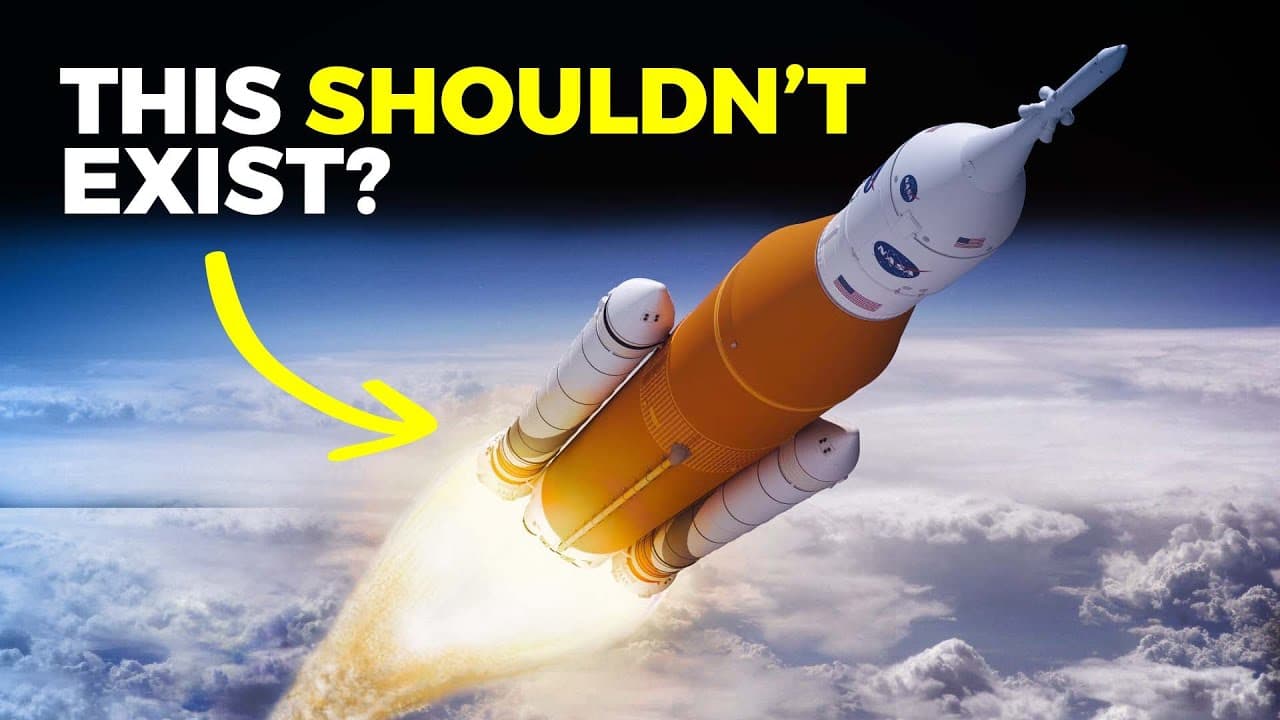
The SLS exists due to politics and legacy, despite its inefficiencies.
Transcript
Today we stand on the threshold of a new golden age of space exploration. The first of three missions that will see humans return to the moon for the first time in 5 decades. The SLS, or Space Launch System, today rests on the stand, waiting to ignite its engines, taking the Orion capsule on a journey around the moon. This is an exciting launch for... Read More
Key Insights
- The SLS, or Space Launch System, is a massive rocket designed to take humans back to the moon, using parts and concepts from the Space Shuttle and Constellation programs.
- Despite advancements in reusable rockets by private companies, NASA's SLS is non-reusable, leading to questions about its cost-effectiveness and necessity.
- The SLS program is a result of political decisions, particularly the NASA Authorization Act of 2010, which revived the canceled Constellation program under a new name, Artemis.
- The SLS's design incorporates components from past programs, such as the Space Shuttle's RS-25 engines and solid rocket boosters, with some modifications for increased performance.
- The program's high costs are partly due to NASA's strategy of spreading jobs across the U.S. to gain political support, a practice criticized for inefficiency.
- The SLS is seen as a 'jobs program' with the rocket as an output, reflecting the complexities of funding and politics in space exploration.
- Despite its inefficiencies, the SLS represents a step towards human exploration of the moon and potentially Mars, amidst a resurgence of interest in space travel.
- The content highlights the role of nostalgia and excitement in space exploration, drawing parallels to historic moon missions and the potential for future achievements.
Install to Summarize YouTube Videos and Get Transcripts
Explore YouTube Video Summarizer or Get YouTube Transcript Extractor
Questions & Answers
Q: Why is the SLS considered outdated?
The SLS is considered outdated because it is a non-reusable rocket, unlike modern rockets developed by private companies that drastically reduce launch costs through reusability. Despite advancements in space technology, the SLS relies on legacy components and designs, leading to questions about its cost-effectiveness and necessity in the current era.
Q: What political factors influenced the SLS program?
The SLS program was influenced by political factors, particularly the NASA Authorization Act of 2010, which revived the canceled Constellation program. The act required NASA to reuse technology and workforce, ensuring job distribution across the U.S. This strategy secured political support but led to criticisms of inefficiency and high costs.
Q: How does the SLS utilize components from previous programs?
The SLS utilizes components from previous programs by incorporating parts from the Space Shuttle and Constellation programs. It uses RS-25 engines and solid rocket boosters from the Space Shuttle, with modifications for increased performance. This approach was mandated by the NASA Authorization Act of 2010 to reuse existing technology and workforce.
Q: What criticisms does the SLS program face?
The SLS program faces criticisms for its high costs and inefficiency. Critics argue that the funds could be better spent on other NASA projects or commercial partnerships. The program's reliance on non-reusable technology and its status as a 'jobs program' further fuel debates about its necessity and effectiveness in modern space exploration.
Q: What are the goals of the SLS program?
The goals of the SLS program include returning humans to the moon for the first time in decades and serving as a stepping stone for future exploration of Mars. By leveraging existing technology and workforce, the program aims to maintain U.S. leadership in space exploration and inspire a new generation of space enthusiasts.
Q: How does the SLS program impact NASA's budget and focus?
The SLS program impacts NASA's budget and focus by allocating significant resources to a non-reusable rocket, potentially limiting funding for other projects. However, it also supports NASA's collaboration with commercial partners and long-term goals of lunar and Martian exploration, balancing traditional and innovative approaches in space exploration.
Q: What role does nostalgia play in the SLS program?
Nostalgia plays a role in the SLS program by evoking memories of historic space missions, such as the Apollo program. The SLS's design, reminiscent of past rockets, appeals to those who cherish the legacy of human space exploration. This emotional connection helps garner public and political support for the program despite its challenges.
Q: What is the future outlook for space exploration following the SLS program?
The future outlook for space exploration following the SLS program is promising, with advancements in commercial space technology and NASA's focus on innovative projects. The SLS serves as a transitional step towards sustainable lunar exploration and potential Mars missions, with the commercial sector poised to provide cost-effective solutions for future endeavors.
Summary & Key Takeaways
-
The Space Launch System (SLS) is a massive, non-reusable NASA rocket built using parts from previous programs, designed for lunar missions. Despite its high cost and inefficiency, it exists due to political decisions and serves as a stepping stone in space exploration.
-
The SLS program was revived under the NASA Authorization Act of 2010, following the cancellation of the Constellation program. The act mandated the reuse of technology and workforce, leading to the SLS's current form, which combines elements from the Space Shuttle and Constellation programs.
-
The SLS's existence is driven by political and economic factors, including job distribution across the U.S. to secure congressional support. While criticized for inefficiency, the program contributes to ongoing space exploration efforts, with potential for future lunar and Martian missions.
Read in Other Languages (beta)
Share This Summary 📚
Summarize YouTube Videos and Get Video Transcripts with 1-Click
Try YouTube Summary with ChatGPT & Claude or YouTube Transcript Generator
Explore More Summaries from Real Engineering 📚

Summarize YouTube Videos and Get Video Transcripts with 1-Click
Try YouTube Summary with ChatGPT & Claude or YouTube Transcript Generator