How NASA Reinvented The Wheel - Shape Memory Alloys
TL;DR
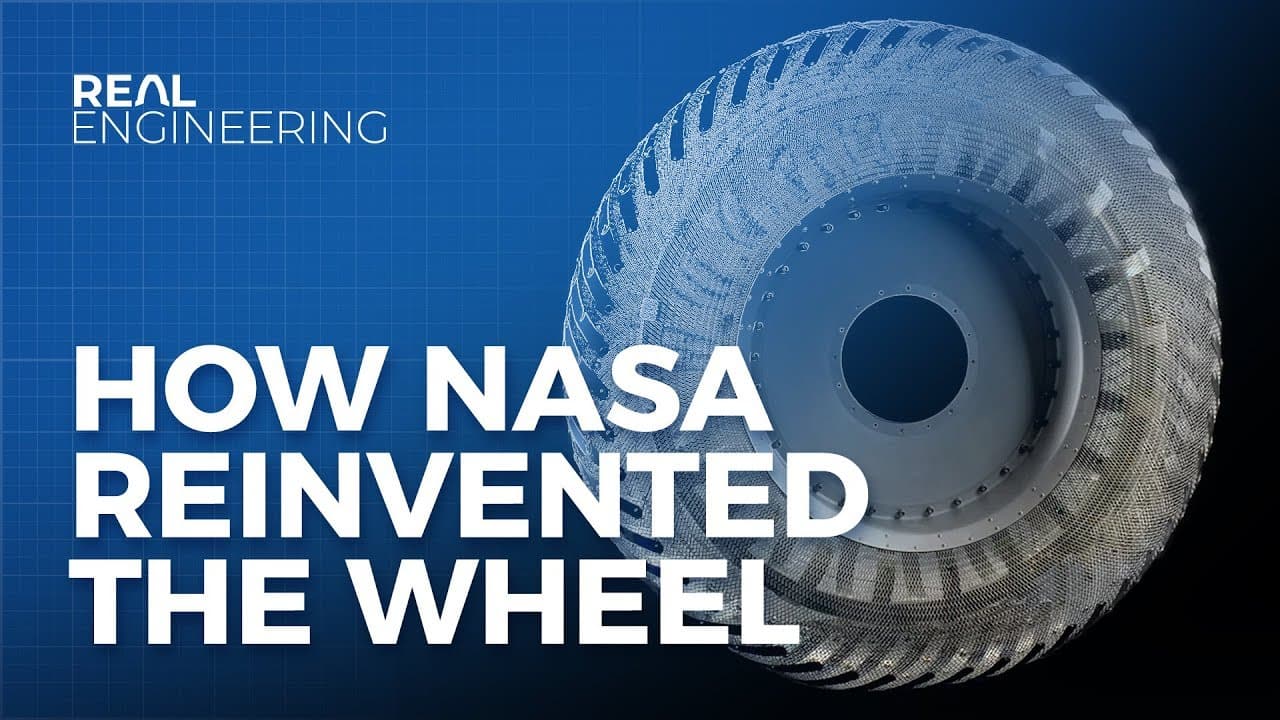
NASA develops shape memory alloy wheels for Mars rovers.
Transcript
This episode of Real Engineering is brought to you by the Royal Air Force and the Briggs Automotive Company, who are currently holding an engineering design competition for Young Engineers. One of the moments that will always stand out in my life is the watching the joy and excitement of the engineers at JPL celebrating the monumental task they had... Read More
Key Insights
- NASA's Mars rovers face challenges with wheel durability due to the rough Martian terrain, necessitating innovative solutions.
- Traditional aluminum wheels suffer damage due to the harsh conditions and weight of the Curiosity Rover, prompting the need for redesign.
- Rubber tires are unsuitable for Mars due to extreme temperatures and UV radiation, which make them brittle and degrade quickly.
- The Lunar Rover's flexible steel mesh wheels were considered but deemed inadequate for Mars due to higher rover weight and gravity.
- Nitinol, a shape memory alloy, is used in new spring tires, offering flexibility and resilience while withstanding Mars' conditions.
- Nitinol's unique properties allow it to recover its shape after deformation, making it ideal for applications on Mars and Earth.
- The material's ability to transform between martensite and austenite structures under stress or heat is key to its functionality.
- Nitinol's superelasticity is crucial for the new Mars rover wheels, allowing them to deform and recover without permanent damage.
Install to Summarize YouTube Videos and Get Transcripts
Explore YouTube Video Summarizer or Get YouTube Transcript Extractor
Questions & Answers
Q: What challenges do Mars rover wheels face?
Mars rover wheels face significant challenges due to the planet's rough terrain, which causes damage to traditional aluminum wheels. The harsh conditions, combined with the rover's weight, lead to permanent deformation and cracks in the wheels, necessitating innovative solutions like Nitinol-based wheels.
Q: Why can't traditional rubber tires be used on Mars?
Traditional rubber tires are unsuitable for Mars because the planet's extreme temperatures can cause rubber to become brittle. Additionally, the UV radiation on Mars would degrade rubber quickly. These factors make rubber tires impractical for use on Mars, leading to the exploration of alternative materials like Nitinol.
Q: How does Nitinol help solve the wheel problem for Mars rovers?
Nitinol, a shape memory alloy, helps solve the wheel problem for Mars rovers by allowing wheels to deform and recover their shape. Its superelasticity and ability to transform between crystal structures under stress enable the wheels to handle Mars' challenging conditions without permanent damage, enhancing rover durability.
Q: What is the significance of Nitinol's transformation temperature?
Nitinol's transformation temperature is significant because it can be tailored for specific applications. By adjusting the titanium content, engineers can set the temperature at which Nitinol changes its crystal structure, allowing it to remember its shape. This property is crucial for applications like stents and Mars rover wheels.
Q: How does the superelasticity of Nitinol benefit Mars rover wheels?
The superelasticity of Nitinol benefits Mars rover wheels by allowing them to deform significantly under stress and then recover their original shape. This property enables the wheels to adapt to the rugged Martian terrain, providing resilience and preventing permanent damage, which is essential for the rover's long-term operation.
Q: What are the potential applications of Nitinol on Earth?
On Earth, Nitinol has potential applications in various industries due to its shape memory and superelastic properties. It is used in medical devices like stents, which expand at body temperature without damaging blood vessels, and in other fields where materials need to recover their shape after deformation.
Q: Why are the new Mars rover wheels considered an engineering innovation?
The new Mars rover wheels are considered an engineering innovation because they incorporate Nitinol, a shape memory alloy that allows for unprecedented flexibility and durability. This innovation addresses the limitations of traditional materials, enabling the wheels to withstand Mars' harsh conditions and extend the rover's operational lifespan.
Q: How does the new wheel design impact future Mars missions?
The new wheel design, using Nitinol, impacts future Mars missions by providing more reliable and durable wheels that can handle the planet's challenging terrain. This advancement increases the longevity and effectiveness of rovers, allowing for more extensive exploration and data collection, ultimately contributing to the success of future missions.
Summary & Key Takeaways
-
NASA is addressing the issue of wheel damage on Mars rovers by developing new wheels made from Nitinol, a shape memory alloy. This innovative material allows the wheels to deform and recover, providing durability and adaptability to Mars' challenging terrain.
-
Traditional aluminum wheels are inadequate for the Curiosity Rover due to the harsh Martian environment. Nitinol's unique properties offer a solution, enabling wheels to withstand stresses and recover their shape, enhancing the rover's operational lifespan.
-
The development of Nitinol-based wheels highlights NASA's commitment to engineering innovation. These wheels are designed to handle Mars' extreme conditions, ensuring the longevity of future rover missions and paving the way for further exploration.
Read in Other Languages (beta)
Share This Summary 📚
Summarize YouTube Videos and Get Video Transcripts with 1-Click
Try YouTube Summary with ChatGPT & Claude or YouTube Transcript Generator
Explore More Summaries from Real Engineering 📚






Summarize YouTube Videos and Get Video Transcripts with 1-Click
Try YouTube Summary with ChatGPT & Claude or YouTube Transcript Generator