The Problem with the Next Moon Mission
TL;DR
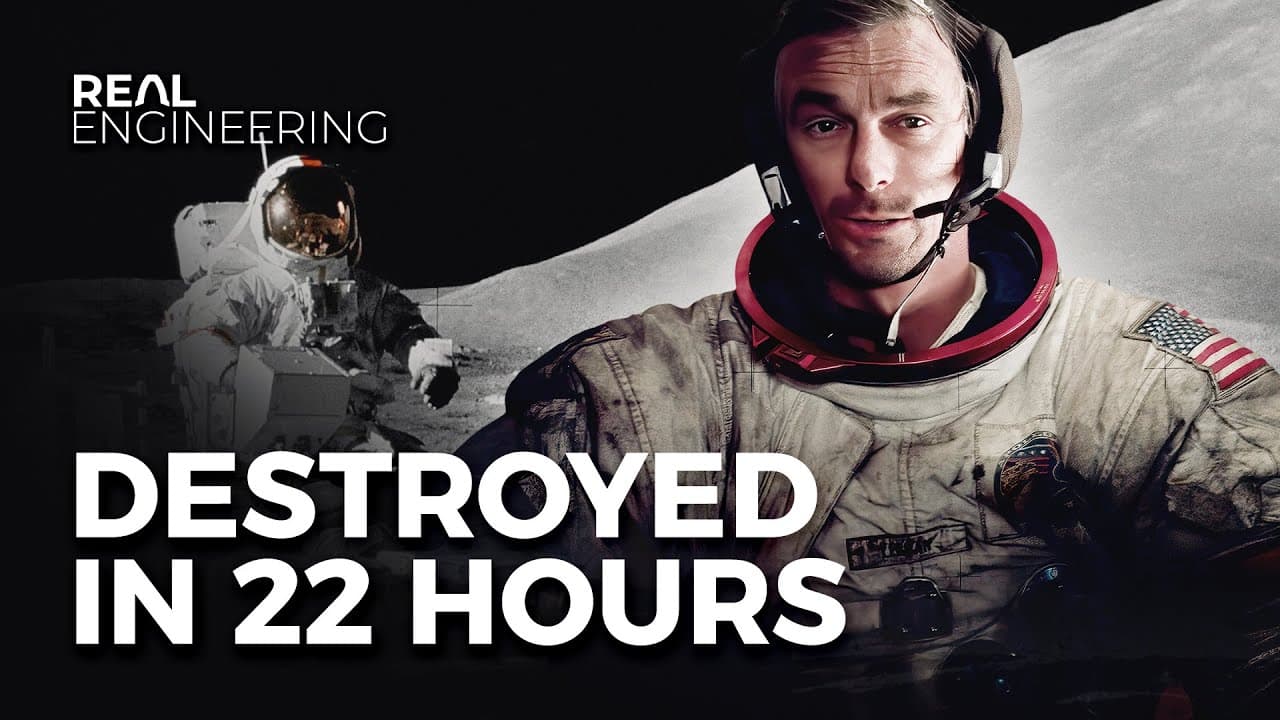
Lunar dust poses significant challenges for future moon missions.
Transcript
In 1968, astronauts on NASA’s Apollo 8 mission saw something that should have been impossible. In the last moments before the lunar sunrise and sunset every day, they noticed a haze developing on the horizon, and then in the final few seconds before the sun had risen or fallen, they saw bright bands of light radiating out from the surface, sharply ... Read More
Key Insights
- Apollo 8 astronauts observed unexpected light bands on the moon, attributed to lunar dust scattering sunlight, not atmospheric gases.
- Lunar dust, composed of fine particles and sharp glass, poses significant risks to astronauts and equipment, causing damage and health issues.
- NASA's Space Technology Roadmaps aim for spacesuits to endure 800 hours on the lunar surface, a significant increase from Apollo missions.
- Lunar dust forms due to micrometeorite impacts, creating electrostatic charges that cause dust to levitate and adhere to surfaces.
- Electrostatic potentials on the moon's surface can reach up to 20 V on the day side and -3800 V on the night side.
- NASA's Breakthrough, Innovative & Game-changing Idea Challenge inspired novel solutions for lunar dust, such as conductive fibers and charged brushes.
- Carbon nanotubes, with high strength and conductivity, are being integrated into spacesuits to repel charged dust using electrical currents.
- NASA's prototype dust removal system using carbon nanotubes removed up to 96% of lunar dust simulant, promising for future missions.
Install to Summarize YouTube Videos and Get Transcripts
Explore YouTube Video Summarizer or Get YouTube Transcript Extractor
Questions & Answers
Q: What phenomenon did Apollo 8 astronauts observe on the moon?
Apollo 8 astronauts observed unexpected light bands on the moon's horizon during lunar sunrise and sunset. This phenomenon was attributed to lunar dust scattering sunlight, as the moon lacks an atmosphere. The dust, composed of microscopic particles, created a haze that scattered light, resulting in the observed bands.
Q: Why is lunar dust a significant challenge for future moon missions?
Lunar dust is a major challenge due to its composition of fine particles and sharp glass, which can damage equipment and pose health risks to astronauts. It adheres to surfaces due to electrostatic charges, causing issues like obscured vision, corroded equipment, and reduced spacesuit mobility, making it crucial to address for future missions.
Q: How does lunar dust form and why does it stick to surfaces?
Lunar dust forms from micrometeorite impacts that break off parts of lunar rocks, creating fine dust. It sticks to surfaces due to electrostatic charges formed by radiation exposure. On the moon's day side, dust particles gain positive charges, while on the night side, they become negatively charged, causing them to adhere to surfaces.
Q: What solutions have been proposed to address the lunar dust problem?
Solutions proposed to address lunar dust include conductive fibers inspired by chinchilla hair, electrically charged brushes powered by UV radiation, and fabric mimicking insect hair structures. These solutions aim to use charge to repel dust from surfaces, reducing its adhesion and impact on equipment and spacesuits.
Q: How are carbon nanotubes used in addressing lunar dust challenges?
Carbon nanotubes are used in spacesuits to repel lunar dust by creating electrical currents that generate repulsive forces. These nanotubes are woven into the suit's outer layer, creating a system that actively ejects dust through electrical fields. This method leverages the high conductivity and flexibility of carbon nanotubes to mitigate dust adhesion.
Q: What results were achieved with NASA's prototype dust removal system?
NASA's prototype dust removal system, which integrates carbon nanotubes into spacesuit fabric, achieved remarkable results by removing up to 96% of lunar dust simulant. This system uses electrical currents to create repulsive forces that eject dust from the fabric, demonstrating significant potential for future lunar missions.
Q: What is the significance of NASA's Space Technology Roadmaps for lunar missions?
NASA's Space Technology Roadmaps are significant for lunar missions as they set ambitious goals for extending spacesuit lifespan to 800 hours on the lunar surface. This is crucial for establishing long-term outposts on the moon, as it addresses the challenges posed by lunar dust and enhances the durability and functionality of spacesuits.
Q: How does the dust removal system work in NASA's prototype spacesuit?
The dust removal system in NASA's prototype spacesuit works by integrating carbon nanotube electrodes into the outer fabric. These electrodes are activated by alternating currents, creating electrical fields that repel charged dust particles. The system effectively uses electrical energy to mechanically eject dust, preventing its adhesion to the suit.
Summary & Key Takeaways
-
Apollo 8 astronauts witnessed unexpected light bands on the moon due to lunar dust scattering sunlight, not atmospheric gases. This discovery highlighted the challenges posed by lunar dust, which is composed of fine particles and sharp glass, causing damage to equipment and health issues for astronauts.
-
NASA's Space Technology Roadmaps aim to extend the lifespan of spacesuits to 800 hours on the lunar surface, a significant increase from Apollo missions. Lunar dust forms from micrometeorite impacts, creating electrostatic charges that cause dust to levitate and adhere to surfaces, posing a major challenge for future missions.
-
In response to the lunar dust problem, NASA's Breakthrough, Innovative & Game-changing Idea Challenge inspired novel solutions like conductive fibers and charged brushes. Carbon nanotubes are being integrated into spacesuits to repel charged dust using electrical currents, with a prototype system removing up to 96% of lunar dust simulant.
Read in Other Languages (beta)
Share This Summary 📚
Summarize YouTube Videos and Get Video Transcripts with 1-Click
Try YouTube Summary with ChatGPT & Claude or YouTube Transcript Generator
Explore More Summaries from Real Engineering 📚



Summarize YouTube Videos and Get Video Transcripts with 1-Click
Try YouTube Summary with ChatGPT & Claude or YouTube Transcript Generator