How AI Sales Enablement Speeds Up Revenue Teams
TL;DR
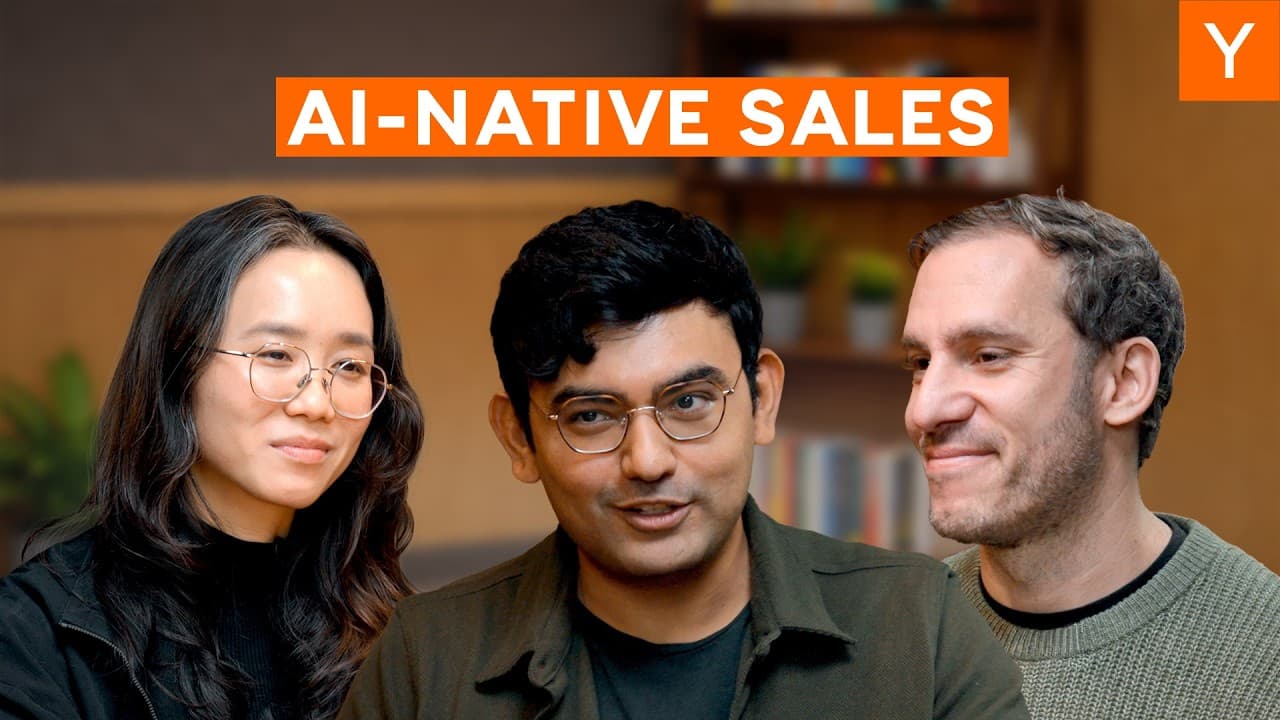
AI-native sales enablement can shorten onboarding, personalize deal content, and let sellers rehearse important conversations before meeting buyers. Letter AI says its customers achieve close to full adoption, while one Fortune 100 customer created an acquisition-related seller certification over a weekend with two or three people, instead of spending at least a month on the work.
Transcript
[music] I'm excited today to welcome the founders of Letter AI who are announcing their 40 million series B round. Here is Alli and Arman. Tell us uh what Letter AI is. Hey Diana, nice to be here. Uh, letter AI is an AI native enablement platform which means we help revenue teams ramp up more quickly with personalized training, coaching and also de... Read More
Key Insights
- Letter AI is an AI-native enablement platform that combines personalized training, coaching, buyer content, and sales simulations. It aims to help revenue teams ramp faster, engage buyers with relevant information, and accelerate deal cycles.
- New-team-member onboarding is a primary Letter AI use case. The founders say customers can make new employees productive in about half the time required before adopting the platform, while using AI to create and personalize the supporting training materials.
- AI role-play is a way for sellers to practice high-stakes conversations before speaking with real buyers. Repeated simulations provide a setting for preparation where mistakes do not directly affect an active prospect or customer relationship.
- Tractatus was Letter AI's original generative AI developer-tool product. The founders pivoted because the market was becoming saturated and developers often prototyped with the platform before writing their own Python implementations, which made the product insufficiently sticky.
- Legacy enablement systems can suffer from low adoption and heavy operational requirements. The founders observed that sellers struggled to find useful material, rarely logged in, and depended on people to curate content, develop training, and keep resources current.
- Enterprise readiness helped Letter AI secure Lenovo during the YC batch. The initial introduction came through a relationship from a previous job, and the resulting Lenovo deal reportedly expanded tenfold during the following two years.
- AI-generated enablement can compress large content-development projects. One Fortune 100 customer created a seller certification between Friday and Monday with two or three people, while the same acquisition-related project previously would have required at least a month and many contributors.
- Letter Compass personalizes enablement around each seller's active book of business. It connects broader content, pitch decks, certifications, training, and role-plays with CRM and conversational intelligence data to surface relevant insights and follow-ups for current deals.
Install to Summarize YouTube Videos and Get Transcripts
Explore YouTube Video Summarizer or Get YouTube Transcript Extractor
Questions & Answers
Q: What is Letter AI and what does it do?
Letter AI is an AI-native sales enablement platform for revenue and customer-facing teams. It provides personalized training, coaching, curated buyer content, and AI role-play simulations. Its purpose is to help new team members become productive faster, prepare sellers for important conversations, deliver relevant information to prospects at the appropriate moment, and move active deals forward more efficiently.
Q: How does Letter AI help sales teams onboard faster?
Letter AI uses existing organizational knowledge to accelerate the creation of personalized training and certification materials. The founders say new team members become productive in about half the time they required before using the platform. In one acquisition case, a Fortune 100 customer prepared a complete certification for hundreds of incoming sellers over a weekend with only two or three people involved.
Q: Why did the founders pivot from Tractatus to Letter AI?
Tractatus offered developer tools for generative AI, but the founders concluded during Y Combinator that the idea was not sufficiently strong. The field was becoming saturated, and developers frequently used the product to create prototypes before rebuilding the solution themselves in Python. That behavior produced weak retention, so the founders shifted toward AI-native sales enablement and adopted a more memorable name.
Q: What problem did Letter AI identify in legacy sales enablement tools?
The founders identified low adoption, poor content discovery, high licensing costs, and substantial manual work as central problems in legacy enablement. Sellers often could not find relevant product information and rarely logged into existing systems. Meanwhile, enablement teams needed many people to curate materials, create training, and maintain content. Letter AI uses AI and existing knowledge sources to reduce that operational burden.
Q: How did Letter AI win Lenovo as an early customer?
The Lenovo opportunity began with someone the CEO knew from a previous job. That contact understood the product's potential and introduced the founders to the appropriate sales stakeholders. Letter AI also took early steps to become ready for enterprise requirements. Those factors helped the company close a substantial Lenovo agreement during its YC batch, and the founders say the deal later grew tenfold over two years.
Q: What is Letter Compass and how does it support active deals?
Letter Compass is a product that personalizes enablement resources according to the book of business owned by a seller or customer success manager. Instead of presenting generic product training, it connects content, pitch decks, certifications, role-plays, CRM information, and conversational intelligence data with current opportunities. It then surfaces relevant training, insights, and follow-up actions intended to help advance specific deals.
Q: How does AI role-play improve sales preparation?
AI role-play gives sellers a simulated environment in which they can rehearse buyer conversations multiple times before joining a live call. The founders position this capability as especially useful for high-stakes prospects, where an avoidable mistake could affect a real opportunity. Practice allows sellers to test their knowledge, refine how they respond, and prepare for likely questions without risking an active customer conversation.
Q: How is Letter AI integrating with customers' AI systems?
Letter AI is building its own MCP servers and an agent-to-agent protocol. These capabilities allow customers' web applications, internal agents, and customer-facing agents to communicate with Letter's agents for distributed reasoning, content retrieval, and question answering. The founders also describe sellers working in Cursor and using a Letter AI MCP server to access relevant content or receive answers during their research workflows.
Summary & Key Takeaways
-
Letter AI provides personalized training, coaching, buyer content, and simulated sales conversations for revenue teams. Its platform is designed to help new team members become productive faster and give sellers relevant material during active deals. Customers include large enterprises such as Lenovo, Adobe, and Novo Nordisk, plus startups including Plaid and Kong.
-
The company emerged from a YC pivot after its original developer-tool product, Tractatus, struggled with retention. Developers used it for prototypes and then rebuilt the work themselves. The founders instead addressed low adoption and labor-intensive content management in legacy enablement systems by using AI to draw from existing organizational knowledge and create personalized materials faster.
-
Letter AI is expanding from general enablement into daily deal execution through Letter Compass, which personalizes training, content, insights, and follow-ups according to each seller's book of business. The company is also building MCP servers and an agent-to-agent protocol so customers' applications, internal agents, and customer-facing AI systems can interact with Letter's agents and knowledge.
Read in Other Languages (beta)
Share This Summary 📚
Summarize YouTube Videos and Get Video Transcripts with 1-Click
Try YouTube Summary with ChatGPT & Claude or YouTube Transcript Generator
Explore More Summaries from YC Root Access 📚



Summarize YouTube Videos and Get Video Transcripts with 1-Click
Try YouTube Summary with ChatGPT & Claude or YouTube Transcript Generator