How Is Onebrief Fixing Military Planning With Software?
TL;DR
Onebrief speeds up military planning by replacing disconnected Word documents and PowerPoint slides with reusable data cards that synchronize maps, matrices, written plans, and presentations. In one example, planners completed revisions that normally required several weeks in just three hours. Its path from roughly 200 stakeholder interviews to military headquarters worldwide also offers practical lessons for defense startups. Read on to see how the product and sales strategy worked.
Transcript
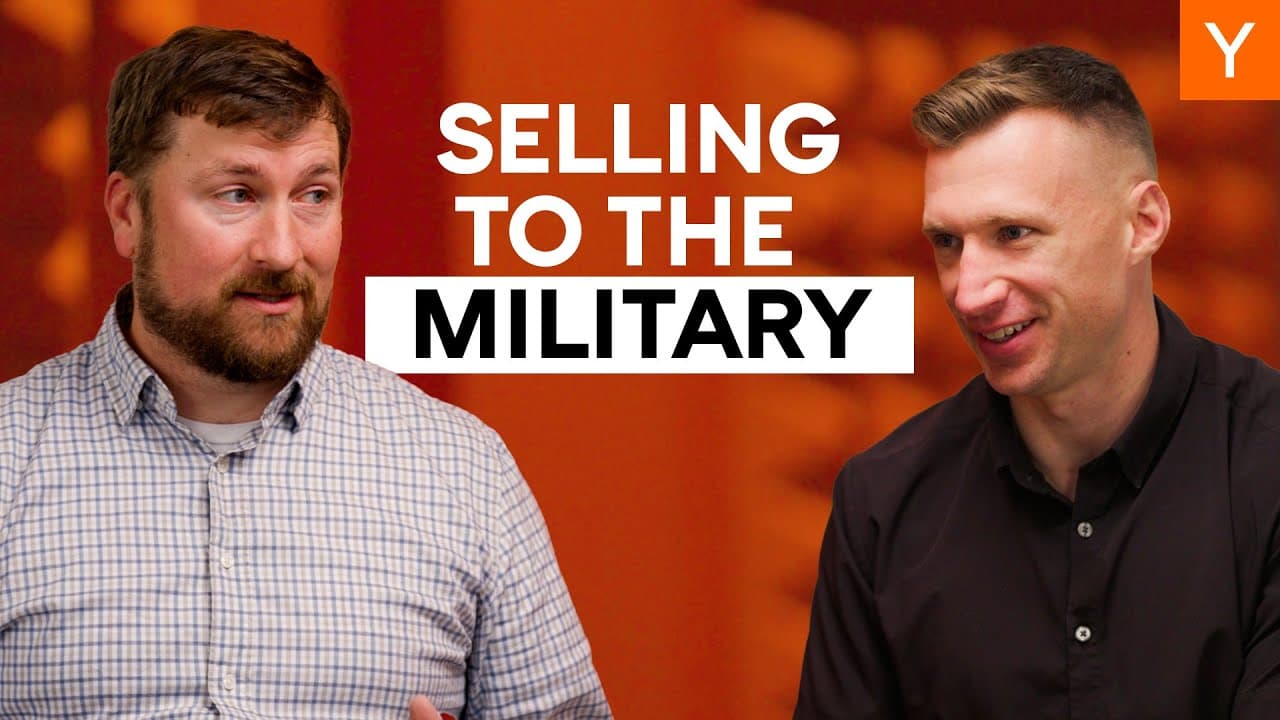
Grant Demory is a former US Army officer and the co-founder of One Brief from YC Summer 21 batch. They're creating software to help dramatically speed up military planning. What we're doing is on a on a per dollar basis the most important thing happening in defense tech in the world. Today, we're going to talk with him about what he's learned selli... Read More
Key Insights
- Military operational planning traditionally relies heavily on Word and PowerPoint, with contributors across multiple headquarters exchanging hundreds of slides and ultimately producing large documents such as operations orders or base plans. This fragmented workflow makes coordination, version management, and major revisions slow.
- Onebrief is built around reusable cards representing information such as situational facts, military units, and tasks. The same cards generate maps, synchronization matrices, written plans, and slides, so changing one underlying item automatically updates every connected output that uses it.
- Synchronized planning data can compress major revisions from weeks into hours. In one cited case, planners replaced a rejected course of action, updated its map overlays, synchronization matrix, written base plan, and slides, then gained the commander's approval within three hours.
- The idea for Onebrief emerged from Grant Demaree's military experience during the 2014 Ebola epidemic in Liberia. He watched headquarters personnel exchange PowerPoint files and reach decisions months later than he believed possible, then observed a similar planning pattern at another headquarters covering Iraq and Syria.
- The US military is composed of many organizations that control their own substantial budgets, rather than operating solely as one purchasing unit. Onebrief estimated that about 1,200 US commands needed its product, allowing the company to approach individual commands with urgent needs.
- A government purchase card enabled Onebrief's first small sale with very little contracting. Some military personnel can use these cards for purchases up to $25,000, depending on the organization, giving an early defense startup a faster route into a headquarters and direct exposure to users.
- About 200 stakeholder interviews showed the founders that their initial assumptions were incomplete. Although Demaree had military-planning experience and began by building clickable mockups and a MATLAB prototype, broad conversations with participants in operational planning proved essential for understanding what the product needed.
- Realistic Saturday exercises gave Onebrief access to early users before it held a military contract. The company recruited planners through cold LinkedIn messages, paid them for eight-hour sessions, and compared teams using Word and PowerPoint with teams using an early Onebrief prototype.
Install to Summarize YouTube Videos and Get Transcripts
Explore YouTube Video Summarizer or Get YouTube Transcript Extractor
Questions & Answers
Q: How does Onebrief make military planning faster?
Onebrief stores facts, military units, and tasks as reusable cards that feed maps, synchronization matrices, written plans, and slides. When one card changes, its connected outputs update together, reducing repeated edits across separate Word documents and PowerPoint presentations.
Q: What military-planning problem does Onebrief solve?
Military headquarters traditionally build plans through Word and PowerPoint, sometimes exchanging hundreds of slides among as many as 12 contributing headquarters. Because the same information is duplicated across documents, maps, matrices, and presentations, coordination and major revisions can take a long time.
Q: How much time can Onebrief save on plan revisions?
One cited course-of-action revision would normally have created several weeks of work. With Onebrief, planners changed the map overlays, synchronization matrix, written base plan, and slides in three hours, after which the commander approved the revision without further changes.
Q: How did Grant Demaree identify the need for Onebrief?
Grant Demaree recognized the problem while serving as a US Army officer during the 2014 Ebola epidemic in Liberia. He watched headquarters personnel exchange PowerPoint files and make decisions months later than he believed necessary, then observed the same planning pattern at a theater headquarters covering Iraq and Syria.
Q: How did Onebrief make its first military sale?
Onebrief entered through an individual command using a government purchase card rather than starting with a large contract. Depending on the organization, military personnel can use these cards for purchases up to $25,000, allowing the company to validate demand and work directly with users.
Q: Why did Onebrief target individual military commands?
The US military consists of many organizations that control their own substantial budgets, rather than acting only as one purchasing unit. Onebrief estimated that roughly 1,200 US commands needed its product, so it could approach commands with urgent planning needs individually.
Q: How did Onebrief research military planners' needs?
The founders conducted about 200 interviews with stakeholders involved in operational military planning. Those conversations showed that assumptions behind their clickable mockups and early MATLAB prototype were incomplete and clarified what users actually needed.
Q: How did Onebrief test its early software with military planners?
Onebrief recruited planners, generally majors through colonels, through cold LinkedIn messages and paid them for eight-hour Saturday exercises. One team used Word and PowerPoint while another used an early Onebrief prototype, allowing the founders to observe both workflows and improve the software.
Summary & Key Takeaways
-
Onebrief addresses the slow, fragmented process of operational military planning. Headquarters traditionally exchange hundreds of PowerPoint slides and produce large Word documents, making coordinated revisions laborious. Onebrief instead represents facts, units, and tasks as reusable cards that feed synchronized maps, planning matrices, written orders, and presentations across multiple commands.
-
Grant Demaree recognized the problem while serving as a US Army officer during the 2014 Ebola response in Liberia, then saw the same pattern at a theater headquarters covering Iraq and Syria. After initially building mockups and a MATLAB prototype, the founding team conducted about 200 interviews with military-planning stakeholders to refine its assumptions.
-
Onebrief entered the military through an individual command rather than treating the Department of Defense as one monolithic customer. Its first purchase used a government purchase card, avoiding a lengthy initial contracting process. Early product testing involved paid military planners completing realistic Saturday exercises with either legacy tools or Onebrief while the team observed their work.
Read in Other Languages (beta)
Share This Summary 📚
Summarize YouTube Videos and Get Video Transcripts with 1-Click
Try YouTube Summary with ChatGPT & Claude or YouTube Transcript Generator
Explore More Summaries from YC Root Access 📚





Summarize YouTube Videos and Get Video Transcripts with 1-Click
Try YouTube Summary with ChatGPT & Claude or YouTube Transcript Generator