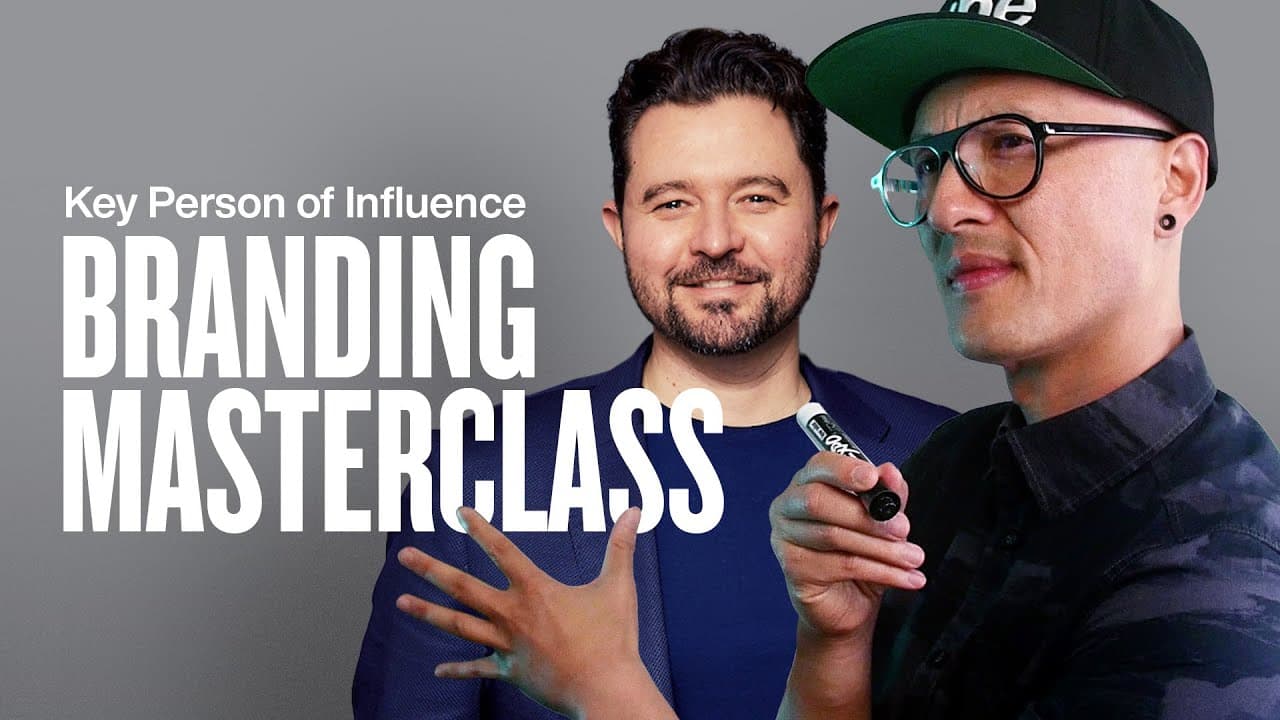
How Do You Build a Personal Brand That Creates Demand? Daniel Priestley’s Personal Branding Masterclass
TL;DR
Build a personal brand that creates demand by clarifying your pitch, publishing useful content, developing a product ecosystem, raising your profile, and partnering with strong performers. Daniel Priestley says visibility can attract inbound opportunities, while content and products help expertise travel beyond direct conversations and trading time for money. Read on to understand how these connected capabilities turn professional value into influence.
Transcript
yeah so i'm daniel priestley not jason priestley i'm an i'm an entrepreneur and an author i've been an entrepreneur since i was 21 years old i've built a number of different companies around the world i was born in australia i currently live in london in the united kingdom i have an entrepreneur accelerator that we run with offices in sydney london... Read More
Key Insights
- Personal branding changes the flow of opportunities because recognized people attract inbound proposals, partnerships, introductions, and audience attention. Priestley observed this directly while working behind the scenes with best-selling authors, television personalities, award winners, celebrities, and entrepreneurs who had built valuable companies.
- Social media is a personal-brand distribution engine because it helps people connect with others who think about or discuss the same subjects. Priestley identifies Myspace, YouTube, Facebook, and the social media strategy used during Barack Obama's 2008 campaign as signs of this broader change.
- Technology is an amplifier rather than a substitute for ability. Priestley compares it to a microphone, which benefits someone who can sing but makes poor singing more noticeable. Digital reach therefore cannot compensate for weak ideas, unclear communication, or an unconvincing professional identity.
- A compelling pitch is a foundational influence skill because professionals must answer the question, "What do you do?" with clarity and credibility. If others cannot quickly understand the value being offered, publishing, networking, and profile-building activities have a weaker foundation.
- Publishing content gives expertise a form that can travel beyond direct conversations. Blogs, articles, reports, and books allow a person to communicate ideas publicly, establish a consistent message, and give interested audiences a way to encounter and evaluate that person's thinking.
- A product ecosystem converts skills, talent, and ideas into offers that people can buy. This approach reduces exclusive dependence on trading time for money by surrounding personal expertise with products capable of creating revenue across different times and locations.
- A recognizable profile is necessary because competence alone does not guarantee attention or opportunity. The description summarizes this principle as, "You are who Google says you are," emphasizing that public visibility and discoverability influence how the market understands a professional's identity.
- Partnerships with high performers expand what an individual can accomplish. Priestley's event business demonstrated this principle by using prominent speakers as audience draw cards, while its commercial arrangements combined setup fees, retainers, success fees, cost sharing, revenue participation, and sometimes equity.
Install to Summarize YouTube Videos and Get Transcripts
Explore YouTube Video Summarizer or Get YouTube Transcript Extractor
Questions & Answers
Q: How do you build a personal brand that creates demand?
Clarify what you do, publish useful ideas, turn your expertise into a product ecosystem, build a recognizable profile, and partner with high performers. These capabilities make your value easier to understand, discover, purchase, and combine with other people’s strengths. Technology can extend your reach, but it cannot replace credible ideas, useful skills, or clear communication.
Q: What does Daniel Priestley mean by a key person of influence?
A key person of influence is someone whose expertise is clearly communicated, publicly visible, and supported by content, products, and partnerships. Priestley observed that recognized authors, television personalities, celebrities, and entrepreneurs attracted intense inbound attention, including introductions, proposals, and business opportunities.
Q: Why is a clear pitch important for personal branding?
A clear pitch gives people a compelling answer when they ask what you do. It establishes the value and credibility behind your work, giving publishing, networking, product development, and profile building a stronger foundation.
Q: How does publishing content build personal influence?
Publishing gives ideas and expertise a form that can travel beyond direct conversations. Blogs, articles, reports, and books communicate a consistent message publicly and let interested audiences evaluate a professional’s thinking. This creates more opportunities for the right people to discover the person’s work.
Q: What is a product ecosystem in personal branding?
A product ecosystem is a collection of offers created from a person’s skills, talent, and ideas. It reduces dependence on exchanging working hours for money by making expertise available through products that customers can buy across different times and locations.
Q: Why is professional competence alone not enough to create influence?
Being capable does not automatically make someone visible, recognizable, or discoverable. Priestley argues that professionals need a public profile that connects their identity with a specific kind of value. The page summarizes this idea as, “You are who Google says you are.”
Q: How does social media affect a personal brand?
Social media helps individuals connect with people who share their ideas, interests, or conversations. Priestley describes technology as an amplifier, like a microphone: it expands the reach of strong work but also makes unclear communication and weak positioning more noticeable.
Q: How did Daniel Priestley recognize the value of personal branding?
Priestley organized introduction events featuring best-selling authors, award winners, celebrities, television personalities, and entrepreneurs who had built valuable companies. Behind the scenes, he saw the intense flow of attention and opportunities surrounding these recognized figures. That experience showed him how a strong public identity could change a person’s opportunity landscape.
Summary & Key Takeaways
-
Daniel Priestley developed his ideas about personal influence after working closely with prominent authors, award winners, celebrities, and successful entrepreneurs at business events. He observed that recognized individuals attracted an intense flow of opportunities, introductions, proposals, and audience attention that was unavailable to equally capable but less visible professionals.
-
Social media changed access to personal branding by giving individuals tools to connect with people who share their ideas and interests. Priestley argues that these tools are amplifiers, comparable to a microphone. They can increase the reach of valuable work, but they can also magnify unclear communication and weak positioning.
-
Becoming a key person of influence requires five connected capabilities: delivering a clear pitch, publishing content, turning expertise into a product ecosystem, building a recognizable profile, and partnering with high performers. Together, these capabilities help professionals move beyond trading time for money and create broader commercial opportunities.
Read in Other Languages (beta)
Share This Summary 📚
Summarize YouTube Videos and Get Video Transcripts with 1-Click
Try YouTube Summary with ChatGPT & Claude or YouTube Transcript Generator
Explore More Summaries from The Futur 📚

Summarize YouTube Videos and Get Video Transcripts with 1-Click
Try YouTube Summary with ChatGPT & Claude or YouTube Transcript Generator