How LSD Led to the Discovery of PCR
TL;DR
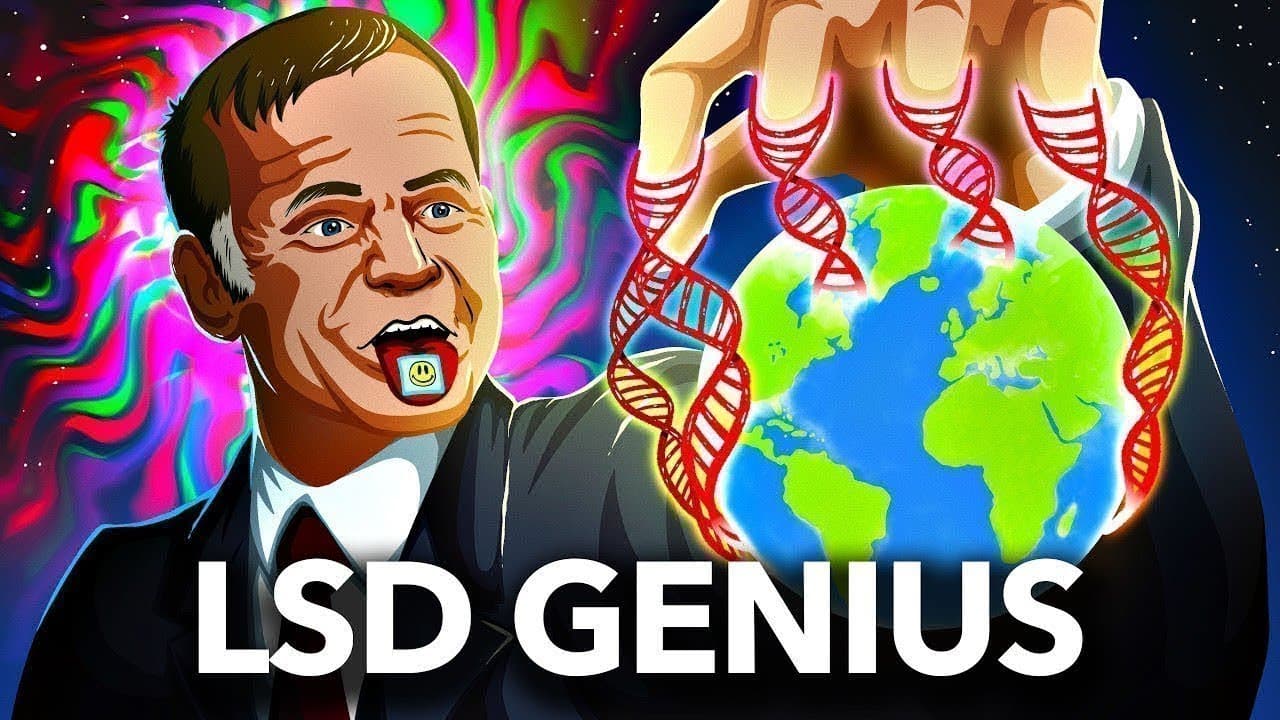
Kary Mullis, while under the influence of LSD, conceptualized the polymerase chain reaction (PCR), a groundbreaking technique that allows for the amplification of specific DNA segments. Despite his eccentricity and controversial views, Mullis's invention revolutionized genetic testing, enabling rapid disease diagnosis and forensic analysis.
Transcript
Here's what happens when you put your DNA under a microscope. You can extract some from your mouth, just gargle salt water and mix this with soap and rubbing alcohol. You'll get a gooey mass at the top. This is DNA. Most of it is yours, but some of it actually comes from bacteria living in your mouth. At 100 times magnification, you... Read More
Key Insights
- Kary Mullis invented the polymerase chain reaction (PCR), which allows for the amplification of DNA segments.
- PCR was conceptualized by Mullis during a drive, inspired by his experiences with LSD.
- The process involves heating DNA to separate strands, using primers to target specific sequences, and polymerase to replicate DNA.
- Thermus aquaticus, a bacterium from hot springs, provided a heat-resistant polymerase crucial for PCR's efficiency.
- Despite initial skepticism, PCR became a cornerstone in genetic testing, forensics, and disease diagnosis.
- Mullis's controversial views on HIV/AIDS and climate change overshadowed his scientific achievements.
- PCR's ability to amplify small DNA samples revolutionized fields like forensics and medical diagnostics.
- Automation and creative thinking in science can lead to groundbreaking discoveries, as demonstrated by Mullis's work.
Install to Summarize YouTube Videos and Get Transcripts
Explore YouTube Video Summarizer or Get YouTube Transcript Extractor
Questions & Answers
Q: How did Kary Mullis come up with the idea for PCR?
Kary Mullis conceptualized the polymerase chain reaction (PCR) during a drive in 1983, inspired by his experiences with LSD. He envisioned a method to amplify specific DNA segments by using heat to separate DNA strands, primers to target sequences, and polymerase to replicate DNA. This idea revolutionized genetic testing and forensics.
Q: What role did Thermus aquaticus play in PCR development?
Thermus aquaticus, a bacterium from Yellowstone National Park's hot springs, provided a heat-resistant polymerase crucial for PCR's success. This enzyme, able to withstand high temperatures, allowed for efficient DNA amplification without frequent polymerase replenishment, making PCR a practical and widely used technique in genetic testing and diagnostics.
Q: Why was PCR initially met with skepticism?
PCR faced skepticism because it seemed too simple and Mullis's initial experiments lacked proper controls. Many scientists doubted its feasibility, thinking the concept must have been tried before without success. However, once refined, PCR proved revolutionary, enabling rapid DNA amplification and transforming genetic testing and forensics.
Q: How did PCR revolutionize genetic testing and forensics?
PCR revolutionized genetic testing and forensics by allowing for the rapid amplification of specific DNA segments from tiny samples. This made it possible to diagnose diseases quickly and accurately and identify individuals in forensic cases, even from minute biological samples, significantly advancing both fields.
Q: What controversies surrounded Kary Mullis after his PCR invention?
Kary Mullis was controversial for his views on HIV/AIDS, climate change, and his eccentric behavior. He denied that HIV caused AIDS and was skeptical of global warming, overshadowing his scientific achievements. Despite these controversies, Mullis's invention of PCR remains a cornerstone in genetics and diagnostics.
Q: How does PCR work to amplify DNA?
PCR amplifies DNA by using heat to separate DNA strands, primers to target specific sequences, and DNA polymerase to replicate the strands. This process is repeated in cycles, exponentially increasing the amount of target DNA, making it easier to study and analyze even from small samples.
Q: What impact did automation have on Mullis's discovery of PCR?
Automation played a significant role in Mullis's discovery of PCR. His routine tasks were automated, freeing his time and allowing him to think creatively, ultimately leading to the conception of PCR. This highlights how automation can facilitate innovation by enabling scientists to focus on creative problem-solving.
Q: How has PCR impacted modern science and medicine?
PCR has profoundly impacted modern science and medicine by enabling precise genetic testing, rapid disease diagnosis, and advancements in forensic science. It allows for the amplification of specific DNA segments, facilitating research, diagnostics, and the development of treatments, significantly advancing our understanding and capabilities in genetics.
Summary & Key Takeaways
-
Kary Mullis invented the polymerase chain reaction (PCR), a technique that amplifies specific DNA segments, revolutionizing genetic testing and forensic analysis. His inspiration came during a drive, influenced by LSD, leading to a method that uses heat to separate DNA strands, primers to target sequences, and polymerase to replicate DNA. Despite initial skepticism, PCR became essential in genetics.
-
Thermus aquaticus, a bacterium from Yellowstone's hot springs, provided a heat-resistant polymerase crucial for PCR's success. This discovery allowed PCR to efficiently amplify DNA without frequent polymerase replenishment, making it a practical and widely used technique. Mullis's eccentric personality and controversial views on HIV/AIDS and climate change later overshadowed his scientific contributions.
-
PCR's impact extends beyond genetics, influencing fields like forensics, where it aids in identifying individuals from tiny DNA samples. The method's development highlights the potential of automation and creative problem-solving in science, as Mullis's work exemplifies how unconventional thinking can lead to revolutionary breakthroughs.
Read in Other Languages (beta)
Share This Summary 📚
Summarize YouTube Videos and Get Video Transcripts with 1-Click
Try YouTube Summary with ChatGPT & Claude or YouTube Transcript Generator
Explore More Summaries from Veritasium 📚


Summarize YouTube Videos and Get Video Transcripts with 1-Click
Try YouTube Summary with ChatGPT & Claude or YouTube Transcript Generator