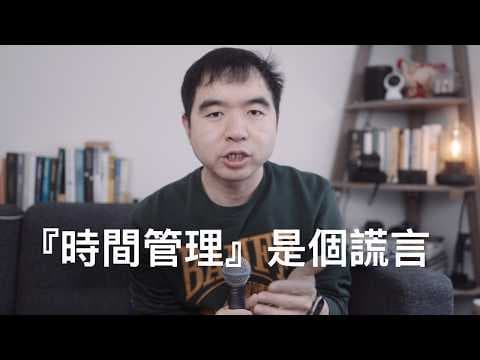
How to manage time by asking the right questions

TL;DR
The core idea is that true productivity comes from focusing on the questions that matter, not merely doing more tasks. By investing time to define big goals, simplifying task lists, reducing cognitive load, and treating time as a strategic game, you can achieve higher returns with less fake work. The video also cites Sam Altman and Richard Hamming to support this approach.
Transcript
Like many others, I have always believed that good time management equals higher productivity. Why can people like Elon Musk, who also have only 24 hours a day, accomplish so many great things? We naturally assume that they must be masters of time management with extraordinary productivity. In pursuit of this productivity, we study various time man... Read More
Key Insights
- Time management is not about doing more, but about choosing the important tasks that yield the most return.
- Big goals drive actions, and dedicating time to reflect on those goals changes daily behavior for better outcomes.
- Two-task daily lists plus a separate annual goal list can dramatically simplify productivity and keep focus on what matters.
- Reducing cognitive load through routines and simplified decisions frees mental energy for high value work.
- Avoids fake work by resisting unnecessary meetings, unnecessary office upgrades, and overengineering tools.
- Question-driven work stops procrastination by asking if the task addresses important problems and why it must be done now.
- Lunchtime networking stories illustrate how pursuing the right questions leads to leadership opportunities and greater impact.
- Time should be managed with a strategic mindset, treating it like a race where priorities determine wins and losses.
Install to Summarize YouTube Videos and Get Transcripts
Explore YouTube Video Summarizer or Get YouTube Transcript Extractor
Questions & Answers
Q: How can focusing on big goals change daily actions?
Focusing on big goals shifts the lens through which you evaluate every action. When you spend time contemplating becoming financially independent, launching a world changing app, or reaching a leadership position, your daily tasks align with those outcomes. This alignment makes you naturally deprioritize minor, nonessential activities, accelerating progress toward meaningful milestones and reducing wasted effort. By making big goals the compass, you amplify the impact of every small decision and stay motivated during long processes.
Q: What does Sam Altman suggest about task lists?
Sam Altman advocates a minimalist approach to task lists: one list for major annual goals and a second for daily tasks. Each day should include a maximum of three important tasks and no more than thirty minor tasks. This structure concentrates effort on what truly matters, prevents overwhelm, and creates a clear metric for success. It also helps avoid getting stuck in unimportant work and supports consistent progress toward high value outcomes.
Q: Why is reducing cognitive load important in time management?
Cognitive load represents the limited amount of mental resources available each day. By reducing daily decisions, such as routine clothing choices or preplanned meals, you free brainpower for high impact work. This strategic simplification prevents decision fatigue, improves consistency, and maintains sharper focus on tasks that have the greatest return. Lower cognitive load enables steadier progress on important goals.
Q: What is the ‘Tian Ji’s Horse Racing’ concept in time management?
The ‘Tian Ji’s Horse Racing’ concept is about arranging time like a strategic game where you protect the most abundant cognitive resources for the most important tasks. It means prioritizing time blocks for high value work and minimizing distractions. This method helps maintain long term focus, prevent burnout, and ensure that limited mental energy is allocated to activities that drive the biggest results.
Q: How does focusing on right questions help in achieving success?
Focusing on the right questions redirects effort toward problems that matter most to the field or project. By asking which questions will lead to Nobel Prize level breakthroughs or major advancements, you invest time where it has the greatest payoff. This approach prevents wasted effort on superficial or flashy tasks and cultivates strategic thinking that leads to substantive, lasting impact.
Q: What role do productivity tools play according to the video?
The video suggests that productivity tools are often distractions when they distract from the core questions and important tasks. Effective time management centers on prioritizing important work, with tools serving as aids rather than masters. The emphasis is on simple systems and habits, like pen and paper for task tracking, over complex toolchains that can create false productivity.
Q: How can one avoid fake work in daily routines?
Avoiding fake work involves recognizing activities that create the appearance of productivity without delivering real value. This includes excessive interviews, high profile events, constant office searches, and overplanning. By limiting tasks to essential, high-impact activities and resisting the urge to fill time with low value tasks, you protect your time for meaningful progress and tangible outcomes.
Q: What is the practical takeaway for someone starting a YouTube channel?
For a new YouTube creator, the practical lesson is to align content with topics that have broad appeal and high potential reach, rather than sticking to a narrow niche. This may involve pausing less successful series to pursue broader, more engaging ideas. The principle is to invest time in what can yield larger audience impact while maintaining personal passion and quality.
Summary & Key Takeaways
-
The video argues that productivity is about prioritizing high return questions and goals, not chasing busywork. It emphasizes spending time on big, meaningful goals to drive substantive results and to change how you allocate attention.
-
A four-step framework is presented: think big, simplify tasks to three major daily goals, reduce cognitive load through routines, and play time like Tian Ji’s horse racing to preserve focus on what matters.
-
The creator references Richard Hamming and Sam Altman to underline the importance of addressing the right questions, avoiding fake work, and adjusting content strategy to maximize audience reach while maintaining personal standards.
Read in Other Languages (beta)
Share This Summary 📚
Summarize YouTube Videos and Get Video Transcripts with 1-Click
Try YouTube Summary with ChatGPT & Claude or YouTube Transcript Generator
Explore More Summaries from 一口新飯 📚



Summarize YouTube Videos and Get Video Transcripts with 1-Click
Try YouTube Summary with ChatGPT & Claude or YouTube Transcript Generator