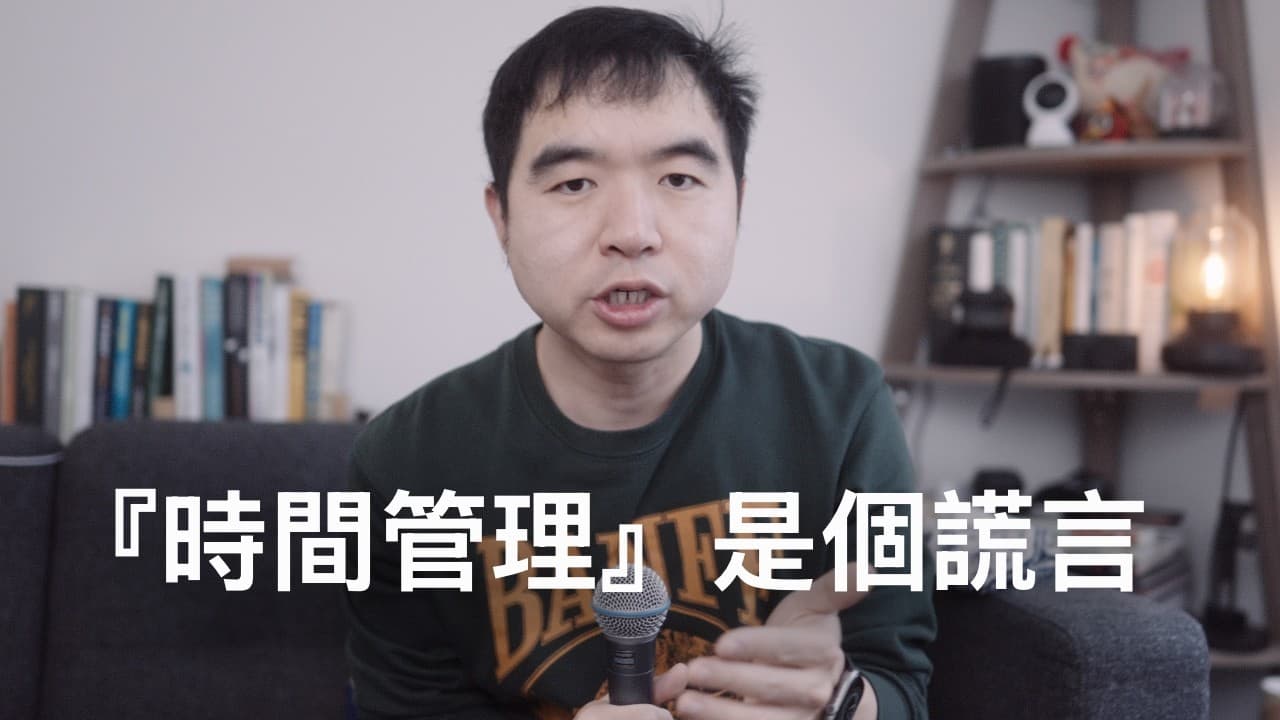
How to Manage Your Attention Instead of Time
TL;DR
Protect your highest-energy hours and use them for the work that matters most, because useful output depends more on attention than on filling every minute. Keep fixed appointments on a calendar, leave flexible tasks on a to-do list, batch similar work, take a short midday nap, and accept that a sustainable routine will not look perfect every day.
Transcript
I started freelancing in 2014, and it's been over ten years now. People often ask me, how do you manage your time? Well, to be honest, like many others, especially in the beginning, I found time management incredibly challenging. Because, when you suddenly have a lot of time on your hands, you realize you were previously managed by your company's s... Read More
Key Insights
- Attention is the resource being managed, not time itself. Treating every hour as equally productive ignores changes in energy and focus, while assigning important work to periods of strong attention can produce much better results than extending work into tired hours.
- Focused flow is realistically limited to around four hours each day for a normal person. Meals, cooking, sleep, and chores therefore do not necessarily displace productive work, because the attention required for demanding tasks may not have been available during those periods anyway.
- Attention is uneven throughout the day. The creator experiences the strongest concentration between waking and lunch, then finds focus increasingly scattered by evening, so mornings are reserved for creative work and afternoons are used for less demanding responsibilities.
- Important outcomes depend on directing attention toward important problems. A perfectly organized schedule has little value when precious concentration is consumed by trivial tasks instead of the creative work, major projects, or personal goals that produce meaningful progress.
- A calendar is best reserved for commitments that must occur at fixed times. Doctor appointments, flights, and meetings belong there, while reminders and flexible tasks belong on a to-do list without unnecessarily precise completion times.
- Creative work is outcome-oriented and difficult to estimate accurately. Assigning a script or similar project to a short fixed block can disrupt the entire day when the task runs longer, even though spending additional time on important work is often beneficial.
- A sustainable routine protects critical time slots instead of demanding identical days. Travel, urgent work, fatigue, shifting projects, and unexpected events make perfect daily repetition unrealistic, but consistently preserving a key morning block can maintain progress.
- Batch processing reduces fragmentation by grouping work that shares momentum or preparation. Large projects can receive full dedicated days, while bills, forms, emails, and calls can be collected into short afternoon blocks when energy is less suitable for creative work.
Install to Summarize YouTube Videos and Get Transcripts
Explore YouTube Video Summarizer or Get YouTube Transcript Extractor
Questions & Answers
Q: Why is attention management more useful than time management?
Attention management is more useful because hours do not produce equal amounts of valuable work. Concentration changes throughout the day, and focused flow may be available for only around four hours. Planning should therefore match demanding tasks with periods of strong energy and direct those periods toward important goals instead of trying to fill every minute.
Q: How should a calendar differ from a to-do list?
A calendar should record commitments that must happen at a particular time, including doctor appointments, flights, and meetings with other people. Flexible reminders and tasks should remain on a to-do list, preferably without overly specific completion times. This separation prevents unpredictable creative work from disrupting every later block in a carefully arranged daily schedule.
Q: How can freelancers protect their most productive hours?
Freelancers can identify when their attention is strongest and defend that period from meetings, errands, messages, and casual conversation. The creator protects the morning for personal projects, content creation, editing, and core startup work. Communication, administration, exercise, and other less creative activities are generally postponed until the afternoon, when concentration is weaker.
Q: What is the 5 AM Project routine?
The 5 AM Project is a protected morning period that begins after waking and breakfast and continues until 8:30 AM. It uses the least disturbed part of the day, while much of the world is still asleep, for personally important and interesting work. One recent example is using AI to develop a desired app.
Q: Why can perfect daily routines cause frustration?
Perfect daily routines cause frustration because freelance life does not repeat in exactly the same way every day. Travel, jet lag, early meetings, urgent work, changing projects, fatigue, and unexpected events can all disrupt a plan. A more realistic approach is to preserve a few critical time slots on most days instead of demanding total consistency.
Q: How does a short midday nap support productivity?
A midday nap can reboot attention after concentrated morning work and lunch. The creator naps for fifteen to twenty minutes and describes waking as feeling like the beginning of another day. The duration is kept within twenty minutes because sleeping longer can produce greater tiredness rather than the mental reset needed for afternoon tasks.
Q: When should tasks be handled in batches?
Batching works well when a project requires momentum or substantial setup, and when many small obligations would otherwise fragment attention. Tax filing can receive three dedicated days, video shooting can occupy an entire day, and launches can use focused sprints. Bills, forms, emails, and calls can also be grouped into afternoon blocks.
Q: Why is single-tasking better than multitasking?
Single-tasking is preferred because attempting several tasks at once makes it difficult to do any of them well. The alternative is sequential tasking, which means focusing fully on one activity and then switching to the next. The transcript describes this as mentally building four walls around the current task so unrelated demands do not consume attention.
Summary & Key Takeaways
-
Effective time management is better understood as attention management. Focused, high-energy work may occupy only around four hours of a day, so tightly scheduling every minute creates unrealistic expectations. Better results come from identifying when attention is strongest and reserving that period for consequential, creative, or personally meaningful work.
-
Calendars and to-do lists serve different purposes. A calendar should contain events that must happen at fixed times, such as appointments, flights, and meetings. Creative or outcome-oriented work belongs on a to-do list because its duration is difficult to predict, and rigid time blocks can turn ordinary delays into frustration.
-
A practical routine protects key morning hours, allows the rest of the day to remain flexible, and matches tasks to changing energy. Creative work comes first, while administrative duties, communication, exercise, and errands move later. Batch processing, single-tasking, walking, cooking, chores, and brief naps help preserve or restore attention.
Read in Other Languages (beta)
Share This Summary 📚
Summarize YouTube Videos and Get Video Transcripts with 1-Click
Try YouTube Summary with ChatGPT & Claude or YouTube Transcript Generator
Explore More Summaries from 一口新飯 📚




Summarize YouTube Videos and Get Video Transcripts with 1-Click
Try YouTube Summary with ChatGPT & Claude or YouTube Transcript Generator