How Does Drinking Alcohol Affect Your Body?
TL;DR
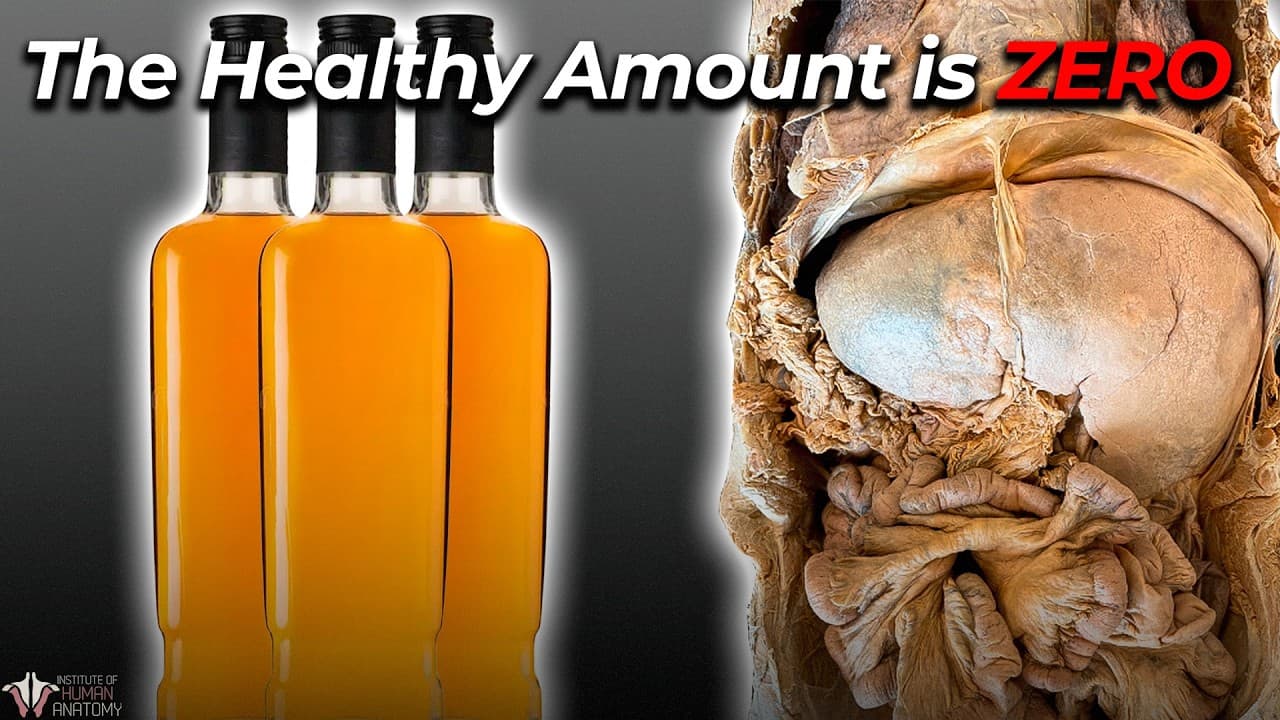
Alcohol rapidly enters the bloodstream, reaches the brain and other organs, and produces toxic acetaldehyde during liver metabolism. Food can slow absorption, but it does not prevent alcohol’s systemic effects, which include impaired judgment and coordination, dehydration, irregular heartbeat, tissue inflammation, DNA damage, increased cancer risk, and potentially fatal suppression of breathing during an overdose.
Transcript
Nearly two billion people consume alcohol regularly. But if you haven't heard, it's dry January where some people will take on the challenge of refraining from drinking any alcohol for one month. But will stopping alcohol for just one month actually have any significant health benefits compared to if you quit all together? Well, today we'll discuss... Read More
Key Insights
- Most alcohol absorption occurs in the small intestine, which absorbs about 80% of ingested alcohol, while the stomach absorbs approximately 10% to 20%. Because alcohol enters the bloodstream through these digestive tissues, stomach contents strongly influence how quickly blood alcohol levels rise.
- Food slows alcohol absorption by delaying gastric emptying, especially when the stomach contains fat and protein. Blood alcohol levels can peak in about 30 to 60 minutes on an empty stomach, compared with approximately 1 to 3 hours when food is present.
- Alcohol metabolism begins when liver cells use alcohol dehydrogenase and NAD to convert ethanol into acetaldehyde. Acetaldehyde is more toxic than alcohol itself, making its subsequent conversion into acetate by aldehyde dehydrogenase an important protective metabolic step.
- The liver metabolizes only about 20% to 30% of alcohol during the first passage of blood from the digestive organs. The remaining 70% to 80% enters systemic circulation unmetabolized, so alcohol-containing blood must pass through the liver multiple times before metabolism is complete.
- Alcohol impairs behavior by suppressing several brain regions with distinct functions. Effects on the prefrontal cortex reduce judgment and impulse control, hippocampal disruption can interfere with short-term memory, and cerebellar suppression causes impaired movement, balance, and coordination.
- Alcohol increases urination by inhibiting secretion of antidiuretic hormone from the pituitary gland. With less antidiuretic hormone signaling, the kidneys retain less water and produce more urine, which can contribute to the dehydration associated with drinking and its lingering effects.
- Alcohol overdose becomes life-threatening when suppression reaches the medulla oblongata, a brain-stem region controlling breathing, heart rate, vomiting, and the gag reflex. Severe suppression can cause hypoventilation, coma, choking risk, and potentially death.
- Chronic alcohol exposure can damage multiple organs through metabolic disruption, inflammation, and oxidative stress. Reported effects include fatty liver accumulation, fibrosis, arrhythmias, cardiomyopathy, pancreatitis, muscle weakness, immune suppression, gastritis, ulcers, cell death, DNA damage, and increased risk of several cancers.
Install to Summarize YouTube Videos and Get Transcripts
Explore YouTube Video Summarizer or Get YouTube Transcript Extractor
Questions & Answers
Q: How is alcohol absorbed into the bloodstream?
Alcohol travels down the esophagus into the stomach, where approximately 10% to 20% can cross the stomach lining and enter the bloodstream. The remaining 80% is absorbed through the small intestine. Because the small intestine handles most absorption, anything that changes how quickly the stomach empties can substantially change the speed at which blood alcohol levels rise.
Q: Does eating food before drinking slow alcohol absorption?
Food slows alcohol absorption by keeping alcohol in the stomach longer and delaying its movement into the small intestine, where most absorption occurs. Fat and protein are specifically identified as slowing gastric emptying. On an empty stomach, blood alcohol can peak in about 30 to 60 minutes, while food can extend that period to roughly 1 to 3 hours.
Q: How does the liver metabolize alcohol?
Inside liver cells, alcohol dehydrogenase and the cofactor NAD convert alcohol into acetaldehyde in the cytosol. Acetaldehyde then enters the mitochondria, where aldehyde dehydrogenase and another NAD convert it into acetate. Acetate can subsequently be used for energy, while accumulating acetaldehyde is undesirable because it is more toxic than alcohol itself.
Q: Why does alcohol affect organs before the liver removes it?
The liver captures and metabolizes only about 20% to 30% of alcohol during the first passage of blood from the digestive system. Approximately 70% to 80% therefore enters systemic circulation unmetabolized. Alcohol can then pass into cells throughout the body, create disruptions, return to the bloodstream, and circulate through the liver repeatedly until metabolism is complete.
Q: How does alcohol affect judgment, memory, and balance?
Alcohol suppresses multiple brain regions. Suppression of the prefrontal cortex affects reasoning, planning, judgment, and impulse control. Effects on the hippocampus interfere with forming and storing short-term memories and can contribute to blackouts at higher intake levels. Disruption of the cerebellum impairs coordinated movement, balance, and overall motor function, causing stumbling and reduced physical control.
Q: Why does drinking alcohol make you urinate more?
Alcohol inhibits secretion of antidiuretic hormone from the pituitary gland. This hormone normally tells the kidneys to retain more water and produce less urine. When alcohol suppresses that signal, the kidneys hold on to less water, urine output increases, and dehydration can develop. This fluid loss contributes to some of the effects that can persist after drinking.
Q: Why can an alcohol overdose be fatal?
At high intake levels, alcohol can suppress the medulla oblongata, part of the brain stem that controls breathing, heart rate, vomiting, and the gag reflex. Severe suppression can reduce ventilation, impair protective responses against choking, cause coma, and lead to death. These effects explain why alcohol poisoning requires serious attention rather than being treated as ordinary intoxication.
Q: What long-term damage can frequent alcohol use cause?
Repeated alcohol exposure can promote fatty acid accumulation, inflammation, oxidative stress, fibrosis, and cell death in the liver and other tissues. It can also contribute to irregular heartbeats, cardiomyopathy, pancreatitis, muscle weakness, immune suppression, gastritis, and ulcers. Reactive oxygen species can damage DNA, which increases the risk of multiple cancer types over time.
Summary & Key Takeaways
-
Alcohol is absorbed through the stomach and small intestine, with most absorption occurring in the small intestine. An empty stomach allows blood alcohol levels to peak more quickly, while fat and protein slow absorption and gastric emptying. After absorption, alcohol-rich blood travels through the hepatic portal vein to the liver.
-
Liver cells convert alcohol into toxic acetaldehyde using alcohol dehydrogenase and NAD. Aldehyde dehydrogenase then converts acetaldehyde into acetate, which can be used for energy. Because the liver processes only part of the alcohol during each pass, unmetabolized alcohol circulates repeatedly through the body and affects numerous tissues.
-
Alcohol suppresses brain regions responsible for judgment, memory, balance, breathing, and protective reflexes. It also disrupts the heart, liver, pancreas, skeletal muscles, immune system, and stomach lining. Frequent exposure can promote cell death, inflammation, fibrosis, and DNA damage, helping explain why health guidance is reconsidering previously accepted drinking limits.
Read in Other Languages (beta)
Share This Summary 📚
Summarize YouTube Videos and Get Video Transcripts with 1-Click
Try YouTube Summary with ChatGPT & Claude or YouTube Transcript Generator
Explore More Summaries from Institute of Human Anatomy 📚




Summarize YouTube Videos and Get Video Transcripts with 1-Click
Try YouTube Summary with ChatGPT & Claude or YouTube Transcript Generator