What Is the Immune System and How Does It Protect Us?
TL;DR
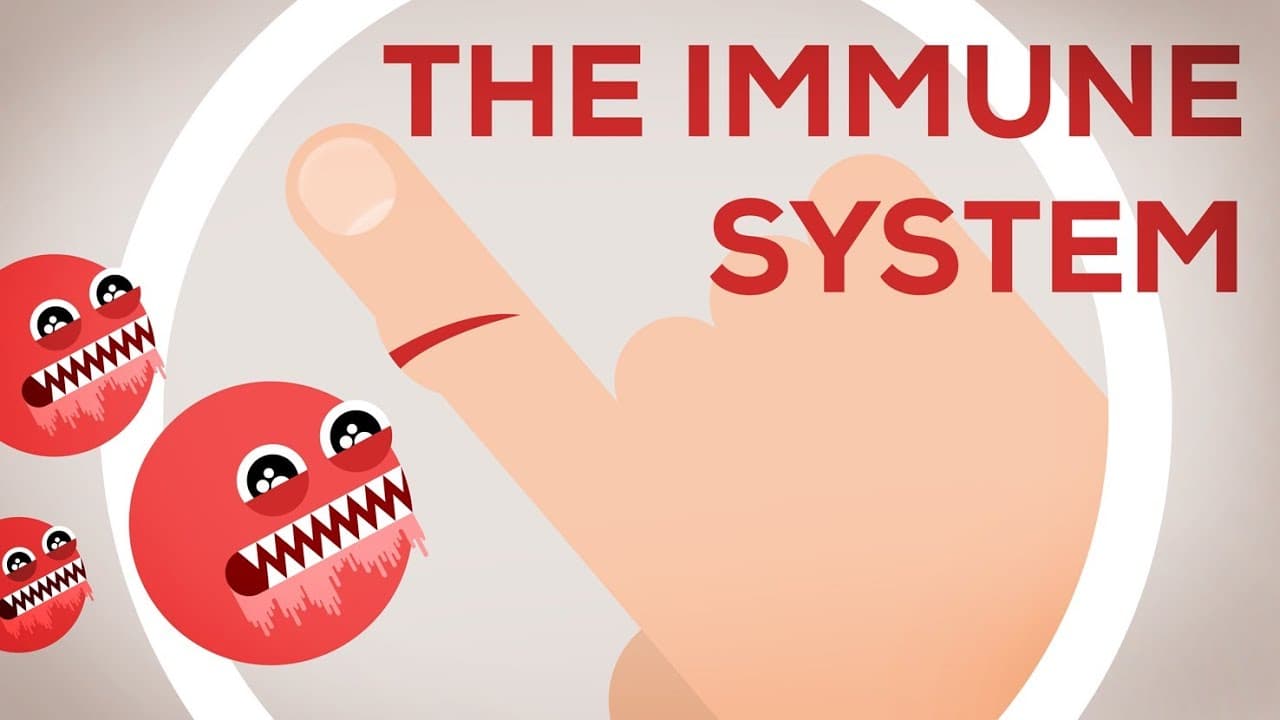
The immune system is a complex defense mechanism that protects the body from harmful invaders like bacteria and viruses. It involves specialized cells such as macrophages and T cells, which coordinate to identify and eliminate threats. Antibodies produced by B cells play a critical role in neutralizing intruders, while memory cells ensure faster responses to future infections.
Transcript
Every second of your life, you are under attack. Billions of bacteria, viruses, and fungi are trying to make you their home, so our bodies have developed a super complex little army with guards, soldiers, intelligence, weapons factories, and communicators to protect you from...well...dying. For this video, let's assume the immune system has 12 diff... Read More
Key Insights
- ❓ The immune system is a sophisticated defense network with specialized cells and proteins.
- 🫥 Macrophages and neutrophils act as the first line of defense, followed by dendritic cells and T cells.
- 🤾 B cells play a crucial role in producing antibodies that target specific invaders.
- 💨 Memory cells help the body remember past infections for faster responses in the future.
- 🧑🚒 The immune system undergoes a coordinated response to fight off infections and restore balance.
- 🤩 Antibodies play a key role in neutralizing intruders and aiding in their destruction.
- 👾 The immune system's complexity and coordination ensure effective protection against harmful invaders.
Install to Summarize YouTube Videos and Get Transcripts
Explore YouTube Video Summarizer or Get YouTube Transcript Extractor
Questions & Answers
Q: What are the main components of the immune system?
The immune system consists of various cells, including macrophages, neutrophils, dendritic cells, T cells, and B cells, as well as antibodies that work together to protect the body.
Q: How does the immune system respond to an infection?
When an infection occurs, the immune system's defense mechanisms are activated, starting with macrophages and neutrophils fighting off invaders, followed by the production of antibodies that target and neutralize the intruders.
Q: What is the role of memory cells in the immune system?
Memory cells are a crucial part of the immune response, as they remember past infections and help the body mount a faster and more effective defense if the same invader is encountered again in the future.
Q: Why is the immune system considered a complex defense system?
The immune system is complex because it involves a network of cells and proteins working together in a coordinated manner to protect the body from a wide range of harmful invaders.
Summary & Key Takeaways
-
The immune system acts as a defense system against harmful bacteria, viruses, and fungi in the body.
-
It involves various specialized cells, such as macrophages and neutrophils, working together to fight off infections.
-
Antibodies produced by B cells play a crucial role in identifying and neutralizing intruders to protect the body.
Read in Other Languages (beta)
Share This Summary 📚
Summarize YouTube Videos and Get Video Transcripts with 1-Click
Try YouTube Summary with ChatGPT & Claude or YouTube Transcript Generator
Explore More Summaries from Kurzgesagt – In a Nutshell 📚





Summarize YouTube Videos and Get Video Transcripts with 1-Click
Try YouTube Summary with ChatGPT & Claude or YouTube Transcript Generator