Which Business Model Should You Build to Get Rich?
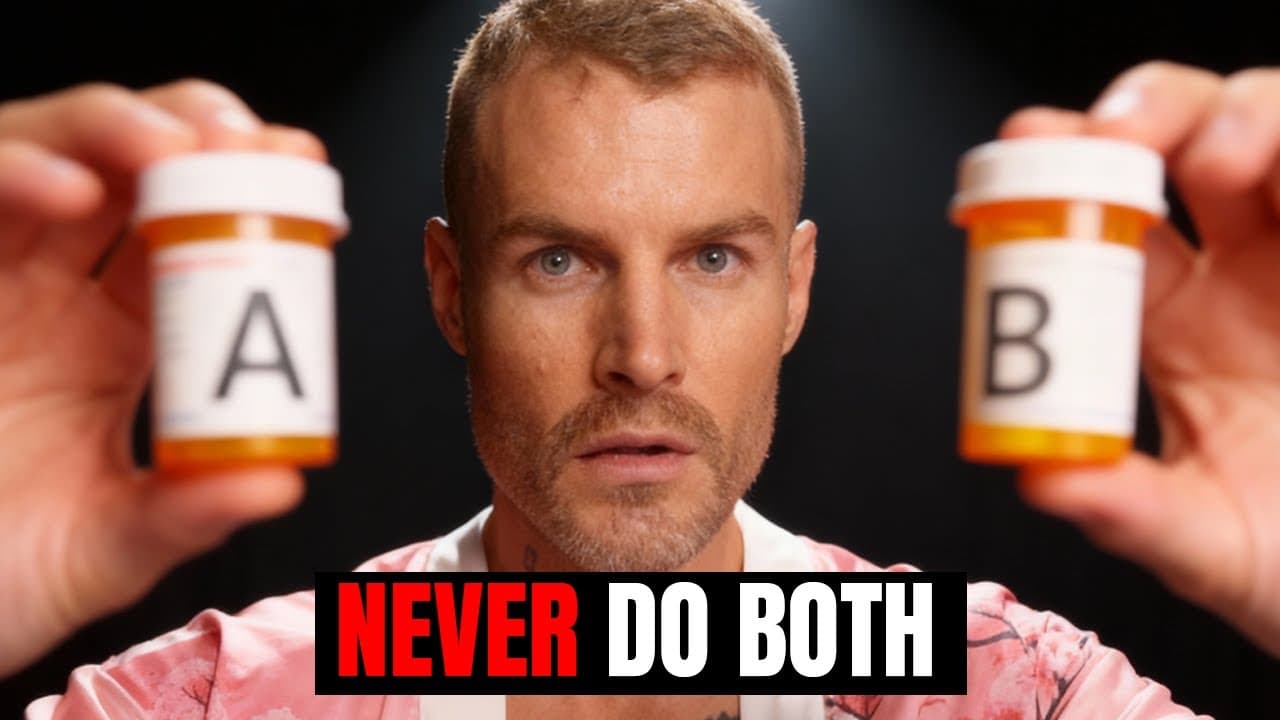
TL;DR
Choose one clear objective: build a short-term cash-flow business for income now, or develop a long-term brand centered on customer retention and asset growth. Trying to combine both approaches creates conflicting priorities, so the right choice depends on your desired income, timeline, lifestyle, scalability, and willingness to wait for returns.
Transcript
Highlevel business video alert. Oh my god. High level. Very advanced. Look, if you want to get rich, you should only be building one of two different types of businesses. Number one question I always get asked, always get asked, Alex, what type of business should I build or what should I be doing with my business? And it's because people are stuck ... Read More
Key Insights
- Business strategy begins with defining the owner's actual goal, because making current income, creating a valuable asset, reaching massive scale, and supporting a preferred lifestyle can require conflicting decisions. Choosing a model before establishing that purpose leaves the company without a coherent direction.
- A cash-flow business is designed to make money in the short term, allowing the owner to pay expenses or support a chosen lifestyle. Its central priority is present profit rather than maximizing the company's long-term brand strength, customer retention, scale, or asset value.
- A long-term brand is built around customer retention and compounding value over time. The intended result is a scalable asset that can eventually grow without constant founder involvement, endure for decades, and reach a much higher valuation than a business focused mainly on immediate distributions.
- Immediate cash flow and long-term asset building impose opposing priorities, according to the speaker. Increasing the emphasis on taking profit now generally reduces the resources and attention available for developing a brand that retains customers, compounds over time, and scales rapidly.
- The correct business type depends on the owner's timeline and patience. Someone who needs income now faces a different decision from someone who can wait two or five years for income while concentrating on growth, customer retention, and the value of the underlying company.
- Business-model labels alone do not answer strategic questions. An agency owner considering software as a service or e-commerce must first determine whether the objective is larger monthly take-home profit or a company capable of reaching a valuation of $100 million or $200 million.
- A highly profitable agency can already fulfill a cash-flow objective even if it is difficult to scale. The example of an agency earning $100,000 per month at a 60–70% profit margin shows why changing models is unnecessary unless the owner's underlying goal also changes.
- Trying to convert a cash-flow operation into a long-term brand can leave a company stuck between incompatible systems. The speaker recommends deciding which outcome matters, accepting that approach's disadvantages, and avoiding a hybrid strategy that weakens both immediate profitability and long-term growth.
Install to Summarize YouTube Videos and Get Transcripts
Explore YouTube Video Summarizer or Get YouTube Transcript Extractor
Questions & Answers
Q: What are the two business strategies for building wealth?
The two strategies are a short-term cash-flow business and a long-term brand focused on customer retention. A cash-flow business aims to produce income now for expenses or lifestyle needs. A long-term brand aims to compound growth, increase asset value, scale to high levels, and eventually operate with less dependence on its founder. The speaker advises choosing one primary strategy rather than combining them.
Q: How do you choose between cash flow and long-term growth?
Start by defining what you want the business to accomplish in your life. Consider whether you need money now, how much monthly profit you want to take home, whether you can wait two or five years for income, what lifestyle you prefer, and whether you want a scalable asset with a potentially large valuation. Those answers determine which strategy fits your goals.
Q: What is a short-term cash-flow business?
A short-term cash-flow business is operated primarily to generate money now. Its profits can pay personal expenses or support the owner's lifestyle as the company grows. This strategy can be attractive to someone who cannot wait years for income, but its focus on present profit creates limitations when compared with building a highly scalable, retention-centered brand that compounds in value.
Q: What is a long-term customer-retention brand?
A long-term customer-retention brand is a company designed to grow consistently and become more valuable as an asset over time. Its objectives include retaining customers, reaching high levels of scale, lasting for decades, and eventually operating whether or not the founder is continuously present. The tradeoff is that the owner may need to wait years before receiving substantial income.
Q: Why should a business not pursue both strategies at once?
The strategies create conflicting priorities. A company focused on immediate cash flow directs decisions toward current profit and owner income, while a long-term brand emphasizes retention, reinvestment, scale, and increasing asset value. According to the speaker, greater emphasis on immediate cash flow generally produces less of the long-term brand growth that compounds over time, leaving a hybrid business poorly optimized for either result.
Q: Should a profitable agency pivot to software as a service?
A pivot should depend on the owner's objective, not merely on the belief that agencies are difficult to scale. The example involves an agency making $100,000 per month with a 60–70% profit margin. If the goal is strong current income, that business may already work well. If the goal is a long-term asset with much greater scale and valuation, another model may better fit.
Q: What questions should an owner answer before scaling?
The owner should ask whether the goal is current income or long-term asset value, how much monthly profit they want to take home, how quickly they need that income, and whether they can wait two or five years. They should also decide whether rapid scale, decades of operation, reduced founder dependence, or a valuation of $100 million or $200 million is the desired outcome.
Q: How does focusing on immediate profit affect long-term value?
According to the speaker, increasing the focus on immediate cash flow generally reduces the long-term brand growth and scalability a company can achieve. Present profit and owner distributions compete with the priorities of customer retention, sustained development, and compounding asset value. That does not make cash flow undesirable, but it means the owner must recognize its tradeoffs and choose it deliberately.
Summary & Key Takeaways
-
Business owners often struggle because they have not defined whether they want immediate income or a valuable long-term asset. Before choosing a model or pursuing the next stage of growth, they should clarify the business's purpose, their desired lifestyle, their income target, and how long they can wait for returns.
-
A cash-flow business prioritizes making money now, often to cover personal expenses or fund a desired lifestyle. This approach can produce substantial profit, but its short-term orientation has serious limitations. The speaker argues that founders should accept those tradeoffs instead of trying to operate simultaneously like a retention-focused, long-term brand.
-
A long-term brand prioritizes customer retention, sustained growth, scalability, and increasing asset value. It may eventually operate without constant founder involvement and last for decades, but it can require waiting years for meaningful income. Mixing this strategy with immediate cash extraction produces conflicting decisions and can obstruct both objectives.
Read in Other Languages (beta)
Share This Summary 📚
Summarize YouTube Videos and Get Video Transcripts with 1-Click
Try YouTube Summary with ChatGPT & Claude or YouTube Transcript Generator
Explore More Summaries from Alex Becker Business 📚
![You'll HATE It, But It Will Make You Rich In A Year [Full Blueprint] thumbnail](/_next/image?url=https%3A%2F%2Fi.ytimg.com%2Fvi%2FVVPECdnzXSA%2Fhqdefault.jpg&w=750&q=75)

Summarize YouTube Videos and Get Video Transcripts with 1-Click
Try YouTube Summary with ChatGPT & Claude or YouTube Transcript Generator