How does a compiler convert high level code to machine
TL;DR
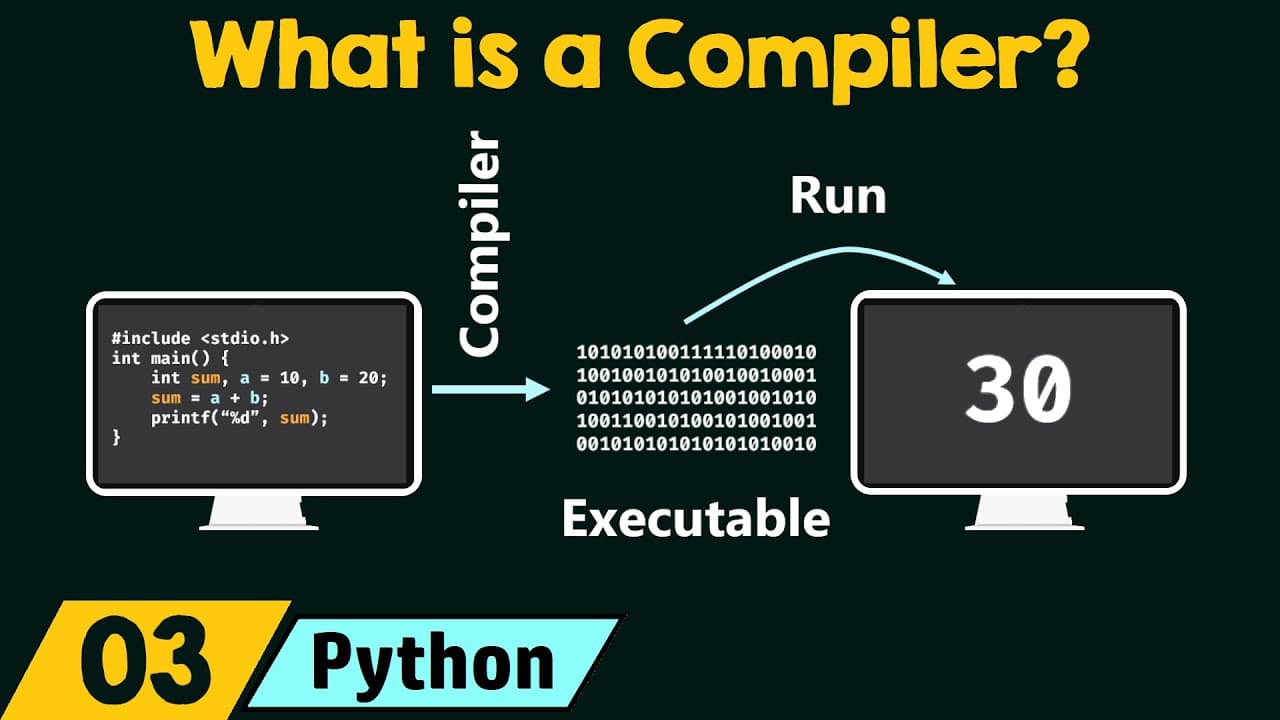
A compiler translates source code from a high level language into machine understandable code in one go. It is software, not hardware, that produces an executable or binary ready to run on a machine. The process creates an executable that can be run on compatible systems, while source files remain human readable.
Transcript
foreign we saw the definition of Python Programming now we are ready to understand what is a compiler so without any further delay let's get started and let's see all the topics of this presentation one by one there are only two topics we need to cover in this presentation the first topic is why do we need a translator and the second topic is what ... Read More
Key Insights
- A compiler is software whose job is to convert source code to machine understandable code in one go.
- A compiler outputs an executable or binary that a machine can run directly on a compatible system.
- High level languages like C and Java are for humans, while machines understand zeros and ones.
- A compiled language needs an appropriate runtime environment, and executables depend on correct extensions like .exe on Windows.
- The process illustrated uses a C program to show compilation and execution steps.
- The compiler turns code into an executable before any run time execution occurs.
- An executable can be transferred to another machine of the same type and run without recompilation.
- The difference between compiler and interpreter is that the former translates entirely before running, the latter may translate on the fly.
Install to Summarize YouTube Videos and Get Transcripts
Explore YouTube Video Summarizer or Get YouTube Transcript Extractor
Questions & Answers
Q: A real search query question about the video (e.g. 'How to...', 'What is...', 'Why does...', 'When should...'). Question 1
What is a compiler and why do we need one for high level languages? A compiler is a software tool whose job is to convert source code written in a high level language into machine understandable code or binary code in one go. This translation bridges the gap between human readable instructions and the binary language that a computer can execute directly. The compiler thus enables high level programs to run on hardware by producing an executable. It is not hardware, and it targets a specific machine architecture so the resulting binary can be executed on compatible systems.
Q: Question 2
How does compiling differ from interpreting, according to the material? The presentation distinguishes between two translator types: compiler and interpreter. A compiler translates the entire source code to machine code before execution, producing an executable file. The executable can run on a Windows or Mac machine depending on the platform, provided the correct extension and environment. Interpreters, by contrast, translate code during execution rather than ahead of time.
Q: Question 3
What example is used to illustrate compilation in the video and what does it demonstrate? The video uses a C programming example to show compilation. It explains that C is a compiled language and that the compiler converts the C source into an executable file such as sum.exe on Windows. The demonstration shows the steps from code to object file to final executable, which can run and print results.
Q: Question 4
What happens to the output after running the compiled program and why is the screen held? After compiling, running the executable on Windows shows the output, such as the calculated result, and then a prompt to press a character keeps the screen open. This behavior is achieved using a function call that waits for user input, ensuring the user can view the result before the window closes.
Q: Question 5
Why is the file extension important in the demonstration and what does it signify? The video emphasizes that the executable generated from compiling on Windows has the .exe extension. This extension indicates the file is a Windows executable, able to run on Windows machines. Different platforms may create different executable extensions, such as .app on macOS, reflecting platform compatibility and packaging conventions.
Q: Question 6
What is the role of the translator in the context of the two topics described? The translator is needed to convert human readable high level language code into a form that machines can understand, which is binary. The talk outlines two types of translators, compiler and interpreter, and focuses on the compiler as the one that translates the entire source code into machine code in one go, producing an executable.
Q: Question 7
What does the speaker mean by machine understandable code and how is it produced? Machine understandable code refers to binary or executable code that a computer processor can execute directly. The compiler reads the high level source code, analyzes it, and outputs a binary executable that contains instructions the machine can run. This translation closes the gap between human logic and machine execution.
Q: Question 8
What practical steps are shown for compiling and running a C program in the video? The video demonstrates opening an IDE, preparing a C source file, and using a build or compile action to generate an executable file, such as sum.exe on Windows. It then runs the executable to observe the output, showing how compilation precedes execution and how the final binary operates on the target machine.
Summary & Key Takeaways
-
A compiler is a complex software that converts high level code to machine code in one go. It emphasizes translating source code into an executable form that machines can execute directly. The lecture uses a C example to illustrate compilation and executable generation on Windows.
-
The concept of a translator is highlighted to bridge the gap between human readable code and machine language. The example shows header files, linking, and the creation of an executable with a specific extension such as .exe for Windows.
-
The video demonstrates that compiled languages use a translator to produce binary code, enabling execution on a target machine. It contrasts the roles of compilers and interpreters and showcases how an executable is produced and run, illustrating portability of the compiled output across machines of the same type.
Read in Other Languages (beta)
Share This Summary 📚
Summarize YouTube Videos and Get Video Transcripts with 1-Click
Try YouTube Summary with ChatGPT & Claude or YouTube Transcript Generator
Explore More Summaries from Neso Academy 📚




Summarize YouTube Videos and Get Video Transcripts with 1-Click
Try YouTube Summary with ChatGPT & Claude or YouTube Transcript Generator