What Actually Happens When You Stretch?
TL;DR
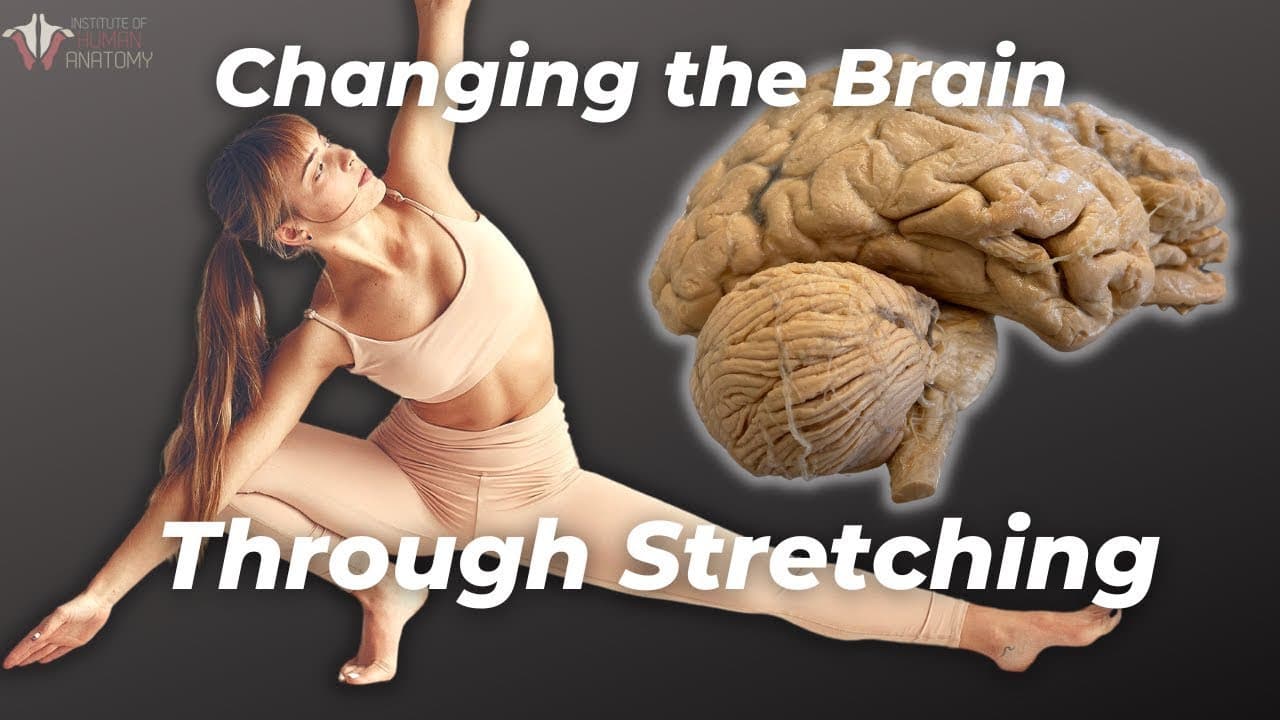
Stretching enhances flexibility by lengthening muscles and tendons, while the brain regulates this process. Muscle spindles provide crucial feedback on muscle length to the brain, which coordinates muscle contractions and helps prevent overstretching. Over time, consistent stretching can lead to neurological adaptations that increase your range of motion.
Transcript
many of us have probably thought about including stretching into our daily routines as there are many potential benefits to stretching one of the more obvious and common benefits being improved flexibility and range of motion but what is actually happening to our bodies when we stretch and develop adaptations like improved flexibility well part of ... Read More
Key Insights
- 💪 Stretching improves flexibility by lengthening muscles and tendons associated with specific joints.
- 💪 Muscle spindles provide information to the brain about muscle length and changes in length.
- 💪 The brain processes this information to coordinate muscle contractions and create a conscious awareness of body position.
- 💪 The stretch reflex, initiated by muscle spindles, protects muscles from overstretching.
- 🥺 Consistent stretching over time can lead to neurological adaptations that increase flexibility.
- 👋 Different types of stretching exist, but static stretching is typically the best for long-term improvements in flexibility.
- 🧡 Strengthening muscles in lengthened positions is also important for overall flexibility and range of motion.
Install to Summarize YouTube Videos and Get Transcripts
Explore YouTube Video Summarizer or Get YouTube Transcript Extractor
Questions & Answers
Q: How does stretching improve flexibility and range of motion?
Stretching lengthens muscles and tendons associated with specific joints, allowing for greater movement and increased range of motion.
Q: What are muscle spindles and what role do they play in stretching?
Muscle spindles are specialized sensory receptors embedded within muscle tissue that detect muscle length and changes in length. They provide information to the brain about muscle position and help coordinate muscle contractions.
Q: How does the brain process information from muscle spindles?
The brain receives information from muscle spindles and relays it to the cerebellum and somatosensory cortex. The cerebellum coordinates muscle contractions, while the somatosensory cortex creates a conscious awareness of body position.
Q: What is the stretch reflex and how does it protect muscles?
The stretch reflex is a protective mechanism initiated by muscle spindles when a muscle is stretched too quickly or too far. It causes the muscle to contract and its antagonist muscle to relax, preventing overstretching.
Summary & Key Takeaways
-
Stretching improves flexibility and range of motion by increasing the length of muscles and tendons associated with specific joints.
-
Muscle spindles, specialized sensory receptors within muscle tissue, provide information to the brain about muscle length and changes in length.
-
The brain, specifically the cerebellum and somatosensory cortex, processes this information to coordinate muscle contractions and create a conscious awareness of body position.
-
The stretch reflex, initiated by muscle spindles, protects muscles from being stretched too quickly or too far.
Read in Other Languages (beta)
Share This Summary 📚
Summarize YouTube Videos and Get Video Transcripts with 1-Click
Try YouTube Summary with ChatGPT & Claude or YouTube Transcript Generator
Explore More Summaries from Institute of Human Anatomy 📚




Summarize YouTube Videos and Get Video Transcripts with 1-Click
Try YouTube Summary with ChatGPT & Claude or YouTube Transcript Generator