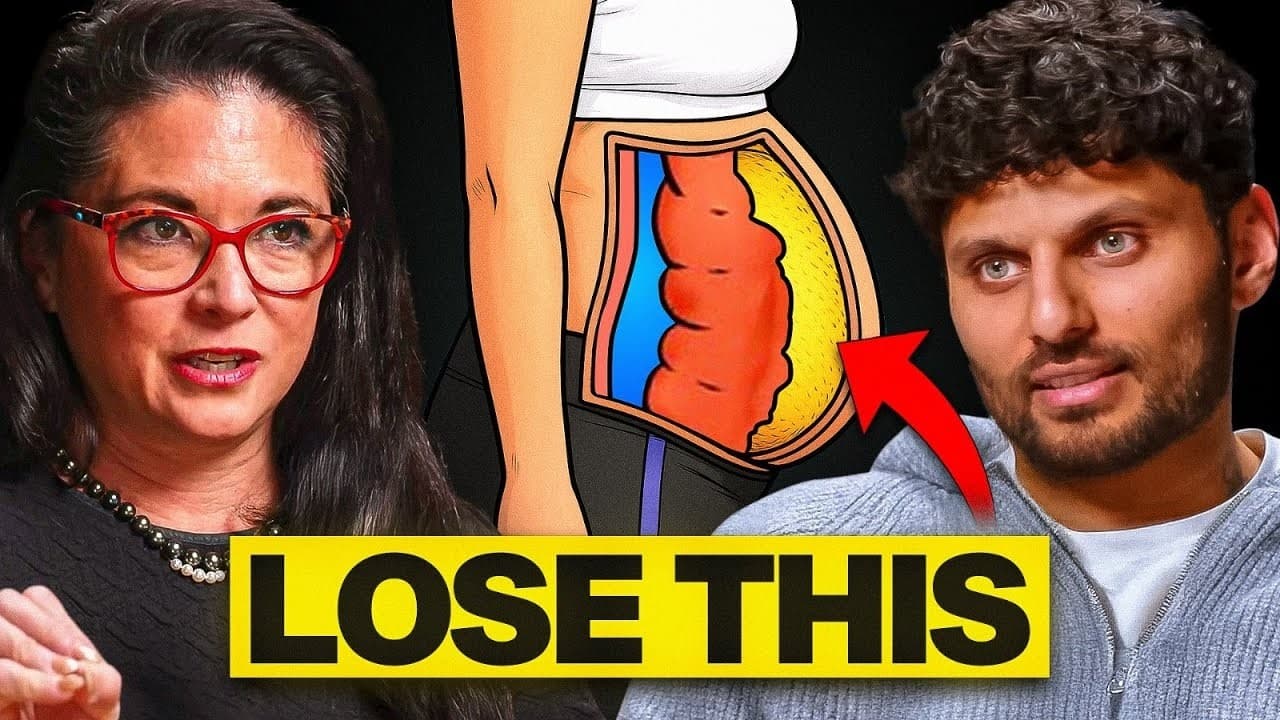
How to Recompose Your Body and Lose Belly Fat
TL;DR
The plan centers on rebuilding your body rather than chasing weight loss. Sleep, mobility, lean muscle, and bone health are prioritized as the core pillars, with a focus on sustainable habits from your 20s onward. Restoring energy and metabolic efficiency can help reduce belly fat and improve overall vitality at midlife.
Transcript
At what age are we actually old? I believe that our perception of aging has to do with what we view the future. Is there something that happens in our 35 to 45 range that our sleep starts to become less consistent? How do we lose that stubborn belly fat? Weight is not the measure for me. It's body composition. I never say lose weight. I say we are ... Read More
Key Insights
- Sleep quality is the top priority in midlife because without sufficient rest, energy and brain function for other health tasks decline.
- Mobility and bone health are essential during the 30s and 40s to preserve functional capacity and protect against frailty later in life.
- Building lean muscle mass and bone density is most effective when integrated into daily life rather than treated as separate workouts.
- A healthy lifestyle should avoid turning the body into a garbage can; nutrition should support rather than sabotage health goals.
- Biological aging shows a significant shift around age 40, where intracellular repair and toxin clearance become less efficient, but can be mitigated by lifestyle choices.
- Women in their 40s may experience sleep disruptions due to hormonal shifts, particularly estrogen decline from diminishing egg reserves, impacting overall health.
- Consistency of healthy habits in youth reduces the burden of midlife health challenges and makes later transitions easier.
- Differentiating between being healthy and being fit helps tailor strategies for lasting well-being rather than just appearance.
- More videos from this channel:
- More from this channel: Jay Shetty Podcast
Install to Summarize YouTube Videos and Get Transcripts
Explore YouTube Video Summarizer or Get YouTube Transcript Extractor
Questions & Answers
Q: What is the direct, practical priority for someone in their 30s to 40s according to the expert?
The direct priority is to figure out how to sleep through the night because without adequate sleep, energy and the brain power to tackle other health goals like mobility and building lean muscle are compromised. Sleep acts as the foundation for all other health efforts, and circadian rhythm alignment is framed as the starting point for sustainable progress across weight management, muscle growth, and bone health.
Q: Why does sleep become harder in midlife for women in particular?
Sleep becomes harder in midlife for women primarily due to hormonal shifts as estrogen declines with reduced egg reserves starting around age 40 to 45. This hormonal change can disrupt circadian rhythm and sleep patterns, making night waking and trouble returning to sleep more common, which in turn affects sleep dependent processes like muscle and bone maintenance.
Q: How does the speaker describe the concept of aging and its relation to health habits?
Aging is described as a myth that you cannot combat; the trajectory of aging can be altered by investing in daily health habits. By prioritizing consistent mobility, sleep, nutrition, and relationships, individuals can maintain vitality and reduce the frailty associated with aging. The emphasis is on proactive daily choices rather than accepting decline as inevitable.
Q: What role does bone health play in midlife health according to the interview?
Bone health is emphasized as a critical component because bone density peaks around age 30 and then begins to decline. Building and preserving bone mass in the 30s and 40s supports long term mobility and reduces frailty risk later in life. This makes resistance training and weight-bearing activities essential components of a midlife health plan.
Q: What is the difference between being healthy and being fit as discussed in the video?
Being healthy refers to overall well being including sleep, nutrition, mobility, and metabolic function, while being fit emphasizes physical performance and appearance. The discussion suggests that both are important but that sustainable health relies on integrating healthy habits into daily life rather than pursuing peak fitness alone without foundational wellness.
Q: What should people in their 20s focus on to set up future health success?
People in their 20s should focus on learning to sleep well, prioritizing health over short term pleasures, and developing consistent habits that support mobility and nutrition. The idea is to establish routines that can become automatic and reduce the risk of forming harmful patterns that later hinder midlife health.
Q: How is the concept of biological aging explained in the talk?
Biological aging is described as a real process where the first major hits to cellular repair occur around age 40, including less efficient toxin clearance and protein synthesis. However, the speaker notes that lifestyle choices can rejuvenate these cellular processes, and research supports that daily health investments can alter the aging trajectory.
Q: What is the recommended relationship to food and nutrition in this health framework?
The recommended approach is to feed the body in a way that supports vitality rather than filling it with indiscriminate calories. The speaker warns against turning the body into a garbage can and emphasizes that nutrition should align with goals like maintaining muscle, bone health, and energy, rather than indulging in habits that contribute to decline.
Summary & Key Takeaways
-
The video argues that aging is not an inevitable decline and that intentional daily habits can shift your health trajectory, emphasizing sleep, mobility, and nutrition as foundational steps.
-
It outlines a clear timing window in the 35 to 45 range where the first major biological hit occurs and explains why this period requires establishing durable routines.
-
It concludes that building bone and muscle early is crucial, and that treating the body as a temple supports long term health and vitality rather than quick fixes.
Read in Other Languages (beta)
Share This Summary 📚
Summarize YouTube Videos and Get Video Transcripts with 1-Click
Try YouTube Summary with ChatGPT & Claude or YouTube Transcript Generator
Explore More Summaries from Jay Shetty Podcast 📚



Summarize YouTube Videos and Get Video Transcripts with 1-Click
Try YouTube Summary with ChatGPT & Claude or YouTube Transcript Generator