How Runway Video AI Could Power Robot Intelligence
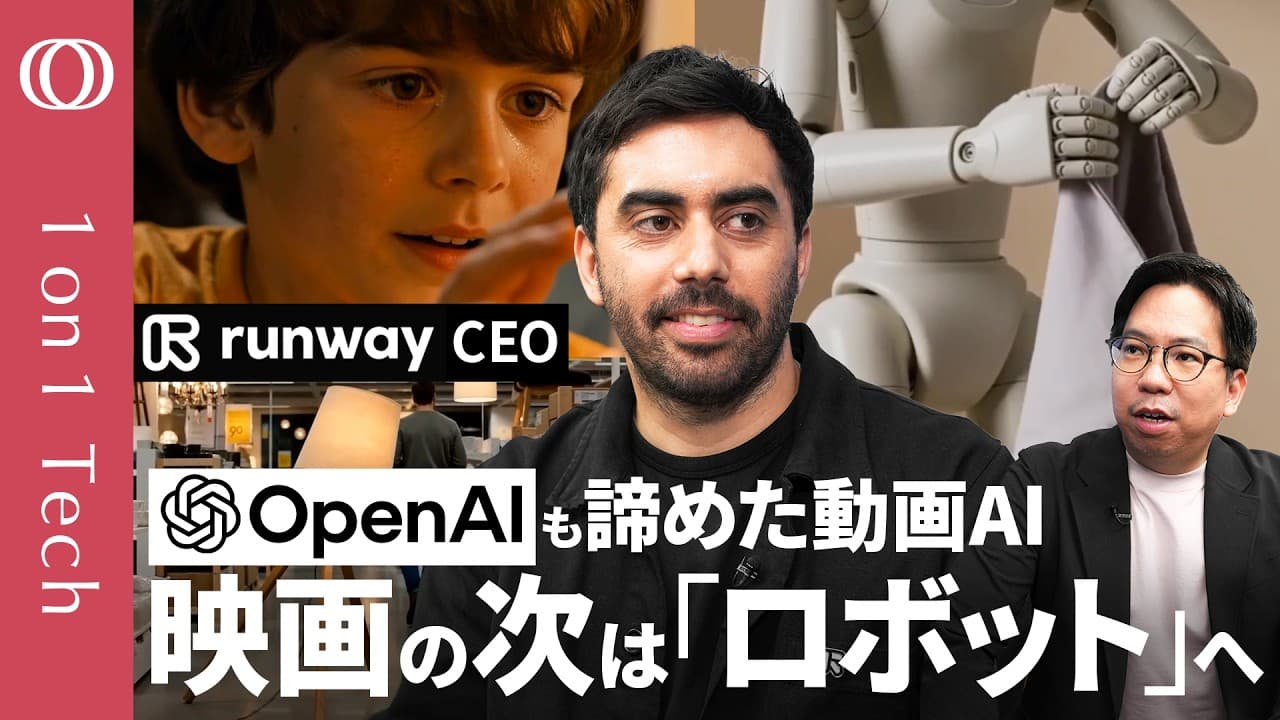
TL;DR
Runway’s video models are evolving from creative tools into systems that can model aspects of the physical world, which may eventually support robotics. The company already helps people across filmmaking, advertising, design, gaming, architecture, education, sales, and other fields turn ideas into visual stories, while treating human intent and creative judgment as essential parts of the process.
Transcript
Oneonone startup languages. Okay, we're joined by Christo Valenzilla, co-founder and co-CEO of Runway. Thank you very much for your time. >> Yeah, of course. Thank you for having me here. >> Yeah, you just got here or >> Yes, Japan. >> Couple days ago. Okay. How long are you here for this time? >> Uh just like over a week, a little bit less than a ... Read More
Key Insights
- Runway is a multimedia platform for turning human ideas into generated content and stories. Its tools support different creative workflows rather than requiring one universal prompt, because each person can approach the models with distinct intentions, methods, and techniques.
- Human creative intent remains central to effective AI-generated storytelling. Producing a coherent and emotionally meaningful work requires knowing what story to tell, while Runway’s models and systems help creators generate the visual material needed to express that vision.
- AI is a general-purpose technology because its applications extend across many fields. Runway serves users in filmmaking, advertising, design, consumer goods, financial services, gaming, architecture, education, and sales, all of which involve communicating ideas or telling stories.
- Creativity is a way of approaching problems rather than a label reserved for professional artists. A salesperson can creatively engage potential customers, while a designer can creatively choose the form of a shoe or garment, making generative tools relevant far beyond filmmaking.
- Generative tools can reveal creative abilities that were previously difficult to express. Runway’s film festival has included successful participants without filmmaking backgrounds, including musicians and brand professionals who discovered that AI allowed them to create stories they had not expected to make.
- Runway’s long-term vision is to make sophisticated visual production as accessible as writing on a computer. The comparison reflects a goal of reducing the cost and technical barriers that historically prevented many people from producing ambitious films and visual stories.
- Runway’s development grew from early experimentation with deep learning for creative purposes. The founders did not initially know the precise route to advanced video generation, but they believed neural networks could augment creativity and continued testing research techniques and product ideas.
- Video generation can lead toward models that understand and simulate the physical world. By representing elements such as gravity, light, motion, and interaction, these systems may move beyond media production and contribute intelligence to robots, including potential applications in Japan’s robotics industry.
Install to Summarize YouTube Videos and Get Transcripts
Explore YouTube Video Summarizer or Get YouTube Transcript Extractor
Questions & Answers
Q: What does Runway do with generative AI?
Runway develops products and technologies that help companies and individuals create content and tell stories. Users can prompt its models and combine different tools to generate visual material that reflects their intentions. The platform is not presented as a system with one correct prompt or workflow. Instead, people can develop distinct techniques according to the stories and outcomes they want.
Q: Who can use Runway besides filmmakers?
Runway can be used by people working in advertising, design, consumer goods, financial services, gaming, architecture, education, and sales. Valenzuela’s reasoning is that storytelling is not limited to cinema. Companies and individuals regularly need to communicate ideas, present products, persuade audiences, or imagine new possibilities, so generative media can support many professional and personal activities.
Q: Does AI replace human creativity in video production?
AI does not remove the need for human intention in the workflow described by Valenzuela. A creator still needs to decide what story should be told and guide the models toward that result. Runway supplies generation capabilities, but coherent storytelling depends on human ingenuity, judgment, experimentation, and the particular techniques each creator develops while working with the system.
Q: Why is generative AI considered a general-purpose technology?
Generative AI is considered general purpose because the same underlying capability can support a wide range of applications rather than a single specialized task. Runway’s customer base illustrates this breadth through uses in media, brands, design, gaming, architecture, education, finance, and sales. The common thread is helping people express ideas and construct stories in forms suited to their goals.
Q: How can video AI help people without filmmaking experience?
Video AI can lower the practical and technical barriers that once kept many people from producing visual stories. Runway’s film festival has featured participants who did not come from filmmaking backgrounds, including musicians and people working with brands. These users could apply generative tools to express creative ideas and make videos or films they had not previously believed they could produce.
Q: How did Runway begin developing video generation models?
Runway began with the founders’ interest in using deep learning techniques for creative work. They studied together and explored how neural networks might augment people’s creativity, then spent an extended period experimenting with research, products, and technical approaches. Stronger conviction and results emerged around image generation, after which the company developed and released its initial video model.
Q: What is Runway’s vision for the future of filmmaking?
Runway’s vision is for ambitious visual production to become far more accessible, eventually approaching the ease of writing a document on a computer. Making sophisticated films has traditionally required substantially greater resources than writing. By reducing production costs and technical barriers, generative systems could allow more individuals to create polished stories from their homes and share their ideas visually.
Q: How could Runway’s video AI contribute to robotics?
Runway’s video technology could contribute to robotics by developing into world models that represent how reality behaves. Video generation involves more than producing attractive images because a useful model must capture aspects of light, gravity, motion, objects, and interaction. A system that can simulate those relationships may eventually provide robots with intelligence for understanding and acting within the physical world.
Summary & Key Takeaways
-
Runway develops generative tools that help companies and individuals create visual stories. Although filmmaking and advertising are prominent applications, customers also use the technology in design, consumer goods, financial services, gaming, architecture, education, and sales. Valenzuela therefore describes AI and Runway as general-purpose technologies rather than narrowly specialized production tools.
-
Runway began by exploring how deep learning could augment creativity. Its founders experimented with research, products, and techniques before gaining stronger results in image generation and later releasing a video model. Valenzuela argues that the rapid improvement of these systems has made previously improbable capabilities feel ordinary, effectively normalizing what once seemed like magic.
-
The company’s broader ambition extends beyond generating attractive footage. Video models can begin representing features of the physical world, including light, gravity, motion, and interaction. This points toward world models that simulate reality and may eventually serve as intelligence for robots, with Japan’s established robotics sector presented as a promising area for application.
Read in Other Languages (beta)
Share This Summary 📚
Summarize YouTube Videos and Get Video Transcripts with 1-Click
Try YouTube Summary with ChatGPT & Claude or YouTube Transcript Generator
Explore More Summaries from TBS CROSS DIG with Bloomberg 📚






Summarize YouTube Videos and Get Video Transcripts with 1-Click
Try YouTube Summary with ChatGPT & Claude or YouTube Transcript Generator