How cohesion, energy and openness drive empire rise explained
TL;DR
Cohesion, energy, and openness determine whether a state or group can conquer others. A margins-based society with strong cohesion and energy and a willingness to adapt and be resilient often defeats wealthier, isolated elites. Historical patterns show these metrics explain how empires like the Qing, Macedonians, Greeks, and Aztecs rose and fell.
Transcript
Today we examine the question why is it that states, countries, nations, they rise and they fall. Okay, so let's start off with an example that you know pretty well. So this is the waring states period and at this point in history there are many powerful states. Okay. So for example the true, the jao, the way. Okay. And if at this point in history,... Read More
Key Insights
- Cohesion is the willingness of a group to work together, sacrifice for others, and act as a unified team.
- Open societies are more willing to adapt, accept limitations, and remain resilient in the face of challenges.
- Energy refers to the drive, focus, and motivation to work toward a clear goal.
- Historically, stronger margins or peripheral groups often conquer wealthy centralized powers due to higher cohesion and energy.
- Weak elites can stagnate a rich society through corruption and detachment, enabling outsiders to gain advantage.
- The model explains multiple historical sequences where poorer groups defeat richer ones by leveraging cohesion and openness.
- The three metrics together create a dynamic where a once marginal group can unify and expand into a dominant empire.
- Even successful empires can decline when cohesion and openness deteriorate, allowing new challengers to rise.
Install to Summarize YouTube Videos and Get Transcripts
Explore YouTube Video Summarizer or Get YouTube Transcript Extractor
Questions & Answers
Q: How does energy influence a group’s ability to conquer or unify territories?
Energy in the lecture is defined as the willingness to work hard, stay focused, and pursue a clear goal with motivation. When a group has high energy, it sustains effort through difficult times, continuously mobilizes resources, and remains capable of organizing complex campaigns or state-building activities. This drive often overcomes material advantages of opponents.
Q: What role does cohesion play in empire formation according to the video?
Cohesion follows the idea of aasayiah, meaning group solidarity or willingness to sacrifice for the group. High cohesion means people see themselves as a team, which enables coordinated action, collective defense, and shared risk. This unity is crucial for sustaining campaigns, resisting internal collapse, and maintaining long-term strategic plans.
Q: How is openness portrayed as a factor in historical conquests?
Openness is described as willingness to adapt, accept limitations, and be resilient. Societies that are open can learn from mistakes, adopt effective practices, and reorganize after setbacks. This flexibility often allows them to outmaneuver more rigid rivals, facilitating expansion, integration of new ideas, and overcoming geographic or political obstacles.
Q: Why do margins-based societies frequently conquer centralized powers in the narrative?
The margin groups are poorer but more cohesive and oriented toward collective action, while wealthy centers may suffer from corruption, arrogance, and detachment. This combination reduces the center’s competitive edge and creates opportunities for marginalized groups to leverage unity, energy, and adaptability to seize control and establish new empires.
Q: Which historical examples are used to illustrate the three metrics in action?
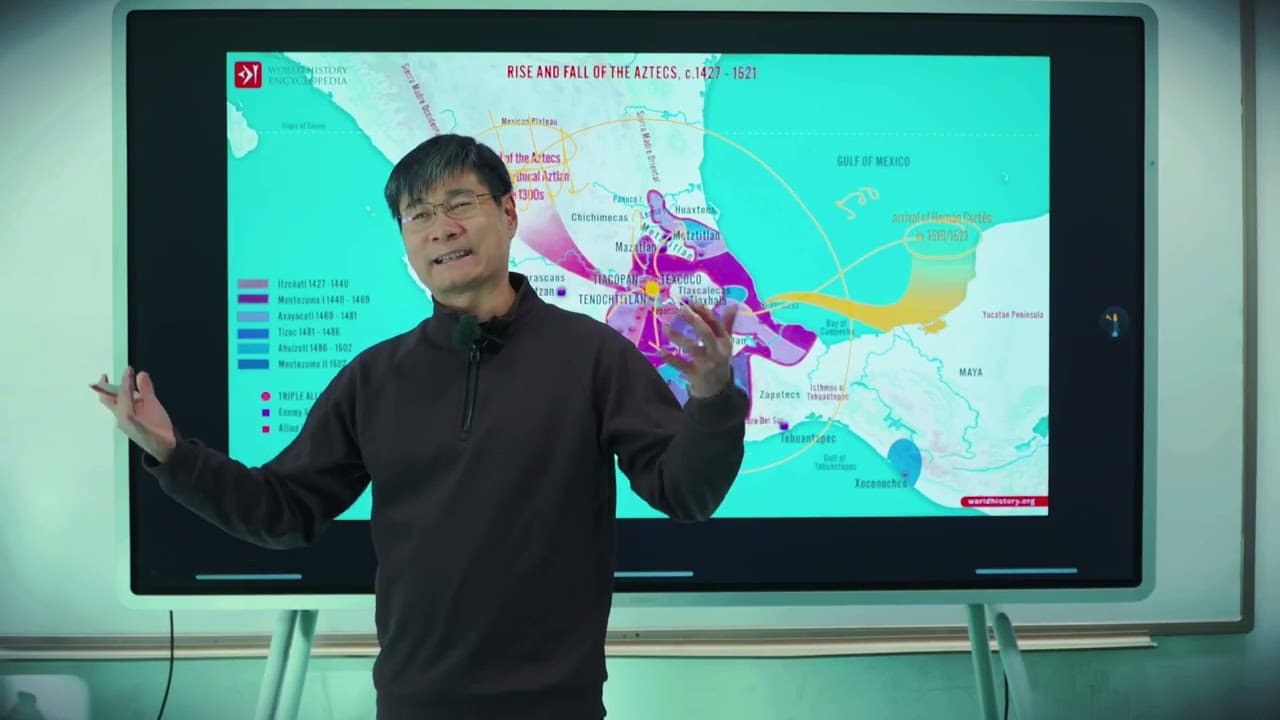
The narrative cites the Qing dynasty conquering all of China, Macedonians defeating the Greek city-states and then the Persian Empire, and the Aztecs being conquered by Spanish conquistadors. In each case, energy, openness, and cohesion shape whether a weaker or marginalized group can triumph, despite apparent material disadvantages.
Q: How does the video connect these metrics to patterns in the rise and fall of empires?
The speaker presents an iron law-like pattern: empires fall when elites become corrupt and stagnant, reducing energy and openness, while margins claim greater cohesion, enabling new groups to rise. This dynamic explains repeated cycles of conquest and empire-building across different civilizations and eras.
Q: What is the proposed alternative to traditional western-centric historic explanations?
The lecture offers a cohesion-energy-openness framework as a universal lens, suggesting that the success of empires depends less on geographic luck or wealth alone and more on social dynamics. It emphasizes the marginal groups’ cohesion and adaptability as decisive factors in determining who conquers whom.
Q: How do Athens, Macedon, and Rome fit into the three-metric model?
Athens had strong attributes but was eventually outpaced by Macedon, which combined energy, openness, and cohesion to conquer the city-states and then the Persian Empire. Rome rose from a peripheral, less centralized setup by leveraging similar metrics, eventually unifying the Italian peninsula and expanding further, illustrating the model across multiple civilizations.
Summary & Key Takeaways
-
A pattern repeats across history where margins-based groups conquer centralized powers by maintaining cohesion while staying open to adapt and maintain energy.
-
The speaker argues three metrics cohesion, openness and energy determine a society’s dynamism and its likelihood to triumph over rivals.
-
Examples from Chinese Warring States, Greek city states, Aztecs, and Macedonians illustrate how energy openness and cohesion interact to enable conquest and empire formation.
Read in Other Languages (beta)
Share This Summary 📚
Summarize YouTube Videos and Get Video Transcripts with 1-Click
Try YouTube Summary with ChatGPT & Claude or YouTube Transcript Generator
Explore More Summaries from Predictive History 📚





Summarize YouTube Videos and Get Video Transcripts with 1-Click
Try YouTube Summary with ChatGPT & Claude or YouTube Transcript Generator