How Can AI Support Women With Breast Cancer?
TL;DR
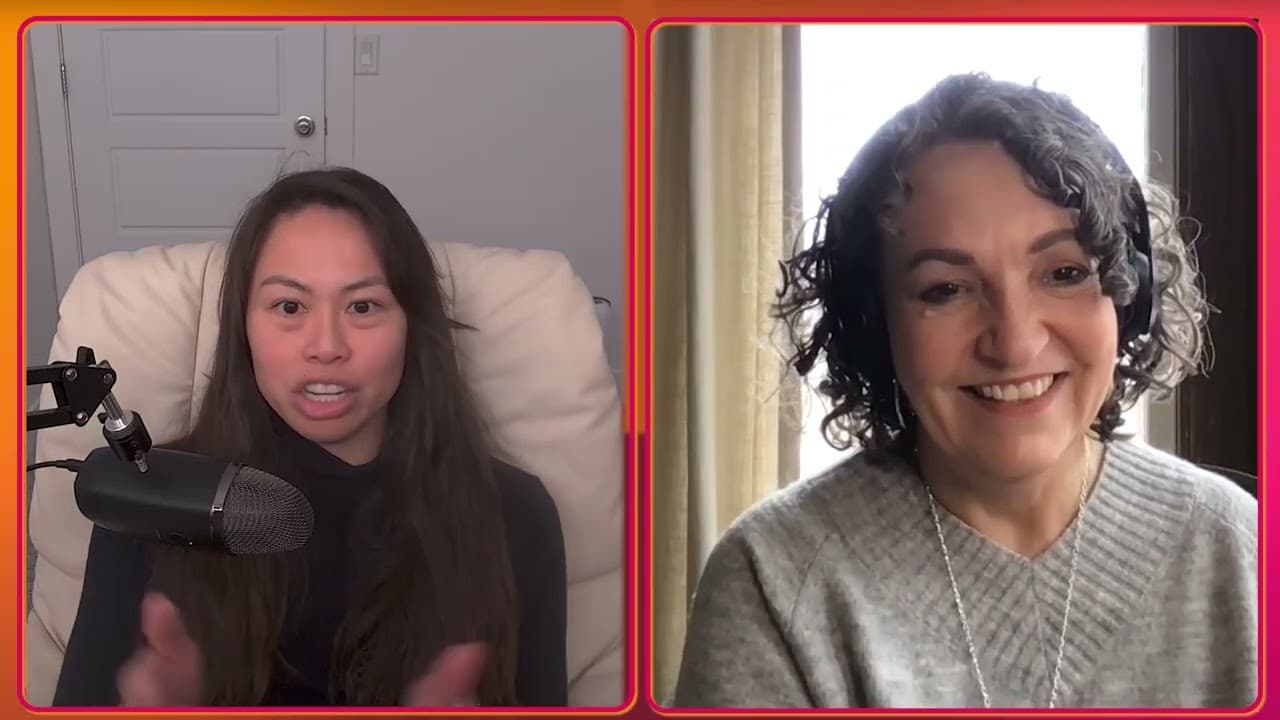
AskEllyn.ai gives women navigating breast cancer a private, multilingual, non-medical companion based on survivor Ellyn Winters-Robinson’s personal story. It offers empathetic support, shares relevant lived experience, and directs medical questions to healthcare professionals, while avoiding registration and anonymizing collected questions to protect vulnerable users.
Transcript
a bunch of high school students and they talk about AI they're like 16 17 year olds and they're building their own chat Bots and they're doing all this stuff that's amazing and as I was sharing my story this young lady came up to me she had tears running down her face and she said I so moved by what you've said and I'm inspired and she said I want ... Read More
Key Insights
- AskEllyn.ai is a digital companion grounded in Ellyn Winters-Robinson’s breast cancer experience and written manuscript. It combines her personal story with OpenAI’s broader knowledge and language abilities, creating interactions that feel more personal than those of a conventional chatbot.
- The purpose of AskEllyn.ai is emotional and experiential support, not diagnosis or treatment guidance. It shares Ellyn’s lived experience, acknowledges what patients may be feeling, and directs medical questions back to doctors, a boundary that has helped earn support from healthcare professionals.
- Privacy is a central design requirement for AskEllyn.ai because its users may be vulnerable patients discussing sensitive experiences. The service requires no registration, does not capture identifying user data, and is designed to provide a safe place where women can communicate and confide.
- Collected questions are anonymized and rephrased with AI before they are reviewed. This process preserves the general subject of each question while removing specific wording, allowing the team to understand user concerns without intentionally retaining a personally identifiable conversation history.
- Multilingual support makes breast cancer companionship accessible to women who may not speak English confidently. AskEllyn.ai can communicate in languages including Bulgarian, Mandarin, and Yoruba, allowing users from different regions and backgrounds to seek support in a language that feels more comfortable.
- Cultural barriers can make breast cancer support difficult even when language translation is available. In cultures where the diagnosis is considered shameful, a private AI companion may become one of the few places where a woman feels able to discuss her condition openly.
- Patient-driven innovation began when Ellyn recognized that many women lack the research skills or confidence to question healthcare professionals. Her initial goal was to share knowledge and survivor wisdom through a book, but an unexpected technology collaboration transformed the manuscript into an interactive companion.
- Limited funding is the primary obstacle to expanding AskEllyn.ai. Ellyn describes the project as a bootstrapped nonprofit supported by a $110,000 grant, which restricts marketing reach even as pharmaceutical, medical equipment, cancer, and healthcare organizations show interest in the technology.
Install to Summarize YouTube Videos and Get Transcripts
Explore YouTube Video Summarizer or Get YouTube Transcript Extractor
Questions & Answers
Q: What is AskEllyn.ai and how does it support breast cancer patients?
AskEllyn.ai is a digital companion based on breast cancer survivor Ellyn Winters-Robinson’s story and manuscript. It lets women discuss concerns with a conversational version of Ellyn that offers empathy, companionship, and relevant lived experience. It is not intended to diagnose conditions or answer medical questions. When clinical issues arise, it encourages users to speak with their doctors.
Q: How was AskEllyn.ai created from Ellyn’s breast cancer story?
Ellyn first wrote a book that combined her breast cancer experience with links to information relevant at different stages of the journey. During a technology-related conversation, she shared the manuscript with the chief executive of another technology company. He used it to create a digital version of her in three weeks, demonstrating that her story could become an interactive support resource.
Q: Why does AskEllyn.ai avoid giving medical advice?
AskEllyn.ai is designed to remain in the companion and friend role rather than function as a medical information service. It can explain what Ellyn experienced and acknowledge a user’s feelings, but it refers medical questions to healthcare professionals. According to Ellyn, doctors and nurses appreciate this guardrail because the system recognizes the limits of its role.
Q: How does AskEllyn.ai protect patient privacy?
AskEllyn.ai does not require registration and does not intentionally capture identifying information about individual users or their locations. The team can identify the language being used and collects submitted questions, but AI is applied to anonymize and rephrase those questions. This preserves their general meaning while reducing the connection to a user’s exact words or identity.
Q: How does multilingual AI improve breast cancer support?
Multilingual AI allows women to communicate in languages that may feel more natural and comfortable than English. Ellyn says AskEllyn.ai can converse in languages including Bulgarian, Mandarin, and Yoruba. This capability can extend support to newcomers and women from different cultural backgrounds who might not participate in conventional support groups because of limited English proficiency.
Q: Why can a private AI companion help women facing cultural stigma?
Some women live in cultures where a breast cancer diagnosis is considered shameful, making it difficult to discuss the condition even with family members. A private companion that communicates in the woman’s own language can provide a place to confide without joining a public support group. Ellyn considers that combination of privacy, language access, and empathy especially powerful.
Q: What challenges limit the growth of AskEllyn.ai?
The main challenge is limited funding and organizational capacity. Ellyn is building the nonprofit largely by herself and received a $110,000 grant from one organization. Because the project has no planned commercial exit and she cannot imagine selling the companion, conventional capital raising is difficult. Limited marketing resources consequently restrict its ability to reach more patients.
Q: How have healthcare professionals and organizations responded to AskEllyn.ai?
Ellyn reports that patients who use AskEllyn.ai value its safety and companionship, while doctors and nurses respect its non-medical guardrails. Large pharmaceutical, medical equipment, cancer, and healthcare organizations have also expressed interest, although some remain hesitant about compliance and cybersecurity. GE Healthcare’s oncology chief medical officer tested the companion in Russian and joined Ellyn for a webinar featuring AskEllyn.ai as a third participant.
Summary & Key Takeaways
-
After being diagnosed with multifocal breast cancer in March 2022, Ellyn Winters-Robinson researched her condition so she could have informed conversations with doctors. She also gathered practical wisdom from other women, wrote a book about her experience, and included links to information relevant to different stages of the breast cancer journey.
-
A technology executive used Ellyn’s manuscript to create a digital version of her in three weeks. The resulting companion, AskEllyn.ai, combines OpenAI’s broader language capabilities with Ellyn’s personal story and personality. It supports users as an empathetic peer while maintaining a clear boundary against providing medical advice.
-
AskEllyn.ai requires no registration, captures no identifying user data, and anonymizes and rephrases collected questions. Its multilingual abilities help reach women facing language or cultural barriers. Although patients, doctors, nurses, and major healthcare organizations have shown interest, limited nonprofit funding and institutional hesitation remain significant challenges to wider adoption.
Read in Other Languages (beta)
Share This Summary 📚
Summarize YouTube Videos and Get Video Transcripts with 1-Click
Try YouTube Summary with ChatGPT & Claude or YouTube Transcript Generator
Explore More Summaries from Sabrina Ramonov 🍄 📚

Summarize YouTube Videos and Get Video Transcripts with 1-Click
Try YouTube Summary with ChatGPT & Claude or YouTube Transcript Generator