How Do Branding and Marketing Work Together?
TL;DR
Branding defines why a company exists, how it differs, and what customers should feel, while marketing carries that message into the market and encourages people to buy. Neither works well alone: establish a focused brand platform first, then devote more resources to distributing its message, generating awareness, attracting customers, and producing the revenue needed to stay in business.
Transcript
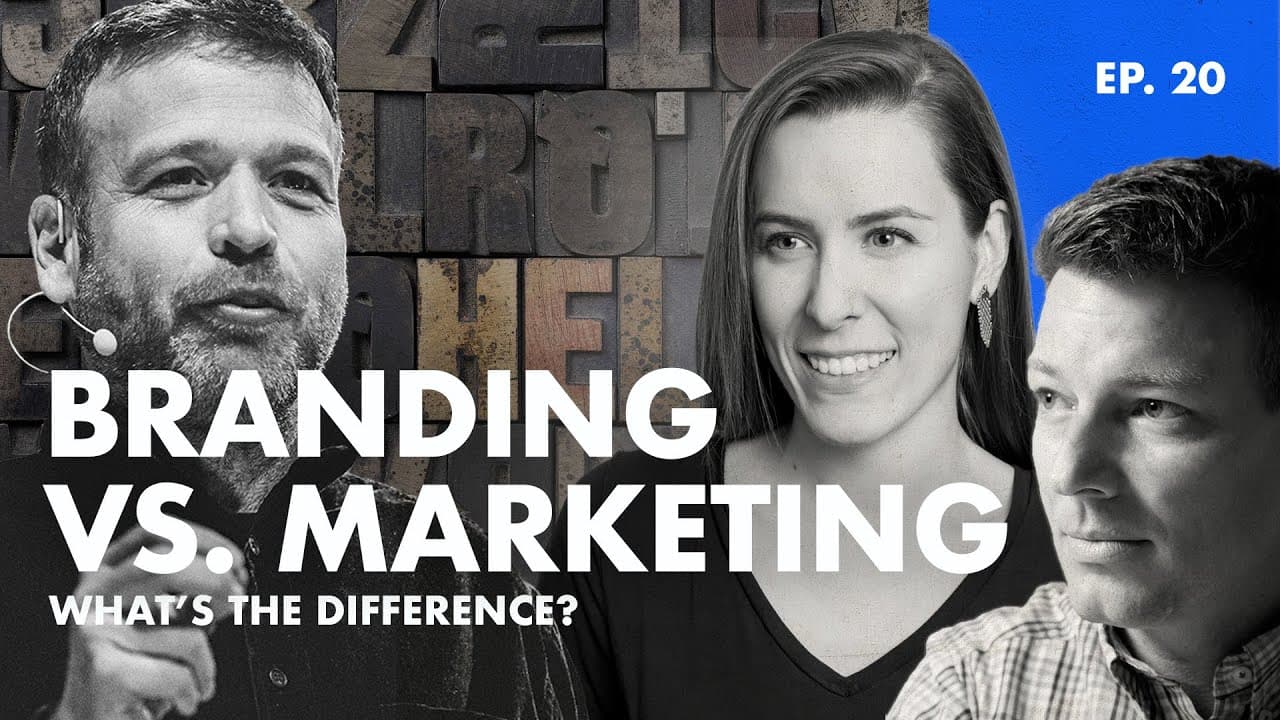
so guys when melinda calls I answer and here we are Melinda's like I think it's time for another meeting but the switch up today is that she's brought in another person that you are familiar with too if you're familiar with the channel none other than Fabian Geralt our he's here and I think we're gonna be talking about something that started to get... Read More
Key Insights
- • Branding is the foundation that establishes why a company exists, what it stands for, how it differs from competitors, how it should be positioned, and what look, feeling, language, and personality should consistently shape the customer’s perception.
- • Marketing is the work of putting an established message into the market, explaining why people should buy, attracting customers, and supporting sales. If people never hear about an offer, they cannot purchase it, regardless of how thoughtfully the brand was developed.
- • A logo is one small component of brand identity, not the complete brand. Designers who produce only a mark are creating visual identity, while broader branding also addresses purpose, differentiation, positioning, customer understanding, voice, values, and emotional connection.
- • A brand platform is a plan that defines what the company stands for, why it exists, whom it serves, how it differs, and how it should appear and speak. This strategic work should guide the company name, visual identity, verbal identity, and subsequent marketing.
- • Branding must begin with customer understanding, including who prospective customers are, which channels they use, what they discuss on social media, and how the company can connect with their concerns. The company’s internal purpose must therefore relate to an external audience.
- • Branding and marketing work as a continuing flow rather than a simple one-time sequence. Branding establishes and maintains the emotional connection, values, and identity, while marketing repeatedly distributes the message and brings people toward the company’s product or service.
- • A 30–70 division between branding and marketing is presented as a potentially sensible guideline for a limited budget, with less allocated to establishing the brand and more allocated to spreading its message. The precise allocation still depends on the company’s needs and circumstances.
- • The claim that branding should wait until a company reaches $50 million or more is challenged because such a company must already have developed basic branding. However, the criticism may reflect cases where companies facing weak revenue spend on rebranding instead of solving immediate marketing and sales problems.
Install to Summarize YouTube Videos and Get Transcripts
Explore YouTube Video Summarizer or Get YouTube Transcript Extractor
Questions & Answers
Q: What is the difference between branding and marketing?
Branding establishes why a company exists, what it stands for, how it differs, where it belongs in the market, and how it should look, sound, and feel. Marketing takes that defined identity and message to prospective customers, explains why they should buy, and helps generate attention, sales, and revenue. Branding creates the word, while marketing spreads it.
Q: Should branding or marketing come first?
A basic brand foundation should come first because a company needs to know what it represents before it can communicate clearly. That foundation includes purpose, audience, differentiation, positioning, name, language, and visual identity. Marketing then spreads the resulting message. In practice, the relationship becomes an ongoing flow because customer response and company development require the brand and its marketing to keep evolving together.
Q: Is marketing more important than branding?
Marketing is essential because customers cannot buy an offer they never hear about, and a company without sufficient sales can run out of business. Branding is also essential because marketing needs a clear purpose, position, identity, and message to communicate. The practical priority depends on the problem: a company with weak revenue may need more marketing, but marketing still requires a usable brand foundation.
Q: What does a brand platform include?
A brand platform identifies what the company stands for, why it exists, whom it serves, how it differs, and how it should be positioned. It also considers customer behavior, relevant communication channels, verbal style, company personality, preferred words, values, and visual direction. These decisions form a brand plan that guides the name, logo, identity, messaging, and later marketing activity.
Q: Is a logo the same thing as branding?
A logo is not the same thing as branding. It is one visible part of a broader identity system. Branding also includes the company’s purpose, values, customer understanding, differentiation, market position, tone of voice, language, personality, and intended emotional connection. Someone who creates only a logo is working on visual identity rather than completing the full strategic branding process described in the discussion.
Q: How should a startup divide its branding and marketing budget?
The discussion suggests that a startup with a fixed budget should divide it intelligently, spending enough to establish the brand and more to distribute the message. A 30–70 split is described as a potentially reasonable rule, with 30 percent for branding and 70 percent for marketing. The central principle is to define the offer clearly, then ensure enough people hear about it.
Q: Why is waiting until $50 million to start branding misleading?
Waiting until a company reaches $50 million to consider branding is described as misleading because the company would already need a name, message, identity, positioning, and some differentiation to reach that scale. Those are branding elements, even if leaders do not label them that way. The more useful warning is against expensive rebranding when the company’s immediate problem is insufficient marketing, sales, revenue, or runway.
Q: How does customer research influence branding?
Customer research helps determine whom the company serves, what those people care about, where they spend time, which channels they use, and how the company can connect with them. Reading social media comments and understanding the customer’s mindset can shape positioning, language, personality, and messaging before the name or visual identity is created. Branding therefore includes both company purpose and customer perception.
Summary & Key Takeaways
-
Branding establishes a company’s purpose, differentiation, positioning, personality, language, and visual identity. A logo is only one visible component of that larger system. Effective branding begins with understanding the intended customers, where they spend time, what they say, and how the company should connect with their needs and perceptions.
-
Marketing spreads the established brand message, explains why customers should buy, attracts attention, and supports sales and revenue. The discussion presents branding and marketing as an ongoing flow rather than isolated activities. Branding creates the foundation and desired emotional connection, while marketing helps people discover, understand, and act on the offer.
-
The argument that companies should delay branding until reaching $50 million or more is criticized as misleading because a company must already have a name, positioning, message, and identity to grow. However, the underlying warning can be useful when established companies spend heavily on branding while neglecting urgent revenue, sales, or runway problems.
Read in Other Languages (beta)
Share This Summary 📚
Summarize YouTube Videos and Get Video Transcripts with 1-Click
Try YouTube Summary with ChatGPT & Claude or YouTube Transcript Generator
Explore More Summaries from The Futur 📚



Summarize YouTube Videos and Get Video Transcripts with 1-Click
Try YouTube Summary with ChatGPT & Claude or YouTube Transcript Generator