Is Print On Demand Worth It? A 7-Day $0 Test
TL;DR
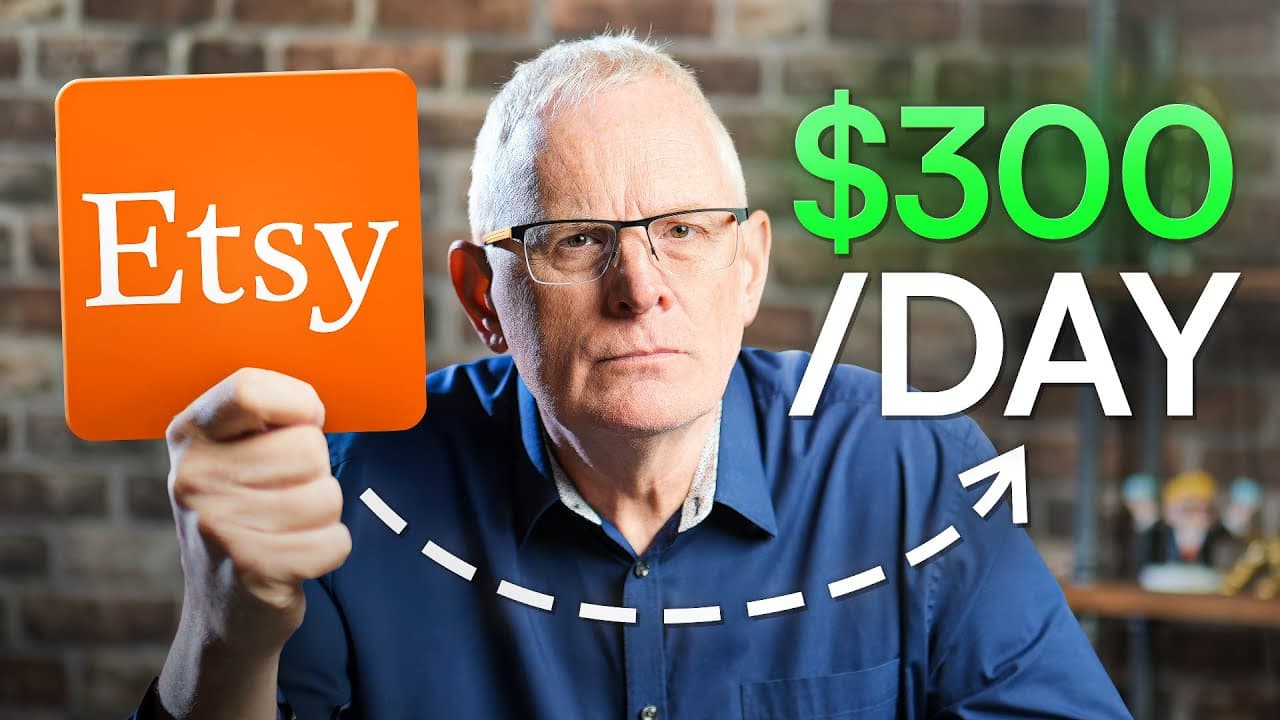
A print on demand wall art store built in 24 hours with zero upfront cash generated 549.89 in revenue from 11 sales, leaving 81.69 in profit after Fiverr designs (60.77), Etsy's 6.5% fee (35.74), and product plus shipping (371.69). The model works because you only pay a supplier once a customer buys, but tight margins mean profit is modest at first.
Transcript
- People are making thousands of dollars in passive income every month selling products that don't even exist until someone places an order. - $34,000 per month. - The realistic earnings I've been able to make with Print On Demand. - Well over a million dollars.
- 63,000. - [Narrator] $21,000 per month, multiple six figures in profit. (tape rewindi... Read More
Key Insights
- Print on demand works by making a design, partnering with a printing company, and having them print and ship the product only after someone places an order, so no inventory or upfront product cost is required.
- The full 7-day test generated 549.89 in revenue from 11 sales but only 81.69 in final profit once designs, platform fees, and fulfillment costs were subtracted, showing the gap between revenue and take-home earnings.
- TikTok is a strong market research tool because sellers promote print on demand stores through its integrated shop feature, and finding an account that repeatedly posts the same product signals that item is actually selling well.
- Wall art was chosen because it is cheap to make yet sells at a high price as an impulse purchase, producing strong profit margins, and it can scale into premium artwork for wealthier buyers.
- Designs were outsourced by ordering five entrepreneurial motivational posters from three Fiverr sellers for 60.77 total, using a written brief specifying an entrepreneurial theme and a 30 by 40 centimeter poster size.
- Etsy was selected as the store because it has a low barrier to entry and an established customer base, though products there are treated as commodities compared mainly on price against similar sellers.
- The poster was priced at 49.99 based on Gelato's Price Navigator tool, aiming for roughly a 50% profit margin, a price the creator acknowledged was high compared to most Etsy competitors.
- Ordering your own product before selling is recommended because reputation is everything; the sample arrived in three days with quality described as fantastic, faster than typical Chinese drop shippers.
Install to Summarize YouTube Videos and Get Transcripts
Explore YouTube Video Summarizer or Get YouTube Transcript Extractor
Questions & Answers
Q: How does print on demand work?
Print on demand works by creating a design and partnering with a printing company that prints and ships the product only when a customer places an order. This means the product does not physically exist until someone buys it, so there is no inventory cost. In this test, the creator paid nothing for products until sales were made, only covering fulfillment costs after each purchase, which makes it possible to start with $0.
Q: How much money did the creator make with print on demand in 7 days?
The business generated 549.89 in revenue from 11 sales over the test period. However, this was not all profit. After deducting 60.77 for Fiverr designs, 35.74 for Etsy's 6.5% fee, and 371.69 for product and shipping costs, the final profit came to 81.69. The creator considered this a success given the entire setup was completed within 24 hours with no upfront cash.
Q: What product is best to sell with print on demand?
In this test the creator chose wall art, specifically entrepreneurial motivational posters. He picked it because TikTok research showed a large market of aspiring entrepreneurs who buy motivational artwork, it is cheap to make but sells for a high price as an impulse purchase, giving strong profit margins, and it can scale into premium artwork for wealthy buyers. He sold wooden framed posters in a 30 by 40 centimeter size.
Q: How do you do market research for print on demand?
The creator used TikTok because many sellers promote their print on demand stores there through the integrated shop feature that lets viewers buy directly from videos. Rather than looking at one-off videos, he searched for accounts that consistently post multiple videos about the same product. If someone repeatedly invests time promoting an item, it is a safe assumption the product is selling well and worth pursuing.
Q: How much does it cost to start a print on demand business?
The creator's rule was to spend $0 upfront, and print on demand made this possible because you do not pay for products until a sale is made. He created a free account with Gelato and did not pay for anything until orders came in. His only spending was 60.77 on Fiverr designs, and product, shipping, and platform fees were paid out of sales revenue rather than upfront capital.
Q: What platform should you use to sell print on demand products?
The creator sold on Etsy because it is relatively simple, has a low barrier to entry, and already has an established customer base to tap into. The downside he noted is that products become commodities compared mainly on price. For building a longer lasting business, he suggested using something like Shopify to create your own store instead, though that requires more setup effort.
Q: Why should you order your own print on demand product before selling?
The creator recommends ordering your own product first because reputation is everything and you do not want customers speaking negatively about quality. He ordered samples shipped to the USA, found the quality fantastic, and was impressed the shipping took only three days, far better than Chinese drop shippers. Verifying quality and shipping speed before selling helps avoid negative reviews and gives you a competitive advantage.
Q: How do you price a print on demand product for good profit?
The creator used Gelato's Price Navigator tool, which lays out the product cost, shipping cost, and total profit per sale. He set the price at 49.99, aiming for a profit margin of around 50%, which he considers a nice margin. He acknowledged this price was high compared to most Etsy competitors and would likely impact sales volume, but was willing to take that risk for better per-sale profit.
Summary & Key Takeaways
-
As a self-imposed side hustle challenge, the creator built a print on demand business under a fake name, spending $0 and launching within 24 hours. He signed up free with Gelato, a supplier with global fulfillment centers and straightforward software.
-
Using TikTok market research, he chose wall art targeting aspiring entrepreneurs who buy motivational posters. Short on time, he ordered five designs from three Fiverr sellers for 60.77, then uploaded them to Gelato as wooden framed 30 by 40 centimeter posters.
-
Selling on Etsy at 49.99 using Gelato's built-in mockup studio and Price Navigator, he made 11 sales totaling 549.89. After Fiverr, Etsy's 6.5% fee, and product and shipping costs, profit was 81.69, which he counted a success worth continuing.
Read in Other Languages (beta)
Share This Summary 📚
Summarize YouTube Videos and Get Video Transcripts with 1-Click
Try YouTube Summary with ChatGPT & Claude or YouTube Transcript Generator
Explore More Summaries from Mark Tilbury 📚

Summarize YouTube Videos and Get Video Transcripts with 1-Click
Try YouTube Summary with ChatGPT & Claude or YouTube Transcript Generator