How to achieve band 7 in IELTS Speaking test
TL;DR
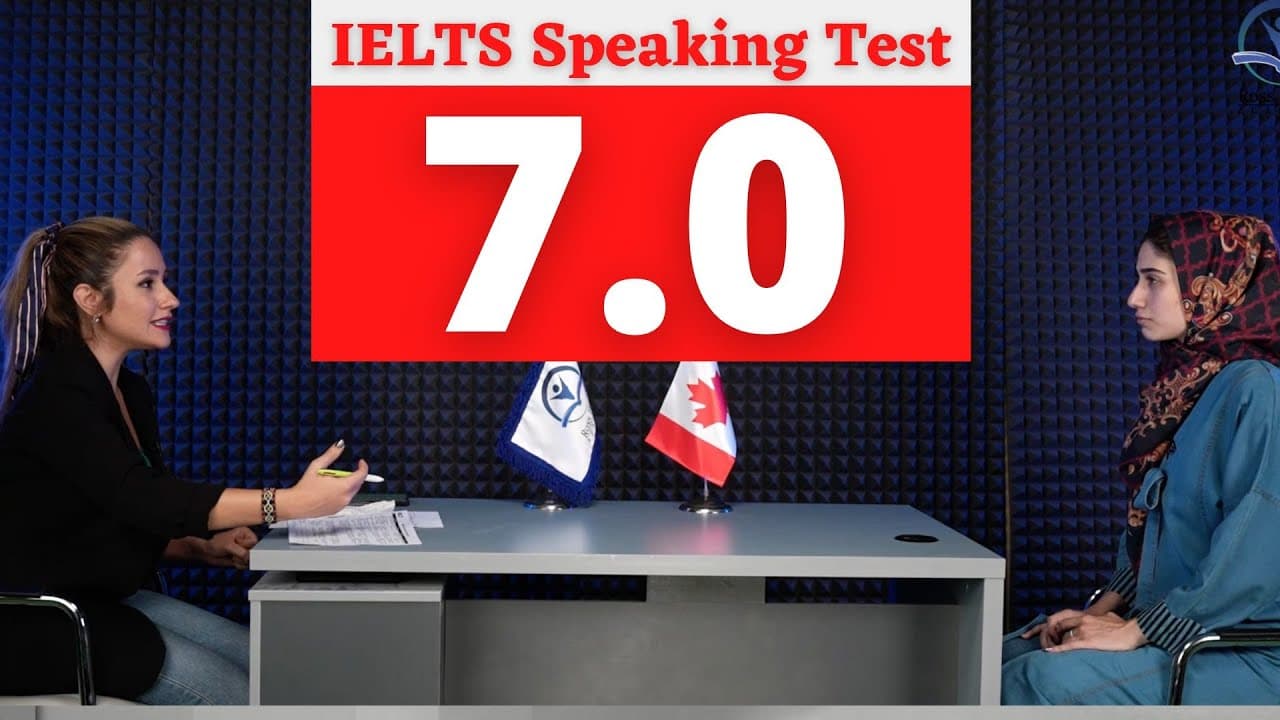
Band 7 relies on strong fluency and coherence, rich vocabulary, and a wide grammar range with accurate usage. The video analyzes a real IELTS Speaking mock, highlighting effective answering, natural pacing, and the value of linking ideas with connectives, plus practical feedback to improve performance.
Transcript
so we can now get started from here it starts the speaking test this is the speaking mock test of the international English language testing system taking place in Ross iOS Academy the candidate is Annie's hand on the candidate's number is zero one four three two five one The Examiner is mayhafi examiner number 443533 good afternoon my name is Meri... Read More
Key Insights
- Fluency and coherence are rated highly when the candidate expands answers beyond short responses and uses natural pauses without excessive repetition.
- Lexical resource is strengthened by using collocations, paraphrase, and varied vocabulary to discuss familiar topics.
- Grammatical range and accuracy improve with the use of complex sentences, subordinate clauses, and correct tense usage, though some past tense forms need refinement.
- Pronunciation can affect clarity even when overall speech is clear, so attention to word-level pronunciation and intonation matters.
- Connectives are important for cohesion; increasing their variety helps create smoother and more polished speech.
- Idiomatic language, where appropriate, can elevate the score, but it must sound natural and not forced.
- The examiner notes specific strengths and areas for growth, providing a blueprint for targeted practice and self-assessment.
- Practicing with real prompts and recording yourself to review later is advised to mirror test conditions and track progress.
Install to Summarize YouTube Videos and Get Transcripts
Explore YouTube Video Summarizer or Get YouTube Transcript Extractor
Questions & Answers
Q: What factors determine a Band 7 in IELTS Speaking according to the video?
A Band 7 is determined by strong fluency and coherence, a broad and accurate lexical resource, and a wide grammatical range with minimal errors. The speaker highlights the importance of developing extended responses, using connectives effectively, and maintaining natural pronunciation and intonation throughout the talk.
Q: How should test takers structure their answers in Part 1 and Part 2?
Test takers should expand responses beyond brief answers, providing explanations, examples, or stories that demonstrate ability to maintain topic relevance. In Part 2, they should use the one-minute planning time to organize notes, then speak for two minutes with clear progression and a logical sequence of ideas.
Q: What role do connectives play in achieving a higher score?
Connectives help to create cohesion by linking ideas, contrasting points, and adding nuance. A higher-scoring performance uses a variety of linking words beyond basic and, but, and so, such as in addition, however, consequently, and moreover, which makes the speech flow more naturally.
Q: What common grammar issues are pointed out in the feedback?
Common issues include tense consistency, especially with past events, and the incorrect or awkward use of verbs in narrative passages. There is also emphasis on avoiding over-reliance on simple sentence structures and incorporating more complex constructions such as conditionals and relative clauses.
Q: Why is pronunciation mentioned as important even with good clarity?
Pronunciation matters because mispronounced words can obscure meaning or disrupt listener flow. Even with clear speech, accurate word pronunciation and natural stress patterns help ensure the examiner understands every detail and can assess pronunciation accurately.
Q: What strategies are suggested for using more idiomatic language?
Strategies include listening to native content to absorb natural phrases, practicing with prompts to apply idioms in context, and ensuring idioms fit the topic and sound natural rather than forced, thereby enhancing expressiveness without compromising clarity.
Q: How can a candidate use feedback to improve for the real test?
Candidates should identify specific weaknesses from feedback, create targeted practice to address them, record themselves to monitor progress, and repeatedly simulate test conditions to build familiarity, timing, and confidence, particularly in areas like coherence, lexical variety, and grammatical accuracy.
Q: What practical tips are given for Part 2 cue card responses?
Practical tips include planning during the one-minute prep, outlining a clear opening, middle, and ending, using personal examples to illustrate points, and maintaining fluency by practicing with similar cue cards to reduce pauses and hesitations while keeping relevance to the topic.
Summary & Key Takeaways
-
This video presents a real IELTS Speaking mock aimed at Band 7 with feedback from an examiner. It emphasizes developing coherent responses, using a broader vocabulary, and applying varied grammatical structures. It also highlights the role of pronunciation and natural pacing in achieving higher scores.
-
Viewers learn how to structure answers, manage timing, and incorporate feedback to improve fluency, accuracy, and lexical resource for the speaking exam.
-
The feedback section explains common weaknesses such as overuse of simple connectives and minor tense errors, and provides concrete tips like using more idiomatic language and practicing with real prompts to boost performance.
Read in Other Languages (beta)
Share This Summary 📚
Summarize YouTube Videos and Get Video Transcripts with 1-Click
Try YouTube Summary with ChatGPT & Claude or YouTube Transcript Generator
Explore More Summaries from Ross IELTS Academy 📚
Summarize YouTube Videos and Get Video Transcripts with 1-Click
Try YouTube Summary with ChatGPT & Claude or YouTube Transcript Generator