What is Artificial Intelligence and How Does It Work?
TL;DR
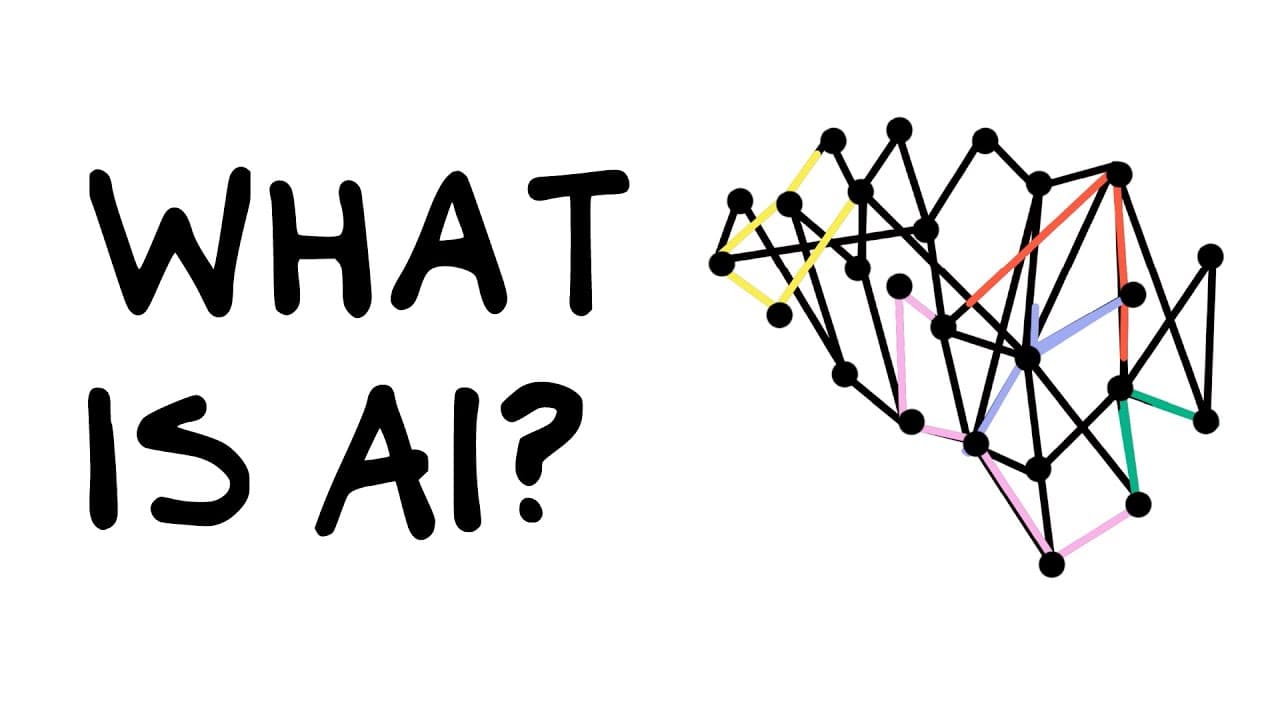
Artificial intelligence (AI) transforms real-world tasks into binary data, enabling computers to execute functions typically requiring human intelligence. Key components include vector embedding, which quantifies words across various dimensions, and neural networks that process information like the human brain. Together, they form large language models capable of generating responses and performing complex tasks.
Transcript
artificial intelligence is applying the strengths of computers to problems that previously required human intelligence AI is not new commercial AI applications include GPS driving instructions facial recognition and voice-based assistant including Alexa and Siri all computers even the most powerful can only understand zeros and ones AI requires tur... Read More
Key Insights
- 🛟 AI applications such as GPS driving instructions, facial recognition, and voice assistants have become part of our daily lives.
- 👨🔬 Traditional web search approaches have limitations in understanding language and context compared to AI systems.
- 👻 Vector embedding allows AI systems to assign numeric scores to words, capturing their meaning across multiple dimensions.
- 💁 Neural networks simulate the structure and processing of the human brain, processing information in the form of vectors.
- 💁 The combination of neural networks and vector embedding forms large language models (LLMs), which can accurately predict sequences of vectors.
- ⚾ LLMs are commonly used in chatbots to generate responses based on the knowledge they have gained.
- 💁 Customized AI assistance is being developed to accomplish information-based tasks and physical actions in various industries.
- 🎙️ More videos with Scott Galloway:
Install to Summarize YouTube Videos and Get Transcripts
Explore YouTube Video Summarizer or Get YouTube Transcript Extractor
Questions & Answers
Q: How does AI convert real-world tasks into zeros and ones?
AI systems digitize information by converting it into zeros and ones, enabling computers to understand and process tasks that require human intelligence.
Q: What is vector embedding and how does it work in AI?
Vector embedding assigns numeric scores to words across multiple dimensions, capturing their meaning in language. It allows AI systems to understand the context and relationships between words.
Q: What are neural networks and how do they contribute to AI?
Neural networks are structures composed of interconnected digital neurons that process information fed to them in the form of vectors. They perform complex calculations and are a key component of AI technology.
Q: How are large language models used in AI applications like chatbots?
Large language models (LLMs) power chatbots by using neural networks and vector embedding to generate responses based on the knowledge they have gained from crawling the internet or specific sets of information.
Summary & Key Takeaways
-
AI involves converting real-world tasks into zeros and ones, allowing computers to understand and process information.
-
AI systems use vector embedding to assign numeric scores to words, capturing their meaning across multiple dimensions.
-
Neural networks, modeled after the brain's structure, process information in the form of vectors and are combined with vector embedding to form large language models (LLMs).
Read in Other Languages (beta)
Share This Summary 📚
Summarize YouTube Videos and Get Video Transcripts with 1-Click
Try YouTube Summary with ChatGPT & Claude or YouTube Transcript Generator
Explore More Summaries from The Prof G Show – Scott Galloway 📚






Summarize YouTube Videos and Get Video Transcripts with 1-Click
Try YouTube Summary with ChatGPT & Claude or YouTube Transcript Generator