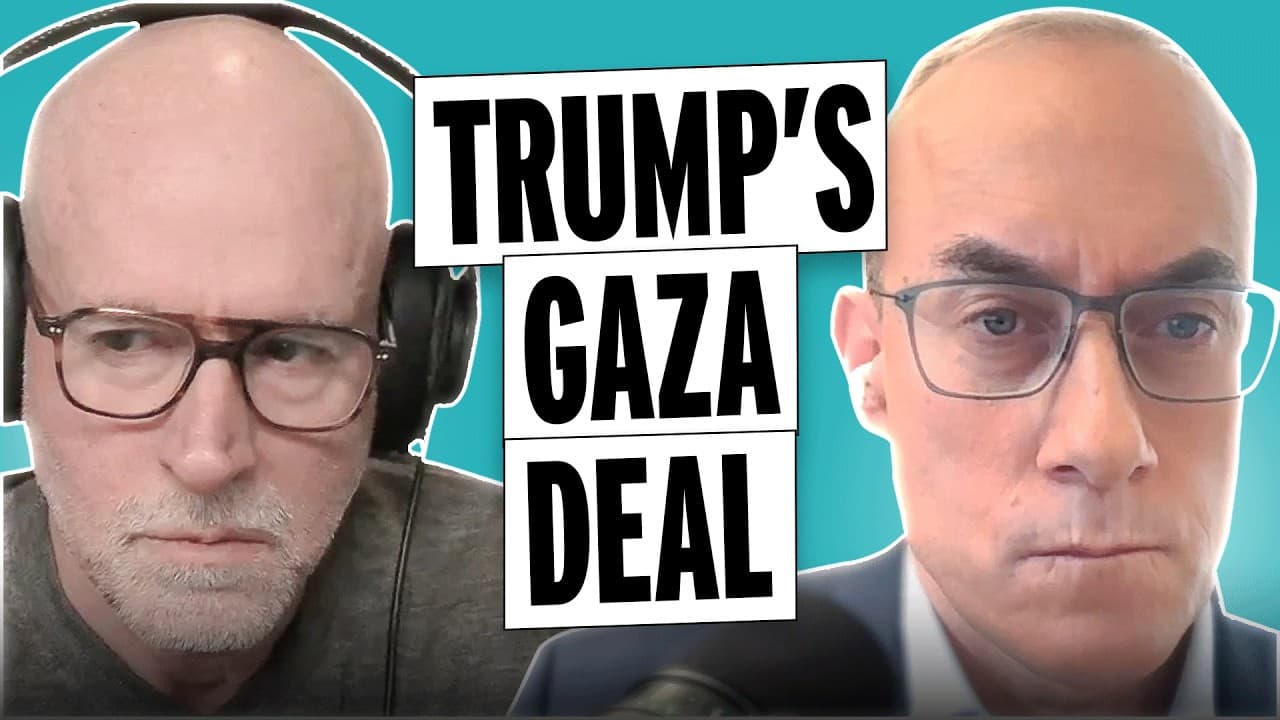
How Did Trump's Deal End the Gaza War? Dan Senor Explains
TL;DR
Trump's team ended the Gaza war by seizing on Hamas's conditional 'yes' to release all 20 hostages at once, banking the agreement and deferring the disputes. Israel's defiant push into Gaza City, the failed strike in Doha, and empowering Kushner and Witkoff pressured Hamas back to the table. Israel released some 2,000 Palestinian prisoners in the first step.
Transcript
Hamas said yes but. Now in a negotiation when someone says yes but you can choose to focus on the yes or the but many of the negotiations over the last two years have fallen apart because various parties tended to focus on the butt. And what Trump seemed to do is he took the yes. Wait a minute. They just said yes. They will release all the hostages... Read More
Key Insights
- Hamas released 20 remaining hostages while Israel freed some 2,000 Palestinian prisoners, marking the first step of Trump's proposed peace deal and arguably the most significant moment since the war began two years ago.
- The negotiation turning point was Hamas saying 'yes, but' to releasing all hostages at once. Trump chose to focus on the 'yes' and bank it, dealing with the disputed details later rather than letting them collapse the deal.
- For two years Hamas refused any deal releasing all hostages at once, insisting on phased releases with pauses and withdrawals. Trump rejected phases entirely, demanding all hostages out at the front end, which experts called naive.
- Israel's decision to enter Gaza City, Hamas's last stronghold, defied international, military, and domestic opposition. Critics now concede it flipped Hamas by signaling no one would rein Israel in, devaluing the hostages as leverage.
- Trump's refusal to restrain Israel over Gaza City removed Hamas's core assumption that hostage threats would always constrain Israel, leading Hamas to conclude it was on its own and should return to negotiating.
- The failed Israeli strike against Hamas in Doha had a catalytic effect, signaling to Arab capitals that the war's fire could spread beyond the Gaza border, pressuring them to tell Hamas to reach a deal.
- Sending Steve Witkoff and Jared Kushner, non-diplomats known to be personally close to Trump, elevated the stakes because personal and family connections carry heavy weight in the Middle East; both were in the room with Hamas.
- Scott Galloway argues that failing to give the Trump administration tremendous credit for this outcome reflects a lack of critical thinking, urging people to evaluate the deal issue by issue rather than through reflexive partisan bias.
Install to Summarize YouTube Videos and Get Transcripts
Explore YouTube Video Summarizer or Get YouTube Transcript Extractor
Questions & Answers
Q: How did Trump's deal end the Gaza war?
Trump's team pushed Hamas to release all remaining hostages at once at the front end rather than in phases. When Hamas said 'yes, but,' Trump chose to focus on the 'yes,' banking the agreement and deferring the disputed details later. This created momentum that let regional leaders envision an end to the war. As the first step, Hamas freed 20 hostages and Israel released some 2,000 Palestinian prisoners.
Q: What was the significance of Hamas saying 'yes, but' in the negotiation?
According to Dan Senor, in a negotiation when someone says 'yes, but,' you can focus on the yes or the but. Many negotiations over the prior two years fell apart because parties focused on the but. Trump instead took the yes, recognizing Hamas had just agreed to release all hostages at once, something it had never agreed to before. He banked that yes and planned to deal with the quibbles later, seizing the opportunity to create momentum.
Q: Why did Israel's decision to enter Gaza City matter?
Gaza City was Hamas's last stronghold, described as Hamas's Berlin or Moscow, and Israel had avoided it for most of the war. Entering it defied the international community, the UN, Europe, and even Israeli society and military. Critics now concede it flipped Hamas more than anything, because it showed no one was reining Israel in. This devalued the hostages as leverage, leading Hamas to realize it was on its own and might return to negotiations.
Q: What role did the failed strike in Doha play?
Dan Senor believes history will look back at the Israeli operation in Doha, an attempted strike against Hamas that failed and was deemed a failure at the time, as having a catalytic effect. It sent a message to the region that the war would not stay contained to the Israel-Gaza border and that the fire could spread anywhere, including to Doha, Abu Dhabi, or Riyadh. This pressured Arab capitals to tell Hamas enough, they needed to reach a deal.
Q: Why did sending Jared Kushner and Steve Witkoff make a difference?
Kushner and Witkoff are not career diplomats, but everyone in the region knows they are individuals extremely close to Trump. In the Middle East, the sense of family and personal connection matters a lot. When regional leaders knew Jared and Witkoff had been empowered by the president to close the deal, it elevated the stakes for many, including Hamas. Both men were directly in the room with Hamas in the final days of negotiations, which sent a strong statement.
Q: What was different about Trump's demand for hostage releases?
For the entirety of the two-year war, Hamas would never agree to release all hostages at once, always insisting on phases with Israeli withdrawals, pauses in fighting, and hostages trickled out over time. Even Dan Senor assumed phases were the only way it could work. Trump rejected this, demanding all hostages out at once at the front end of the deal. Every expert called him naive and foolish, until Hamas responded 'yes, but.'
Q: How did Scott Galloway view the Trump administration's role in the deal?
Scott Galloway admitted he has a negative reflexive bias toward the Trump administration but argued that failing to give it tremendous credit for this outcome means you are not a critical thinker. He urged evaluating issues one by one. He credited the administration heavily, suggested Jared Kushner's relationships and trust built during the Abraham Accords paid off, and noted Trump seemed more focused on the prize than the peace itself.
Q: What did Dan Senor say about analyzing news events in real time?
Dan Senor cautioned against the tendency to have snap reactions and instant analysis of every moment in the news cycle. He noted that people rush to make sense of every reported conversation between leaders, generating cycles of articles about whether talks were tense or good. He argued it is better to take a step back, let events play out, and stitch them together afterward, because several moments over the prior weeks were met with instant consensus that turned out to be wrong.
Summary & Key Takeaways
-
Today marks arguably the most significant moment since the Gaza war began two years ago: Hamas freed its 20 remaining hostages and Israel released some 2,000 Palestinian prisoners as the first step in Trump's proposed peace deal, though broader terms remain unagreed while Trump declared the war over.
-
Dan Senor argues the deal came together through several moments wrongly analyzed at the time: Israel defying pressure to enter Gaza City, the failed Doha strike pressuring Arab capitals, and Trump empowering Kushner and Witkoff, whose personal closeness to him elevated the stakes for Hamas.
-
The decisive move was Trump demanding all hostages released at once rather than in phases. When Hamas answered 'yes, but,' Trump banked the 'yes' and deferred the disputes, creating momentum that let regional leaders finally envision an end to the war.
Read in Other Languages (beta)
Share This Summary 📚
Summarize YouTube Videos and Get Video Transcripts with 1-Click
Try YouTube Summary with ChatGPT & Claude or YouTube Transcript Generator
Explore More Summaries from The Prof G Pod – Scott Galloway 📚





Summarize YouTube Videos and Get Video Transcripts with 1-Click
Try YouTube Summary with ChatGPT & Claude or YouTube Transcript Generator