What Is the Reptilian Brain and Its Functions?
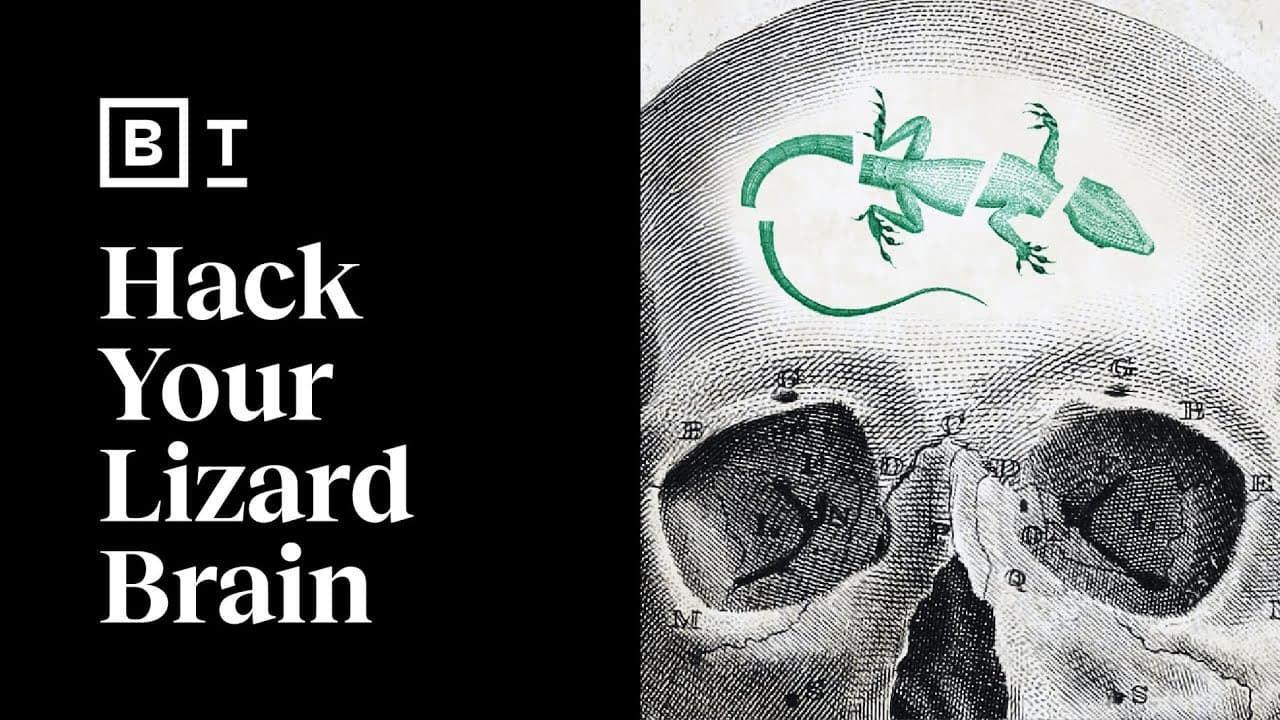
TL;DR
The reptilian brain, the most ancient part of our brain, regulates essential functions such as body temperature and blood glucose levels. It interacts with the limbic system, responsible for emotions, and the cortex, which manages cognitive processes. Understanding these layers helps clarify how our primitive instincts influence complex behaviors.
Transcript
What's the best way to think about the brain? It's insanely complicated, everything connects to everything. Amid all that complexity, functionally, it's very easy to think of the brain as coming in three functional layers. This is a broadly simplifying way to think about aspects of brain function when it comes to behavior. This is highly schematic,... Read More
Key Insights
- 🧠 The brain can be simplified into three layers: the reptilian brain for regulation, the limbic system for emotions, and the cortex for cognitive processes.
- 🧠 The reptilian brain is responsible for maintaining regulatory functions in the body.
- 😨 The limbic system is heavily involved in emotional responses, fear, arousal, and sexual desires.
- 🍉 The cortex regulates impulse control, emotional regulation, and long-term planning.
- ❓ The interaction between these layers can influence behavior and decision-making.
- 💄 Hunger can affect moral judgments and decision-making processes.
- 🧠 Conscious thinking can regulate ancient parts of the brain, such as the reptilian brain, through techniques like biofeedback.
- 🎙️ More videos with Robert Sapolsky:
Install to Summarize YouTube Videos and Get Transcripts
Explore YouTube Video Summarizer or Get YouTube Transcript Extractor
Questions & Answers
Q: What are the main functions of the reptilian brain?
The reptilian brain is responsible for regulatory functions in the body, such as monitoring body temperature, blood glucose levels, and releasing essential hormones for everyday body maintenance.
Q: How does the limbic system influence our emotional responses?
The limbic system, which is part of the brain's emotional center, plays a role in fear, arousal, anxiety, and sexual desires. It is heavily involved in emotional responses to various stimuli.
Q: How does the cortex interact with the other layers of the brain?
The cortex, the most recently evolved part of the brain, influences the limbic system and reptilian brain. It regulates emotional responses, impulse control, and cognitive processes. For example, a cognitive state can evoke an emotional response through the cortex's influence on the limbic system.
Q: How can conscious thinking affect the ancient parts of the brain?
Conscious thinking can regulate ancient parts of the brain, such as the reptilian brain, through techniques like biofeedback. By consciously thinking about positive experiences or using specific techniques, individuals can influence autonomic functions like blood pressure and heart rate.
Summary & Key Takeaways
-
The brain can be organized into three functional layers: the reptilian brain for regulatory functions, the limbic system for emotions, and the cortex for cognitive processes.
-
The reptilian brain is responsible for maintaining regulatory functions like body temperature and blood glucose levels.
-
The limbic system controls emotions such as fear, arousal, and sexual desires.
-
The cortex, the most recently evolved part of the brain, is responsible for impulse control, long-term planning, and emotional regulation.
Read in Other Languages (beta)
Share This Summary 📚
Summarize YouTube Videos and Get Video Transcripts with 1-Click
Try YouTube Summary with ChatGPT & Claude or YouTube Transcript Generator
Explore More Summaries from Big Think 📚


Summarize YouTube Videos and Get Video Transcripts with 1-Click
Try YouTube Summary with ChatGPT & Claude or YouTube Transcript Generator