How to Build High-Performance Teams in AI
TL;DR
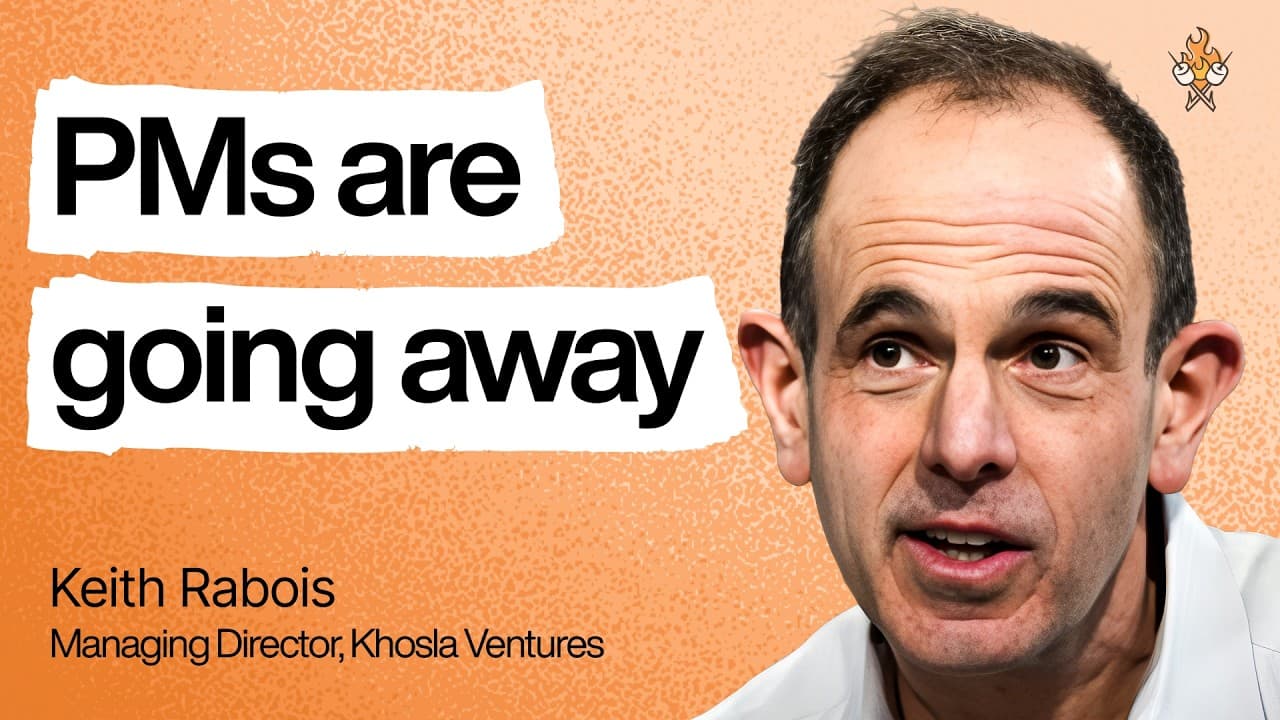
The team you build determines the company you build, so founders should treat talent assessment, retention, and promotion as core operating responsibilities. In the AI era, leaders can produce more work directly, product management increasingly resembles CEO-level judgment about what to build and why, and strong CEOs must fight complacency by pushing harder when results are good.
Transcript
idea of a PM makes no sense in the future. The skill is more like being a CEO now, which is what are we building and why? >> There's a lot of anxiety in the job market. >> AI is going to radically reorient lots of people's careers, maybe including mine. What I've noticed in some of the best organizations is the number one consumer of tokens is the ... Read More
Key Insights
- A startup's team is the company it ultimately builds. Rabois argues that the right people make challenges involving markets, customers, products, and technology easier, while the wrong people make every part of company building more difficult.
- Talent density was central to PayPal's success. Peter Thiel and Max Levchin assembled ambitious, capable people who helped PayPal survive and later created notable companies across many verticals over the following 25 years.
- Trusted networks can outperform interviews when the network contains exceptional talent. PayPal relied heavily on first-degree and second-degree connections to its engineering team and Peter Thiel's Stanford network, although Rabois cautions that this recruiting model does not suit everyone.
- Leadership leverage means each incremental hire should generate nonlinear returns. David Sacks expressed this expectation as one plus one equaling three or more, which pushed Rabois to build a team whose combined output exceeded the sum of individual contributions.
- Internal recruiting can reveal overlooked talent more reliably than short interviews. Rabois improved his team by identifying ambitious PayPal employees whose abilities were not being fully used, then bringing them into roles where they could move quickly and deliver important outcomes.
- Accurate talent assessment is a powerful founder capability. Rabois believes a founder who demonstrates ruthless and accurate judgment about people early in a career can go far even without many other abilities because hiring shapes the organization's capacity.
- The product manager role is moving toward CEO-like judgment. In Rabois's view, the essential skill is increasingly deciding what the organization should build and why, rather than operating through a conventional definition of product management.
- AI allows senior leaders to produce work more directly. Rabois observes that chief marketing officers can become leading consumers of AI tokens because they no longer need multiple layers of deputies to translate their ideas into actual work products.
Install to Summarize YouTube Videos and Get Transcripts
Explore YouTube Video Summarizer or Get YouTube Transcript Extractor
Questions & Answers
Q: How should founders build a high-performance team?
Founders should treat the team as the foundation of the company, then focus continuously on identifying, retaining, and promoting capable people. The objective is not merely to add headcount. Each hire should create leadership leverage, with the combined team producing more than its members could separately. Founders should also look for talented people whose abilities and ambition are currently underused.
Q: Why is talent density important for a startup?
Talent density matters because capable people make product, market, customer, technology, and execution problems easier to solve. Rabois uses PayPal as evidence: Peter Thiel and Max Levchin assembled an unusually strong concentration of talent that helped the company succeed. Many members of that group later applied their ideas, ambition, and abilities to building significant companies across different verticals.
Q: What does leadership leverage mean when hiring?
Leadership leverage means that every additional person should produce disproportionate, nonlinear returns for the organization. David Sacks described the standard to Rabois with the equation that one plus one should equal three or more. A strong leader therefore does more than supervise individual contributors. The leader assembles people whose collaboration, speed, judgment, and complementary strengths increase the entire team's output.
Q: How can a manager identify overlooked talent inside a company?
A manager can observe colleagues over time through shared work, meals, conversations, and informal activities, then compare their demonstrated abilities with how their current roles use them. Rabois followed this approach at PayPal after realizing he assessed familiar colleagues more accurately than strangers. He recruited ambitious employees who were not being fully leveraged, enabling them to contribute quickly because they already understood the organization.
Q: Why can trusted networks be better than interviews?
Trusted networks provide evidence gathered through real relationships and observed performance, while a short interview offers only a limited sample of a stranger's abilities. PayPal used first-degree and second-degree connections extensively when recruiting through its engineering team and Peter Thiel's Stanford network. Rabois says this model works especially well when the network contains unusual talent, but he does not recommend it universally.
Q: How is AI changing the product manager role?
AI is pushing product management toward the broader judgment traditionally expected from a CEO. Rabois argues that the central skill is becoming the ability to decide what the organization should build and why. As AI handles more production and execution work, value shifts toward setting direction, choosing priorities, understanding the purpose behind a product, and exercising accountable judgment about the company's path.
Q: Why are marketing leaders major consumers of AI tokens?
Rabois observes that the chief marketing officer can be the largest consumer of AI tokens in some strong organizations. AI lets marketing leaders generate actual work products directly instead of relying on several layers of deputies to interpret and execute their ideas. This reduces organizational distance between executive judgment and completed output, allowing a senior leader to work with greater speed and independence.
Q: How should a CEO respond when the company is performing well?
A CEO should actively counter the complacency that can emerge when results are strong. Rabois says highly talented people may become unhappy when they feel the organization is merely skating rather than stretching its capabilities. The CEO's role is to restore urgency and maintain demanding standards. In his view, better performance should prompt the CEO to push harder, not relax expectations.
Summary & Key Takeaways
-
Keith Rabois argues that a startup's defining asset is its team. PayPal succeeded partly because Peter Thiel and Max Levchin assembled a dense concentration of talented people through trusted networks. Founders who assess talent ruthlessly and accurately can overcome weaknesses elsewhere because capable teams make product, market, technology, and execution challenges easier.
-
Rabois developed his talent judgment after receiving feedback that leadership requires leverage, meaning each additional hire should create disproportionate returns. Because he initially struggled to evaluate strangers in short interviews, he recruited underused people from elsewhere inside PayPal. Their existing context and demonstrated abilities helped his team move quickly and deliver important results.
-
AI is changing organizational roles and individual careers. Product managers increasingly need CEO-like judgment about what should be built and why, while executives can use AI to create work without layers of deputies. Rabois also argues that strong companies prioritize winning, challenge complacency, and expect CEOs to increase pressure when performance is already strong.
Read in Other Languages (beta)
Share This Summary 📚
Summarize YouTube Videos and Get Video Transcripts with 1-Click
Try YouTube Summary with ChatGPT & Claude or YouTube Transcript Generator
Explore More Summaries from Lenny's Podcast 📚

Summarize YouTube Videos and Get Video Transcripts with 1-Click
Try YouTube Summary with ChatGPT & Claude or YouTube Transcript Generator