What Life-Changing Lessons Does The Psychology of Money Teach? | Graded Reader to Improve Your English
TL;DR
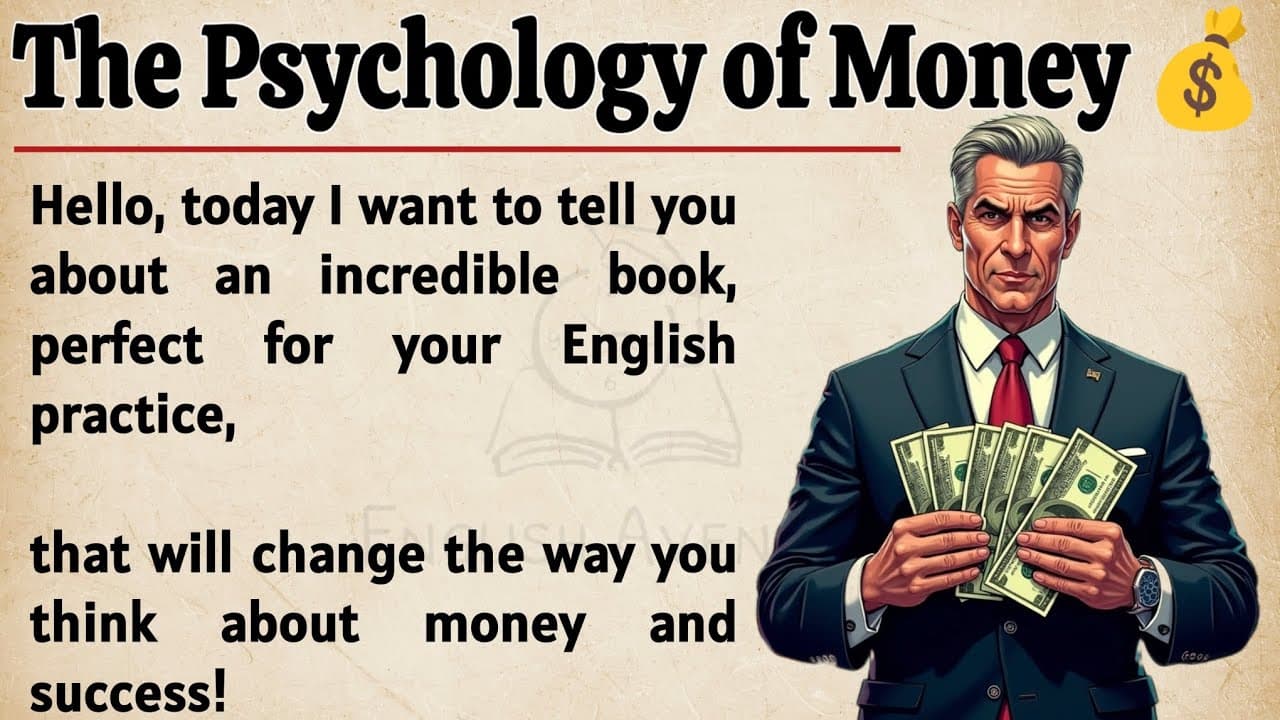
The Psychology of Money teaches that financial success depends more on behavior, emotions, patience, and personal values than on income or mathematical skill. Saving just $10 a week produces $520 after a year, illustrating how small, consistent actions can build wealth over time. It also presents freedom and peace of mind, not flashy possessions, as the real goals of money, so read on for eight practical lessons.
Transcript
hello my dear friends today I'm about to share something truly lifechanging with you a book that has the power to completely transform how you think act and feel about money imagine a book that doesn't just teach you about saving or investing but Dives deep into your mind your emotions and your habits that book is none other than the psychology of ... Read More
Key Insights
- Money is emotional, not just logical. Financial decisions are often driven by feelings rather than pure logic.
- Patience is crucial in building wealth. Long-term investments and saving small amounts consistently can lead to substantial growth.
- Comparing yourself to others can be misleading. True wealth is about peace of mind, not material possessions.
- Freedom is the ultimate goal of money. It's about having the choice to live life on your terms, not just accumulating wealth.
- Everyone's relationship with money is unique. Personal experiences and backgrounds heavily influence financial decisions.
- Luck and risk play significant roles in financial success. Success isn't solely due to hard work; external factors can greatly impact outcomes.
- Avoiding extremes in spending and saving is essential. Balance is key to enjoying life while preparing for the future.
- Time is a powerful tool in wealth-building. Starting early, even with small investments, can significantly increase wealth over time.
Install to Summarize YouTube Videos and Get Transcripts
Explore YouTube Video Summarizer or Get YouTube Transcript Extractor
Questions & Answers
Q: What life-changing money lessons does The Psychology of Money teach?
The central lesson is that managing money depends more on behavior than numbers. The book emphasizes controlling emotional decisions, practicing patience, avoiding comparisons, saving consistently, and using money to gain freedom and peace of mind.
Q: Why are money decisions emotional rather than purely logical?
People often buy things because they feel excitement, social pressure, or a desire for immediate pleasure. The transcript illustrates this with someone buying the latest phone despite having a working one, or spending a work bonus immediately instead of saving it.
Q: Why is patience important for building wealth?
Wealth usually develops slowly through consistent saving and the power of compounding. The transcript says that Warren Buffett began investing as a teenager and that a huge part of his wealth came after age 50, showing the importance of giving money time to grow.
Q: What does saving $10 a week demonstrate?
Saving $10 each week produces $520 after one year. The transcript explains that investing the money and allowing it to grow for 10 years could turn it into thousands of dollars, illustrating how patience and consistency can make small amounts meaningful.
Q: Why can comparing your finances with other people be misleading?
Visible possessions do not reveal a person's complete financial situation. Someone driving a Ferrari could be drowning in debt, while someone with a modest car, ample savings, and no financial stress may be truly wealthier.
Q: What does it mean that freedom is the real goal of money?
Money should provide the freedom to live on your own terms, spend time with loved ones, pursue passions, and sleep without worrying about bills. The goal is not simply to accumulate possessions but to gain greater control over your life and time.
Q: Does earning more money automatically create financial freedom?
No, because freedom depends on how wisely a person uses their income. The transcript contrasts someone earning $2,000 a month while living within their means and saving regularly with someone earning $110,000 a month while drowning in debt.
Q: Why is each person's relationship with money unique?
Financial attitudes are shaped by personal backgrounds and experiences. Someone raised with financial security may not feel urgency about saving, while someone raised in poverty may view every dollar saved as a step toward survival.
Summary & Key Takeaways
-
Money management is deeply tied to emotions and behavior, not just numbers. Understanding your emotional triggers can help you make better financial decisions.
-
Patience and consistency are crucial in wealth-building. Small, regular savings and investments can grow significantly over time due to compounding.
-
True financial freedom comes from living within your means and focusing on long-term goals rather than short-term gratification.
Read in Other Languages (beta)
Share This Summary 📚
Summarize YouTube Videos and Get Video Transcripts with 1-Click
Try YouTube Summary with ChatGPT & Claude or YouTube Transcript Generator
Explore More Summaries from English Avenue 📚





Summarize YouTube Videos and Get Video Transcripts with 1-Click
Try YouTube Summary with ChatGPT & Claude or YouTube Transcript Generator