How Does a Nuclear War Start Minute by Minute?
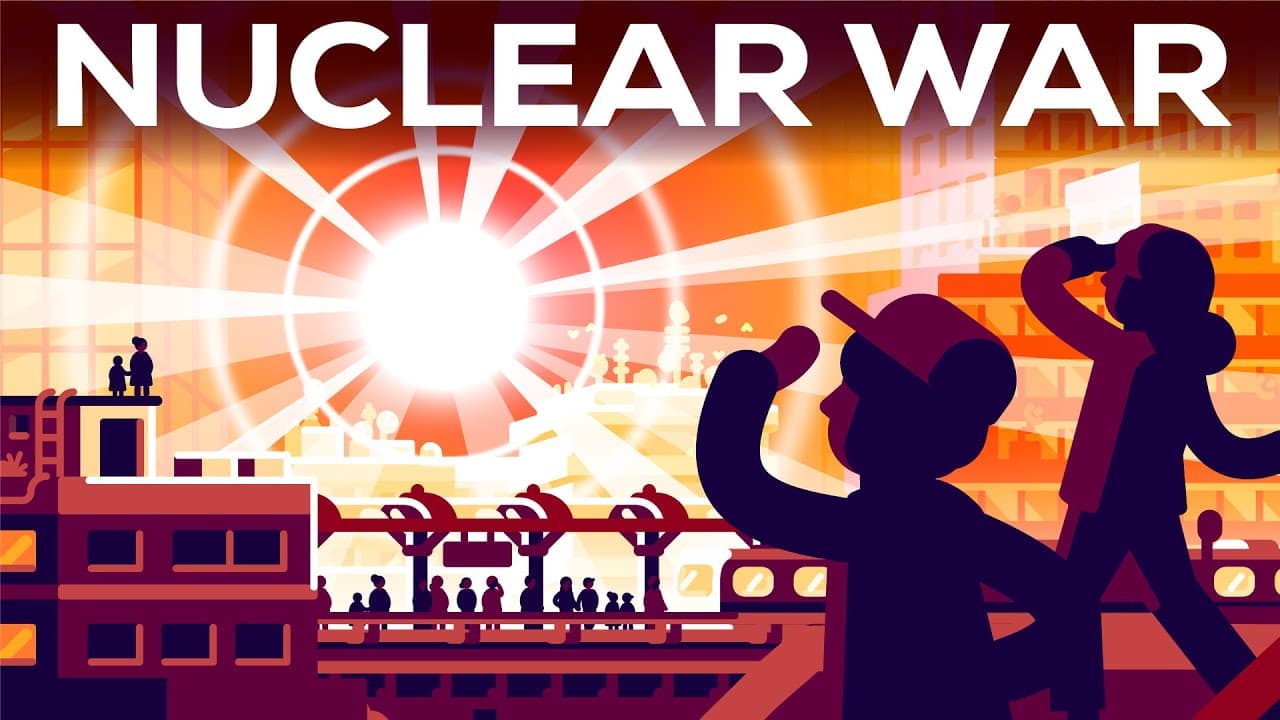
TL;DR
A nuclear war can start in just minutes due to miscommunication or misunderstandings, escalating rapidly from perceived threats. Decisions made by a single leader under time pressure can lead to catastrophic consequences, potentially resulting in millions of casualties and global fallout. Learning from historical close calls emphasizes the importance of careful handling of nuclear arsenals and the need for disarmament efforts.
Transcript
Mr. President! Nuclear missiles will strike our country in 14 minutes. I know it’s your first day in office so I’m going to walk you through it, but you’re the only one who can authorize our nuclear retaliation in response and you’ve only got a few minutes to make a decision! As you know tensions have escalated rapidly in the past few days. T... Read More
Key Insights
- ⌛ Decisive leadership under time pressure is crucial in nuclear crisis scenarios.
- 🫱 The fog of war and technological glitches can exacerbate the risks of nuclear conflicts.
- ⏰ Historical false alarms highlight the precarious nature of nuclear deterrence and the potential for catastrophic miscalculations.
- 🔫 Incremental disarmament efforts are pivotal in mitigating the existential threats posed by nuclear weapons.
- 💨 Collective awareness and activism are essential in steering global security away from nuclear brinkmanship.
- 🧑🌾 Individual decision-making can have far-reaching consequences in nuclear warfare scenarios.
- 🌍 The story underscores the need for international cooperation and responsible governance to avert nuclear catastrophe.
Install to Summarize YouTube Videos and Get Transcripts
Explore YouTube Video Summarizer or Get YouTube Transcript Extractor
Questions & Answers
Q: What are the primary targets of the incoming ICBMs, and what is the potential casualty count?
The ICBMs are targeting nuclear command centers, silos, airforce and navy bases, as well as industry and infrastructure near major population centers. Casualty estimates range from millions to potentially billions in a worst-case nuclear winter scenario.
Q: How does the narrative illustrate the critical role of leadership in nuclear crises?
The story emphasizes the immense responsibility of leaders like the President who must make rapid decisions with incomplete information, highlighting the catastrophic consequences of nuclear warfare at the mercy of a single individual.
Q: What historical examples of nuclear false alarms are referenced, and what lessons do they offer?
The story mentions past incidents like the 1995 Russian submarine missile alert and the 1979 US-Soviet training tape mix-up, showcasing the perilous brinkmanship of nuclear deterrence and the potential for catastrophic misunderstandings.
Q: What message does the narrative convey about the future of nuclear weapons and global security?
The narrative urges for incremental disarmament and collective action to reduce the global nuclear stockpile, presenting a hopeful vision where awareness and activism can shape a safer world free from the specter of nuclear annihilation.
Summary & Key Takeaways
-
A high-pressure scenario unfolds as the President is tasked with authorizing nuclear retaliation against enemy missiles in a matter of minutes.
-
Details reveal the scale of potential devastation, the uncertainty of enemy intentions, and the limited defensive capabilities.
-
The narrative sheds light on the complexities and risks of nuclear warfare decisions, drawing parallels to historical close calls.
Read in Other Languages (beta)
Share This Summary 📚
Summarize YouTube Videos and Get Video Transcripts with 1-Click
Try YouTube Summary with ChatGPT & Claude or YouTube Transcript Generator
Explore More Summaries from Kurzgesagt – In a Nutshell 📚






Summarize YouTube Videos and Get Video Transcripts with 1-Click
Try YouTube Summary with ChatGPT & Claude or YouTube Transcript Generator