What Is Uplifting and Its Ethical Implications for Species?
TL;DR
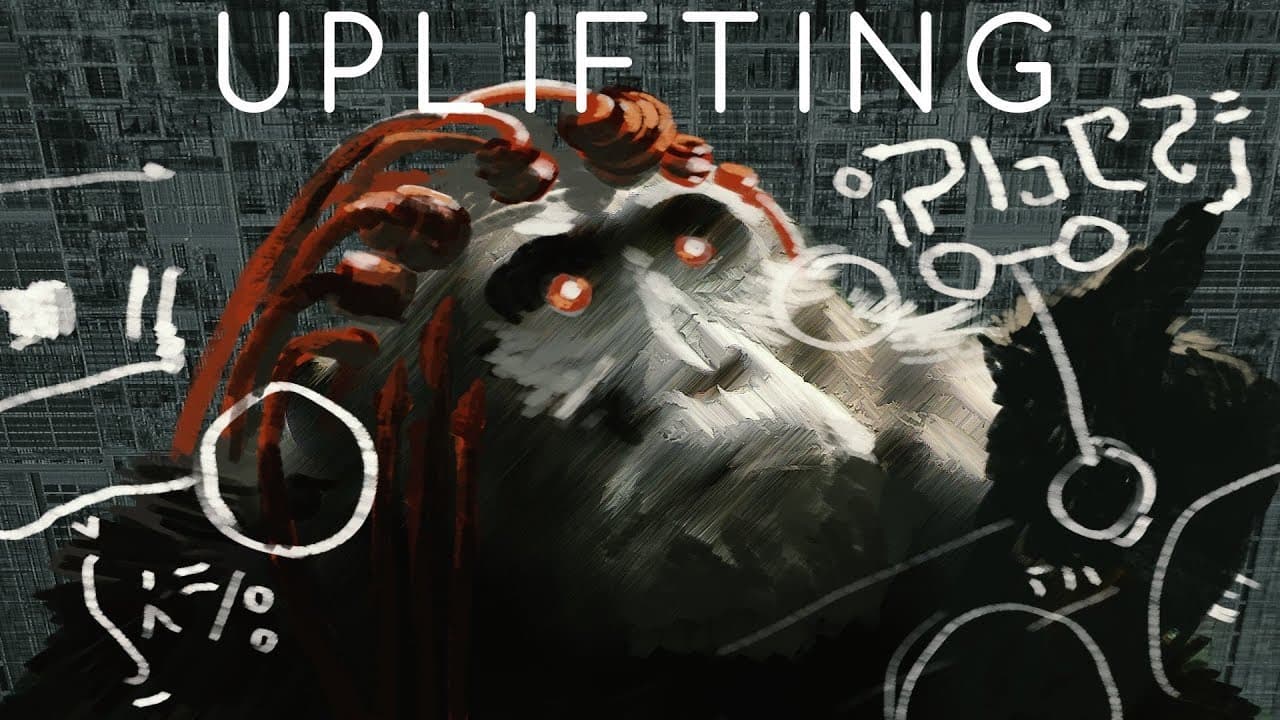
Uplifting involves enhancing other species to achieve human-level intelligence, raising significant ethical concerns about interference. The scarcity of observable intelligent civilizations suggests that advanced forms of life may be rare in the universe, influenced by the type of stars and the conditions on planets or moons. These factors complicate the potential for intelligent life to emerge and evolve.
Transcript
This is part two of a collaboration between Isaac Arthur and myself regarding the concept of uplifting, the idea that a species whether native to your own planet or one you might run across in the depths of deep space could be biologically or technologically augmented to be nearly or as intelligent as yourself, and whether you should do that at all... Read More
Key Insights
- 🤘 Advanced civilizations may not be as common as expected, considering the absence of observable signs of intelligence in the universe.
- 🤩 Certain star types, such as giant stars or red dwarfs, are less suitable for the development of complex life or habitable zones.
- 🎑 Water worlds and ice moons present challenges and possibilities for the development and advancement of civilizations.
Install to Summarize YouTube Videos and Get Transcripts
Explore YouTube Video Summarizer or Get YouTube Transcript Extractor
Questions & Answers
Q: How does the absence of advanced civilizations in the universe challenge the concept of Kardashev type II or III civilizations?
The lack of observable intelligent civilizations in the universe, as observed by Enrico Fermi, suggests that these advanced civilizations may not exist in the Milky Way as envisioned by Kardashev.
Q: Why might uplifting be considered an ethical activity?
Uplifting may be viewed as ethical because intelligence is seen as rare and precious. Helping other species reach their full potential can be seen as a way to preserve and protect intelligence in the universe.
Q: What are the challenges of developing a civilization on water worlds or ice moons?
The lack of land on water worlds or ice moons poses challenges for the development of civilizations. However, concepts such as Dyson's Sunflowers propose that complex species could exist by harnessing sunlight on the surface and maintaining a connection to the ocean below.
Q: Is it ethical to downshift or alter the intelligence of a species to prevent potential threats?
The ethical implications of downshifting a species to prevent future aggression or conflicts depend on the perspective and values of the acting civilization. It raises questions about the balance between preserving intelligence and ensuring the safety and stability of the galaxy.
Summary & Key Takeaways
-
Uplifting involves augmenting species to achieve human-level intelligence and raises ethical questions about interference and assistance.
-
The lack of obvious signs of intelligent civilizations in the universe suggests that advanced civilizations may not be as common as previously believed.
-
The suitability of different star types and the prevalence of water worlds and ice moons impact the potential for intelligent life to develop and advance technologically.
Read in Other Languages (beta)
Share This Summary 📚
Summarize YouTube Videos and Get Video Transcripts with 1-Click
Try YouTube Summary with ChatGPT & Claude or YouTube Transcript Generator
Explore More Summaries from John Michael Godier 📚




Summarize YouTube Videos and Get Video Transcripts with 1-Click
Try YouTube Summary with ChatGPT & Claude or YouTube Transcript Generator