What Mind-Blowing Events Will Change Our Solar System?

TL;DR
Future solar system events include the sun becoming a planetary nebula, Neptune developing stunning rings from the disintegration of Triton, and the potential for habitable ocean moons as the sun expands. Additionally, human colonization could radically reshape celestial bodies, while Mars may experience a second habitability phase, and Earth's poles will change alignment over millennia.
Transcript
The far future of the solar system will see drastic changes and events unlike anything we have experienced in human history. And it will be to the point that it will be difficult to recognize our home star system when compared to what it is now. Some of these events will be quite spectacular, so here are ten mind blowing future solar system events.... Read More
Key Insights
- 🫥 The future solar system will witness the formation of planetary nebulae, visible to neighboring galaxies.
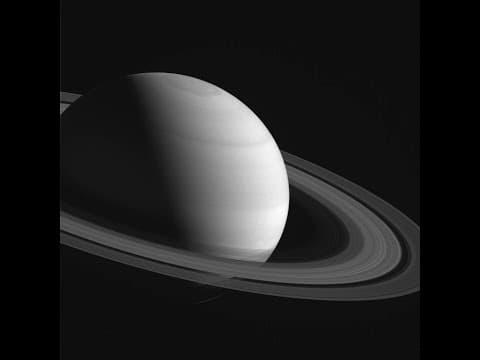
- 😋 Neptune will develop a ring system more magnificent than Saturn's.
- 👻 The habitable zone will expand, potentially allowing oceanic moons to thaw and support life.
- ❓ Human colonization and technological advancements could dramatically transform the solar system, including terraforming efforts and potential stellar engineering.
- 😪 Mars might experience a second period of habitability as the sun enters its red giant phase.
- 🤩 Earth's poles will change their alignment, resulting in a shifting north star and the emergence of a southern pole star.
- 💨 There will eventually be no total solar eclipses on Earth due to the moon's slow drift away from our planet.
- 😪 Earth and Mars could become tidally locked to the sun during its red giant phase, with a possibility of a far-future impact between Earth and the moon.
- 😎 The sun will go through the helium flash stage, resulting in a few minutes of extreme brightness and the eventual evolution into a white dwarf.
Install to Summarize YouTube Videos and Get Transcripts
Explore YouTube Video Summarizer or Get YouTube Transcript Extractor
Questions & Answers
Q: What are planetary nebulae, and what will happen to our sun?
Planetary nebulae occur when stars shed their outer layers, creating a beautiful expanding nebula. Our sun will likely become a planetary nebula, visible across the galaxy and neighboring galaxies, billions of years in the future.
Q: Will Neptune have a more impressive ring system than Saturn?
Yes, in about 3.6 billion years, Neptune's largest moon, Triton, will cross its roche limit and form a spectacular ring system, potentially even surpassing the beauty of Saturn's rings.
Q: Which moons in the outer solar system might become habitable during the sun's red giant phase?
Moons like Europa, Ganymede, and possibly Titan and Enceladus could thaw and develop surface oceans suitable for life as the sun expands. However, when the sun becomes a white dwarf, these oceans will freeze solid.
Q: How could human colonization and technological advancements shape the solar system?
Humans have the potential to colonize and terraform celestial bodies, turning Mars and Venus into habitable planets. Megastructure arrangements could be constructed to cool Venus and create an artificial magnetosphere for Mars.
Summary & Key Takeaways
-
Planetary nebulae, which occur when stars shed their outer layers, will likely be the fate of our sun. These nebulae will be visible across the Milky Way and neighboring galaxies.
-
Neptune will develop a stunning ring system in approximately 3.6 billion years, possibly even more spectacular than Saturn's rings.
-
As the sun expands into its red giant phase, the habitable zone will move outward, potentially allowing oceanic moons like Europa, Ganymede, and Titan to thaw and host life.
-
Human colonization and terraforming efforts in the solar system have the potential to radically alter celestial bodies, even reshaping the sun itself.
Read in Other Languages (beta)
Share This Summary 📚
Summarize YouTube Videos and Get Video Transcripts with 1-Click
Try YouTube Summary with ChatGPT & Claude or YouTube Transcript Generator
Explore More Summaries from John Michael Godier 📚
Summarize YouTube Videos and Get Video Transcripts with 1-Click
Try YouTube Summary with ChatGPT & Claude or YouTube Transcript Generator