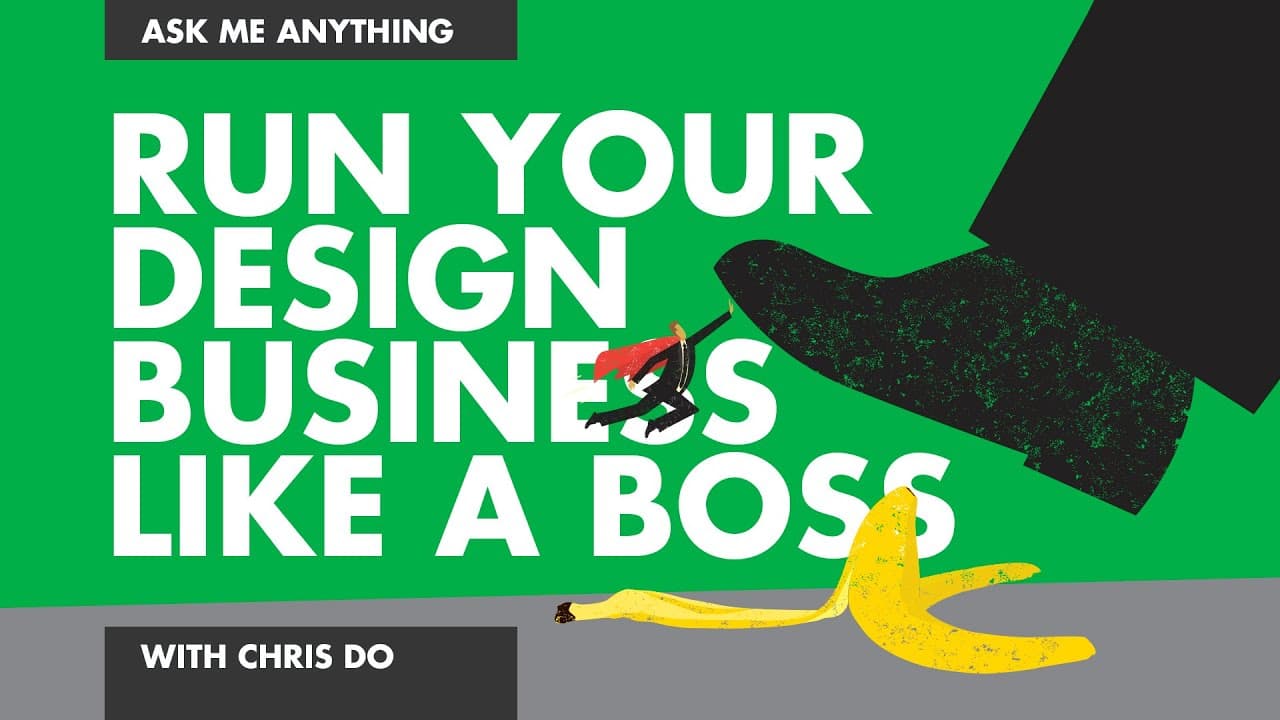
How to price and bid design projects for profitability
TL;DR
The key is to get paid upfront and structure the project so you protect cash flow and profits. Bid with a clear framework that accounts for overhead, guarantees, and risk, and sell the process and the people, not just the work. Transparency with clients prevents misunderstandings and keeps the project moving smoothly.
Transcript
Hey everybody. Welcome to The Process. On this episode of Ask Me Anything we're going and answers that we've got. So stick around. Let me try this again. I want you guys to listen to me– Yeah. I design sandwiches. My name is Jose Caballer I talk about a lot of stuff. My name is Chris Do [Cough cough] Jose, can we just tell em what the show title Ha... Read More
Key Insights
- Upfront payment is a core business discipline for designers to ensure cash flow and reduce risk.
- Bid structure should include overhead costs, profit margins, and contingency for delays or changes.
- Selling the process and the people can be more persuasive than selling the portfolio alone.
- Clear mission statements help articulate value to clients beyond the work itself.
- Transparency about capabilities, schedules, and limits prevents scope creep and disputes.
- Robust sales and marketing effort is essential for securing big budget projects with cash flow.
- Understanding and planning for partnerships and potential breakdowns protects the business in the long term.
- Financial discipline includes budgeting for unexpected issues and setting realistic timelines and costs.
Install to Summarize YouTube Videos and Get Transcripts
Explore YouTube Video Summarizer or Get YouTube Transcript Extractor
Questions & Answers
Q: A real search query question about the video (e.g. 'How to...', 'What is...', 'Why does...', 'When should...'). Question 1
What is the best way to structure payments and milestones in a design project to maintain cash flow and avoid getting stuck with unpaid work? The answer emphasizes getting 50 percent upfront, a mid project milestone, and final delivery with payment within a set period to avoid financial risk. This approach helps ensure you are compensated for time and resources and protects you from surprises when clients delay payments.
Q: Question 2
How do you price design work to include overhead and a profit margin while still remaining competitive? The guidance explains building a bid around direct labor plus overhead, then adding a profit margin, and accounting for potential delays or revisions. This method ensures the project is financially viable while staying fair to clients.
Q: Question 3
Why is it important to sell the process and the people behind the work in addition to the portfolio? The response highlights that clients buy confidence and assurance and that the team delivering the project is a key part of the value proposition. Demonstrating capability and reliability helps close deals beyond a great reel.
Q: Question 4
How should a designer craft a mission statement that communicates value to customers? The guidance suggests focusing on the value provided rather than self-promotion, and profiling target customers to articulate how the team solves their problems. A concise mission statement clarifies purpose and resonates with clients.
Q: Question 5
What are common budgeting mistakes in creative projects and how can they be avoided? The core idea is to plan for unexpected issues by including contingency buffers and honest assessments of risks. Transparent budgeting helps prevent cost overruns and misaligned expectations during the project lifecycle.
Q: Question 6
How can a design business prevent itself from crashing in the first year? The suggested practices include robust sales, cash flow management, and a clear operational structure with upfront agreements. Managing client expectations, costs, and team capacity reduces the chance of financial distress.
Q: Question 7
What are the pros and cons of a brick and mortar operation versus a remote team for a design business? The discussion weighs flexibility, costs, and scalability, noting that a fluid, remote team can offer adaptability while a physical space might impose fixed expenses. The right mix depends on project needs and company strategy.
Q: Question 8
How should a designer handle underbidding and scope changes with clients? The advice emphasizes being upfront about capabilities, setting clear deliverables, and using written agreements. If a task becomes unfeasible within the timeline, you should propose alternatives and possibly end the collaboration amicably to protect the relationship.
Summary & Key Takeaways
-
A design business needs upfront payment and milestone structure to maintain cash flow and reduce risk.
-
A solid bid includes overhead, profit margins, and contingency plans to cover unexpected challenges.
-
Clear communication of value, process, and team capability helps win projects and manage client expectations.
Read in Other Languages (beta)
Share This Summary 📚
Summarize YouTube Videos and Get Video Transcripts with 1-Click
Try YouTube Summary with ChatGPT & Claude or YouTube Transcript Generator
Explore More Summaries from The Futur 📚





Summarize YouTube Videos and Get Video Transcripts with 1-Click
Try YouTube Summary with ChatGPT & Claude or YouTube Transcript Generator